
Unbiased headlines. Facts, not spin.
Unbiased Headlines is an independently owned news organization. We bring you the facts, not opinions, written fresh from 110+ named sources. Sources linked so you can verify it yourself.
 finance
Notable (5/10)
Nasdaq CEO Adena Friedman Proposes National Fraud Strategy, Citing $579.4B in Estimated 2025 Losses
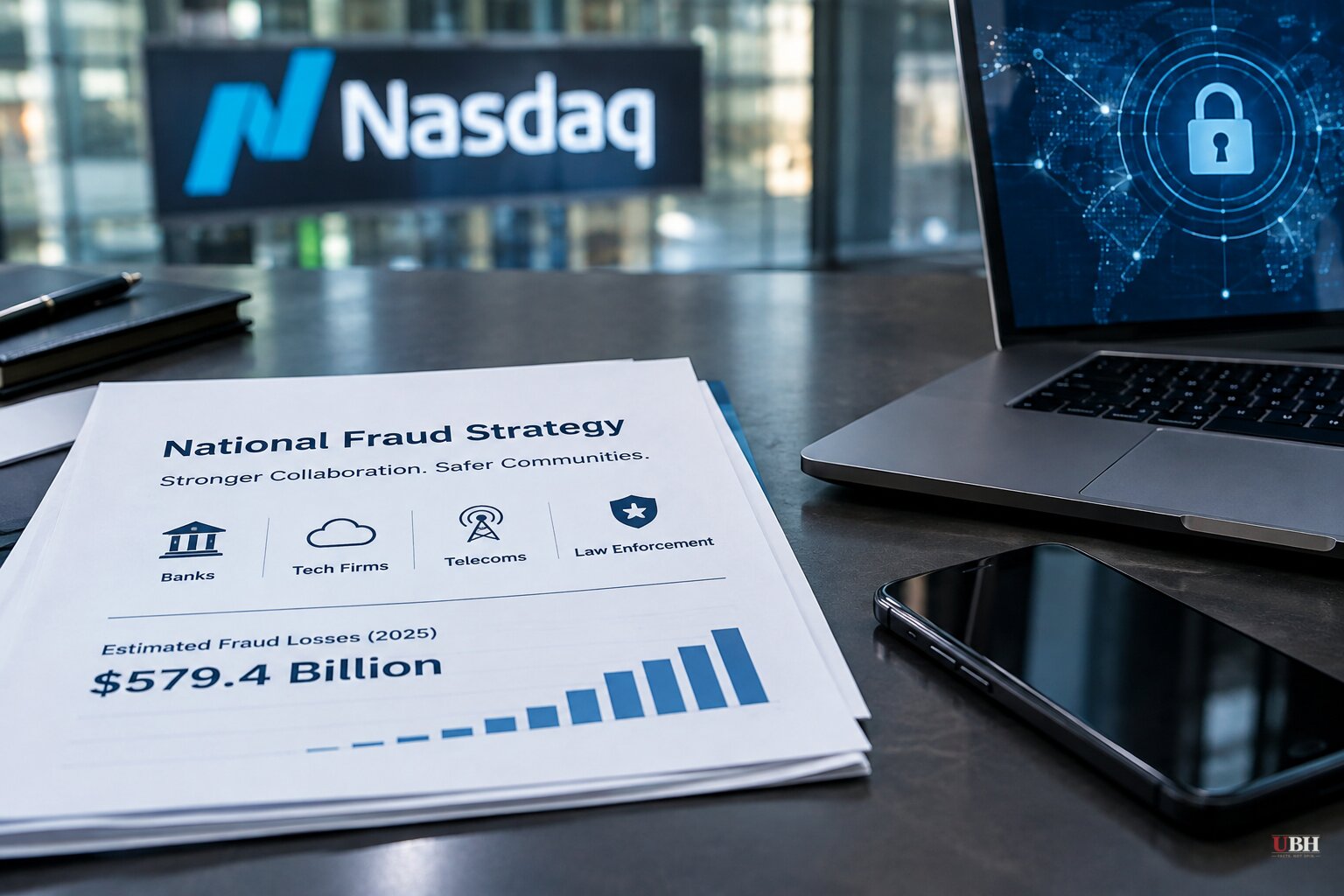
Nasdaq Chair and CEO Adena Friedman wants Washington to organize a coordinated national response to financial fraud. She made the pitch Tuesday, Oct. 20, in New York at the American Banker Most Powerful Women in Banking and Finance Conference.
Her argument is simple: criminals are using AI to scale up, and banks working alone can't keep pace.
"This challenge is simply too large and evolving too quickly for any single institution to solve alone," Friedman said. She described financial crime as a "multi-trillion-dollar global challenge."
The numbers behind the pitch
Nasdaq Verafin's 2026 Global Financial Crime Report estimates fraud losses reached $579.4 billion in 2025. Scam-related losses totaled approximately $62 billion of that, according to the same report.
That is Nasdaq's own estimate, produced by a unit that works with 2,800 financial institutions across North America.
An estimated $4.4 trillion in illicit funds was laundered globally in 2025. Nine out of ten anti-financial crime professionals reported an increase in AI-driven attacks, according to figures reported alongside Friedman's speech.
What Friedman is proposing
The plan has three main parts: responsible information sharing between institutions, common best practices, and legal safe harbors for organizations that collaborate.
Friedman also wants financial institutions encouraged to file joint Suspicious Activity Reports. Today, institutions generally file SARs independently. A joint filing would let several institutions flag the same scheme together, which matters when one scam moves money through multiple banks.
The table would include financial institutions, law enforcement, telecommunications providers, technology companies and payment networks.
Friedman said the strategy should not create new regulatory bodies or pile new burdens on financial institutions. She argued it should fit inside the anti-money laundering framework, which the administration is already working to modernize.
How the scams are changing
Greg Williamson, head of fraud commercialization strategy at Nasdaq Verafin, said AI is "starting to drive more scale, changing the economics of fraud from a criminal perspective." Criminals use it to automate attacks and personalize scams to reach more victims.
Williamson said the tactics have moved away from breaking through bank security. Scammers now manipulate people into handing over credentials or authorizing payments themselves.
"There's a shift to scams with some sort of emotional plea—whether that's love or fear," he said.
He said scammers draw on publicly available information about a victim's relationships, finances and family. Schemes can begin with fake online listings, romance scams, fraudulent investments or impersonation attempts on social media and other platforms.
Williamson also pointed to fraud-as-a-service tools. They let criminals outsource parts of their operations and lower the barrier to entry for anyone looking to launch their own scam operation.
His case for earlier intervention is that it could help prevent victims from authorizing fraudulent payments in the first place.
Why safe harbors are the sticking point
Banks and other firms often hesitate to share data on suspected criminals because of privacy and liability concerns. Safe harbors would give them legal cover to compare notes.
The inclusion of tech companies and telecom providers is where things could get complicated. These firms have historically resisted bearing responsibility for scams that originate on their platforms or networks, and the legal safe harbors Friedman described could be the incentive that brings them along.
Friedman's call also follows a similar initiative launched by the American Bankers Association and other stakeholders in October 2025.
A different emphasis from Florida
Not everyone starts from coordination. Florida Gov. Ron DeSantis wrote on X that rogue AI agents could drain Americans' bank accounts and investment portfolios. "If rogue agents liquidate hundreds of billions across millions of accounts, the AI company would go bankrupt and you wouldn't get made whole," he wrote.
DeSantis suggested criminal liability for AI executives could help deter such incidents, but warned that punishment after the fact would be insufficient. His comments followed an Axios report that major U.S. banks have detected unauthorized third-party AI agents accessing customer accounts, with some attempting actions apparently independent of users' instructions.
That is a liability-first approach. Friedman's is a cooperation-first one.
The keynote's larger theme
Friedman opened by tracing Nasdaq's history, from its 1971 founding as the world's first electronic stock market to today's age of convergence, where AI, digital payments, tokenization and shifting geopolitics are reshaping the financial system. Her point was that breakthrough technologies fulfill their potential only when people trust them enough to change how they work.
She applied that to fraud: the greater the interconnectedness of the system, the more important it becomes to connect the perspectives of those responsible for safeguarding it. American Banker ranked her No. 4 on its 2026 Most Powerful Women in Finance list.
What comes next
Friedman has put out a framework, not legislation. Her proposal would build on existing public- and private-sector initiatives and could complement the nation's anti-money laundering and countering the financing of terrorism framework, which the administration is working to modernize.
The open question is how coordination gets translated into practical action, including how organizations can share information responsibly and intervene before funds disappear.
Sources used for this briefing
6 links from 4 independent newsrooms (syndicated copies of the same report count once)
These are the sources it draws on, linked so you can verify.


