
Unbiased headlines. Facts, not spin.
Unbiased Headlines is an independently owned news organization. We bring you the facts, not opinions, written fresh from 110+ named sources. Sources linked so you can verify it yourself.
 finance
Major Story (7/10)
13 Public Pension Funds Gained $138 Billion From AI Stocks Since 2022, WSJ Finds
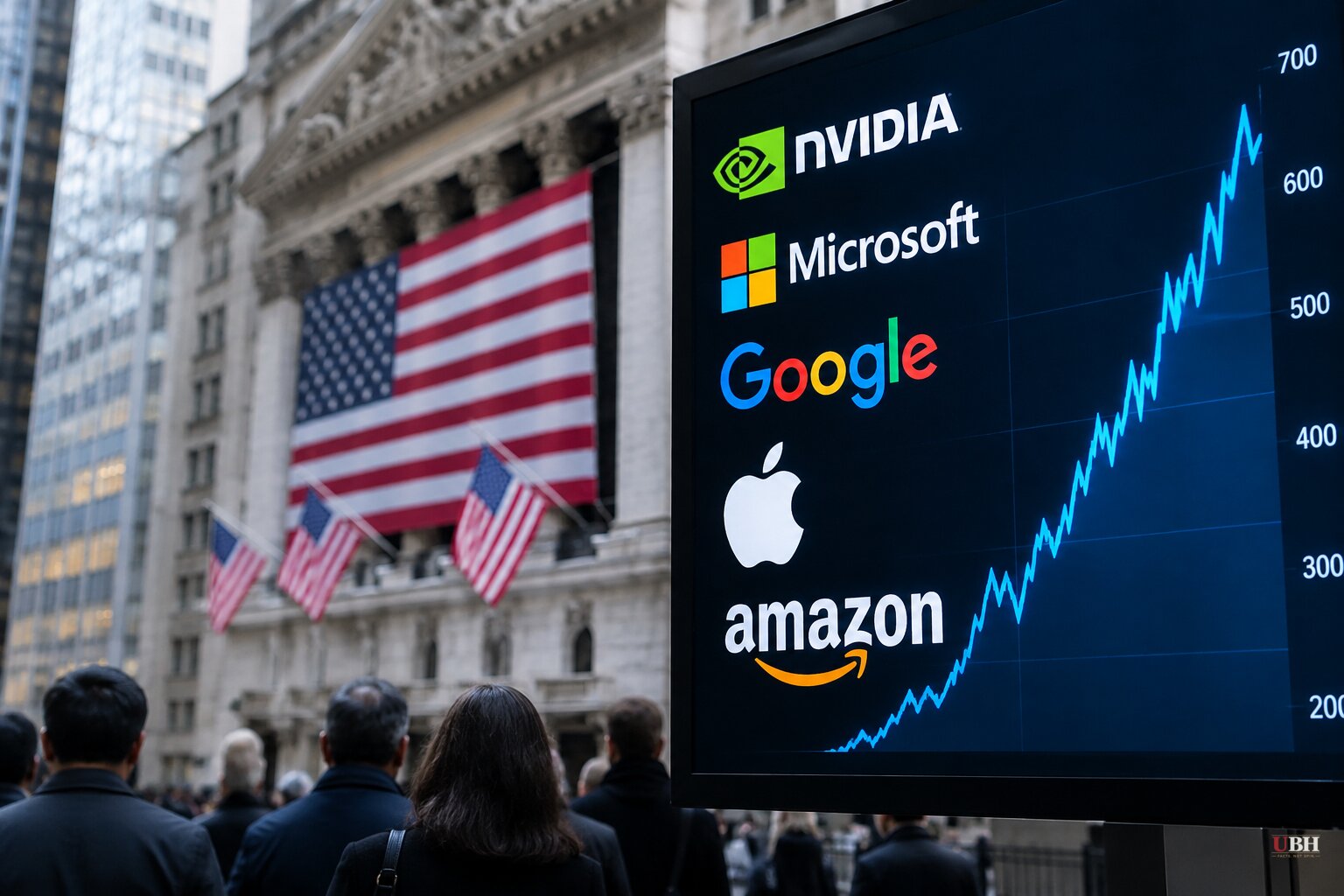
Public pension funds have a large stake in an industry that American politicians are increasingly attacking.
AI-linked stocks drove $138 billion in gains across 13 public-pension funds since 2022, according to a Wall Street Journal analysis published today, Oct. 23. The Journal reports the gains helped those funds dig out of losses from the last financial crisis. It also reports that AI-related equities make up roughly 8% to 10% of fund assets.
That is a big chunk of retirement money riding on a single theme.
A rough week for the trade
The numbers landed after two ugly sessions. On Wednesday, Oct. 21, a hotter-than-expected inflation report pushed the S&P 500 down 1.11% and the Nasdaq Composite down 1.88%. Both had their worst day since July.
Consumer prices rose 3.7% in September from a year earlier, up from 3.4% in August, according to the Bureau of Labor Statistics. Rising oil and gas prices were the main driver. The report strengthened bets that the Federal Reserve will raise rates further.
The damage was concentrated in the AI supply chain. Dell fell 11.3%, Oracle 8.8% and Marvell 8.7%. A benchmark semiconductor index dropped 4.3% and is down roughly 12% over the past week. Nvidia fell 3.2% and sits about 7.5% below the record high it hit earlier this month.
Thursday was worse. The Nasdaq fell 2.6%, and Treasury yields posted their biggest drop since 2023 as investors ran for safety. Shares of real estate investment trusts that lease data centers to hyperscalers such as Meta and Amazon also fell.
Steve Sosnick, chief strategist at Interactive Brokers, told CNN that "there's just so much good news priced into the chip sector right now" that stocks are vulnerable without fresh catalysts. "Trees don't grow to the sky," he said.
CNN also pointed to higher borrowing costs for the data center buildout and to Chinese chipmaker CXMT's announced progress on advanced memory chips as pressure points for chip stocks.
The $138 billion figure is a cumulative gain since 2022. A few bad sessions do not erase it, and the Journal's figure does not say how much of it was given back this week.
The political pushback
Scrutiny of AI is not confined to one party. Florida Gov. Ron DeSantis, a Republican, wrote on X Thursday: "Imagine a rogue AI agent liquidating your bank account and investment portfolio." He said that if rogue agents drained accounts at scale, "the AI company would go bankrupt and you wouldn't get made whole," and he suggested criminal liability for AI executives.
DeSantis was reacting to an Axios report that major U.S. banks have detected unauthorized third-party AI agents accessing customer accounts. Some of those agents were apparently taking actions independent of users' instructions.
The courts are also a front. Music publisher Reservoir Media filed federal lawsuits Wednesday against Anthropic and Suno. It alleges they used copyrighted songs, including Joni Mitchell's "Big Yellow Taxi" and Johnny Cash's "Ring of Fire," to train AI models without permission. An Anthropic spokesperson said the company disagrees with the allegations and "intend[s] to defend this case vigorously." Suno had not responded to a request for comment.
Who funds the buildout
The money question is now a political fight. BlackRock CEO Larry Fink wrote in a Wall Street Journal editorial this week that America faces the "biggest competition for capital" he has seen in 50 years. He wants more working Americans investing in hyperscale AI infrastructure and predicts a recession if the data center buildout is interrupted.
The National Public Pension Coalition, a group that advocates for public pensions, rejects that pitch. In its weekly newsletter it argued that Wall Street helped create the capital shortage by pushing employers away from defined-benefit pensions and toward individual retirement accounts. The group says pension funds held nearly a quarter of the U.S. stock market in 1990. It called Fink's warning "like a thief coming back to sell you what they stole."
That is the coalition's characterization. Fink's own stated argument is that interrupting the buildout would cost the economy.
Nvidia CEO Jensen Huang has made the investment case from the other direction. Touring Europe, he said a gigawatt-scale data center costs about $50 billion to build and could generate tens of billions in annual revenue, around $40 billion by his estimate. Those are Huang's projections, and the company selling the chips has an obvious stake in them.
Retirees and inflation
Inflation is squeezing the same retirees whose funds hold these stocks. New Mexico's Public Employees Retirement Association proposed a $25 million appropriation this week for a short-term cost-of-living adjustment. Executive Director Greg Trujillo would raise the retiree COLA to 1.5% over seven years, versus the base 0.5%. Members of the legislature's interim Investments and Pensions Oversight Committee asked for more details, and the proposal received no final action.
The open question is how much of the AI gain remains after this week's selloff. Whether Congress or state legislatures act against the industry is a second unknown. The Journal's analysis covers only 13 funds, so it is not a count of every public plan.
Sources used for this briefing
7 links from 6 independent newsrooms (syndicated copies of the same report count once)
These are the sources it draws on, linked so you can verify.


