
Unbiased headlines. Facts, not spin.
Unbiased Headlines is an independently owned news organization. We bring you the facts, not opinions, written fresh from 110+ named sources. Sources linked so you can verify it yourself.
 finance
Major Story (7/10)
Event date: October 19, 2026 ·
Hedge Funds Post Broadest One-Day Loss Since Covid as All Three Major Equity Strategies Fall More Than 1%
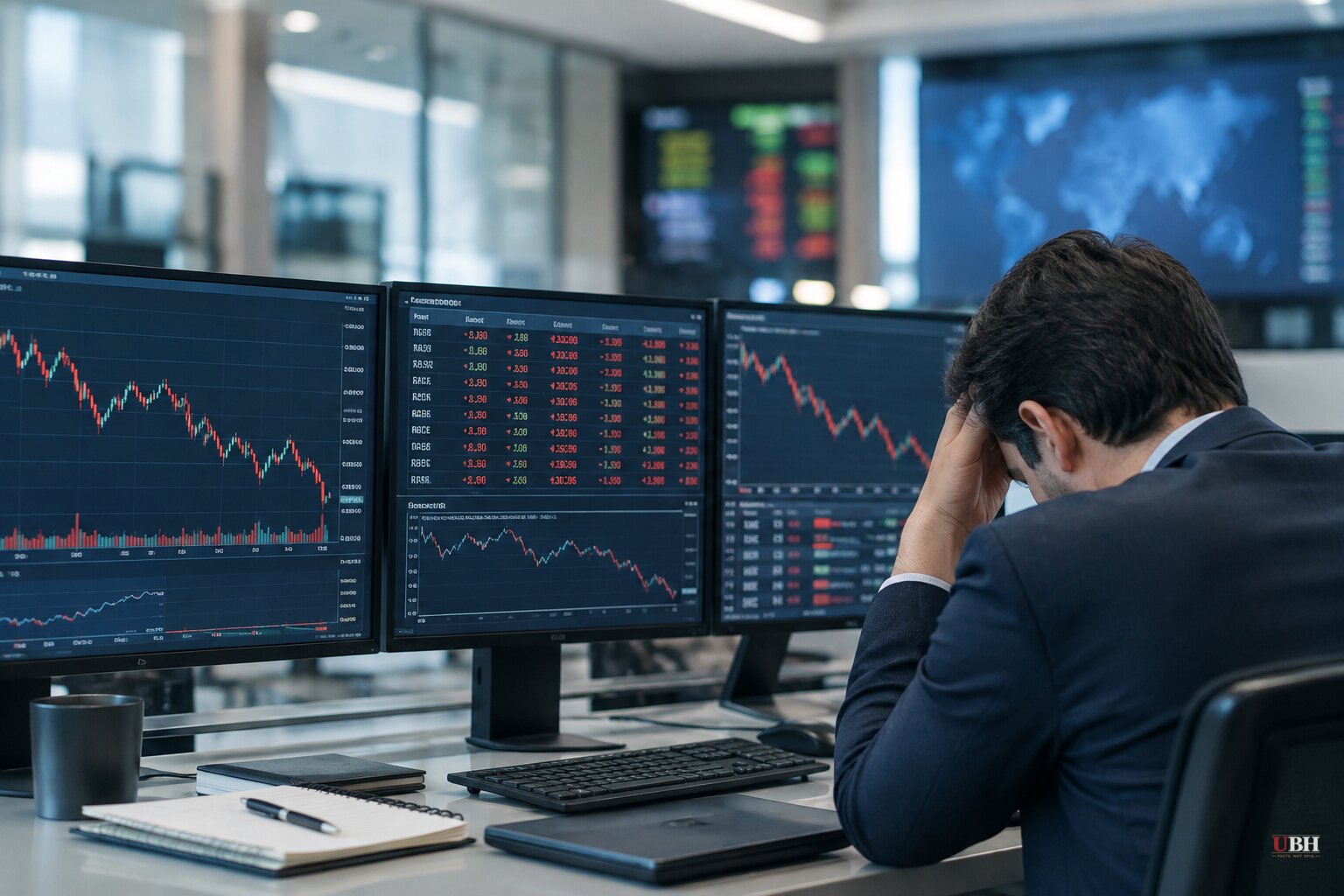
Since the Nasdaq's slide began in mid-October, the damage has moved from the AI stocks themselves to the funds that own them. Thursday, Oct. 22, brought the clearest sign yet.
Goldman Sachs' prime brokerage desk told clients that "for the first time since Covid, all three broad equity strategies fell more than 1% on the same day."
The numbers as of Thursday's close, per Goldman data:
- Global fundamental long-short funds fell 1.4%.
- Funds focused on telecom, media and technology averaged a 2.7% decline.
- Global systematic long-short funds fell 1.3%.
- Multi-strategy platforms fell 1.9%.
A threshold already crossed three times
The 1% mark comes on top of an earlier warning. Goldman noted that from Covid through the end of 2025, those same three strategies never all fell more than 80 basis points on the same day. That has now happened three times in 2026: Feb. 4, July 28 and Oct. 15.
Oct. 15 was the middle of a brutal week. Global fundamental long-short funds, the stock pickers, lost money every day and finished the week to Oct. 15 down 2.9%. They were still up 14.3% for the year at that point. Asia-focused managers took the worst of it, losing 6.8% in the first half of October. South Korea's Kospi fell 8% to a six-month low on Oct. 15, and Taiwan's market dropped more than 3%.
Funds were already running for the exits
Goldman data show hedge funds cut tech holdings over the five sessions through Oct. 15 at the fastest pace since the bank began tracking in 2016. Semiconductors produced the biggest dollar losses. Net leverage fell to 48.6%, a one-year low.
The Nasdaq 100 dropped 5.5% that week, its worst since April 2025. The Nasdaq Composite lost 4.5% and the S&P 500 lost 1.9%, both their worst weeks since June, after both indexes closed at records on Oct. 6.
Tech is still a heavy bet. It made up 23.5% of hedge funds' net global allocations, a level in the 90th percentile of the past five years, Goldman said.
Credit stress is also visible. CoreWeave shares dropped sharply in the selloff and yields on its bonds rose above 15%. Goldman upgraded the stock to buy while cutting its price target to $106 from $139.
Crowded trade or bubble?
Not everyone reads this as a verdict on AI. Bruno Schneller, managing partner at Erlen Capital Management, which invests in hedge funds, called it "less a fundamental rejection of AI and more a classic, high-velocity unwind of a crowded trade meeting a macro reality check."
Schneller pointed to hotter-than-expected U.S. inflation data, which raised expectations of further rate hikes and hit the most capital-intensive parts of the AI complex. The inflation data and the cost of borrowing are the proximate trigger he names. Investors are also questioning whether massive AI spending can pay off soon while borrowing costs stay high.
The market was not one-directional. The Nasdaq 100 rose 2% on Oct. 19, and the S&P 500 and Nasdaq both gained on Oct. 21 before Thursday's drop.
The leverage behind it
Hedge funds did not build these positions with their own cash alone. An analysis by CNBC found the five largest U.S. investment banks generated $67 billion in equities revenue in the first nine months of 2026, about $7 billion above last year's full-year record. Goldman led with more than $19 billion, up 57% from a year earlier. Morgan Stanley took about $17 billion and JPMorgan $15 billion.
Goldman reported a 96% jump in third-quarter equities financing revenue. JPMorgan CFO Jeremy Barnum acknowledged exceptionally strong demand for capital on the bank's earnings call.
The International Monetary Fund estimates hedge fund assets have reached $13 trillion, up from $4 trillion in 2013, with leverage driving much of the growth and potentially amplifying volatility in periods of stress.
The CNBC analysis cited the collapse of the hedge fund Situational Awareness during July's semiconductor selloff, when losses on heavily leveraged AI trades forced it to unwind its positions.
What to watch
So far, the analysis says, recent losses have been absorbed largely by the funds rather than the banks financing them. A broader correction in AI-related stocks would test that. With tech still near a quarter of hedge fund net holdings, it is unclear whether Thursday's drawdown was another leg of the unwind or the tail end of it.
Sources used for this briefing
7 links from 7 independent newsrooms (syndicated copies of the same report count once)
These are the sources it draws on, linked so you can verify.


