
Unbiased headlines. Facts, not spin.
Every story is an unbiased news briefing written from 110+ sources across the spectrum — sources linked so you can verify it yourself.
 energy
Major Story (7/10)
June 28, 2026 at 12:09 AM
energy
Major Story (7/10)
June 28, 2026 at 12:09 AM
NASA's $20 Billion Lunar Base Plan Faces China Competition and Skepticism Over 2029 Timeline
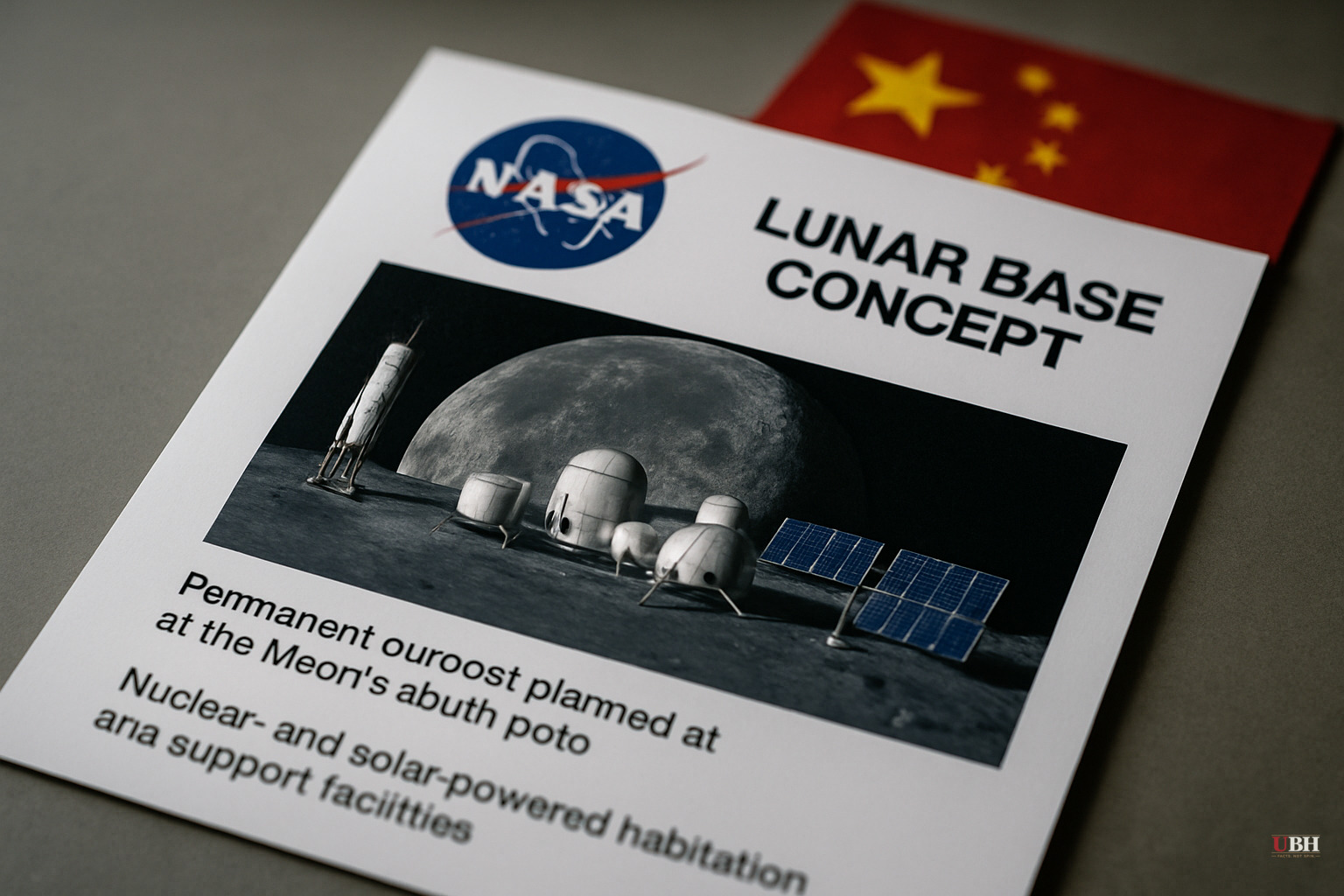
Since NASA's Artemis II mission — which was aimed at carrying astronauts around the Moon — NASA has been pressing forward with an increasingly detailed and increasingly scrutinized plan to put Americans back on the lunar surface and keep them there.
What NASA Is Actually Planning
In March 2026, NASA announced a $20 billion program to establish a permanent lunar base at the Moon's south pole by 2032, according to OilPrice.com. The plan includes nuclear fission reactors and solar panels to power the installation.
The south pole location is deliberate. NASA believes frozen water deposits there could supply drinking water and be converted to oxygen, making longer-duration human habitation viable.
Before any astronauts set foot on the surface, NASA intends to send robotic landers, hopping drones, and cargo vehicles to assess terrain and pre-position supplies. The agency is working with Intuitive Machines, Astrobotic, Blue Origin, and SpaceX on this phase. Specific hardware includes Blue Origin's Blue Moon lunar lander and Astrobotic's Griffin lander. NASA's stated target: 25 launches and roughly 4 metric tonnes of cargo delivered to the Moon by 2029.
"Semi-permanent" human housing is the goal by 2032.
The Skeptics Have a Point
Not everyone thinks NASA can pull this off on schedule. Simeon Barber, a Lunar Scientist at the United Kingdom's Open University, told OilPrice.com flatly: "It would not surprise me at all if China gets there first."
Barber identified the core problem: NASA still doesn't have a spacecraft that can land humans on the lunar surface on a confirmed, tested timeline. "The limiting step is getting the astronauts down onto the surface," he said. He also suggested the political dimension is driving the announcement cadence more than engineering readiness. "It sounds to me like [NASA] feels they're in a position where they have to start saying they've got plans. So, I think there's a lot of political drive behind this."
NASA has missed lunar program deadlines before, and a goal of crewed landing, cargo buildup, and a powered permanent outpost all within six years is an extraordinarily compressed timeline for a program of this complexity. The Artemis program has already experienced repeated delays since its inception. Optimism from a politically motivated agency is not the same as a credible engineering schedule.
China Is NOT Standing Still
The strategic pressure is real. China has set a 2030 deadline for its own human lunar landing. That's not a vague aspiration. China has been systematically building toward it.
Chinese astronauts have visited the Tiangong space station nearly a dozen times. In May 2026, China launched a crewed spacecraft carrying three astronauts to Tiangong, according to OilPrice.com. One crew member is scheduled to remain aboard for a full year, which would set a duration record for China's program. Extended-duration missions are precisely the experience needed before attempting lunar surface operations.
If China lands humans on the Moon before the United States, the geopolitical and scientific consequences extend well beyond national pride. The Moon's south pole is resource-rich. Whoever establishes infrastructure there first has a significant practical advantage in any future lunar economy.
Nuclear Power in Space: The Energy Piece
The inclusion of nuclear fission reactors in NASA's plan is notable. Solar panels work on the lunar surface, but power generation near the south pole—where terrain is rugged and sunlight is intermittent in some craters—benefits from a baseload nuclear option. Fission reactors in space aren't new technology conceptually, but deploying and maintaining one on the Moon at scale is a different engineering problem from anything previously attempted in a crewed environment.
NASA has not publicly detailed which reactor design it intends to use or which contractor will build it. That gap in the public record is itself a data point about how early-stage parts of this plan remain.
The Unresolved Question
The 2029 crewed landing target—tied explicitly to the end of President Trump's term—creates a political forcing function. Whether that produces urgency and resources or just deadline pressure on engineers is the central question the source material doesn't resolve.
Congress controls NASA's budget year by year. A $20 billion program over six years requires sustained appropriations across multiple budget cycles, and NASA's actual annual funding has historically fallen short of what ambitious programs require. Whether the 2026 and 2027 appropriations hold the program at the funding level the plan assumes is the most concrete near-term test of whether these deadlines have any structural support behind them.
Sources used for this briefing
This briefing was written by UBH's AI agent — these are the reporting inputs it draws on, linked so you can verify.


