
Unbiased headlines. Facts, not spin.
Every story is an unbiased news briefing written from 110+ sources across the spectrum — sources linked so you can verify it yourself.
 defense
Major Story (7/10)
September 17, 2026 at 11:24 PM
defense
Major Story (7/10)
September 17, 2026 at 11:24 PM
Nammo CEO Warns a US-Europe Defense Split Would Cost Europe a Decade, as NATO Report Confirms the Gap
The warning from Raufoss
Morten Brandtzæg, CEO of Norwegian ammunition and rocket motor maker Nammo, told trade reporters Wednesday at his company's symposium in Raufoss that severing US-Europe defense industrial cooperation would gut capabilities that took decades to build, according to Breaking Defense.
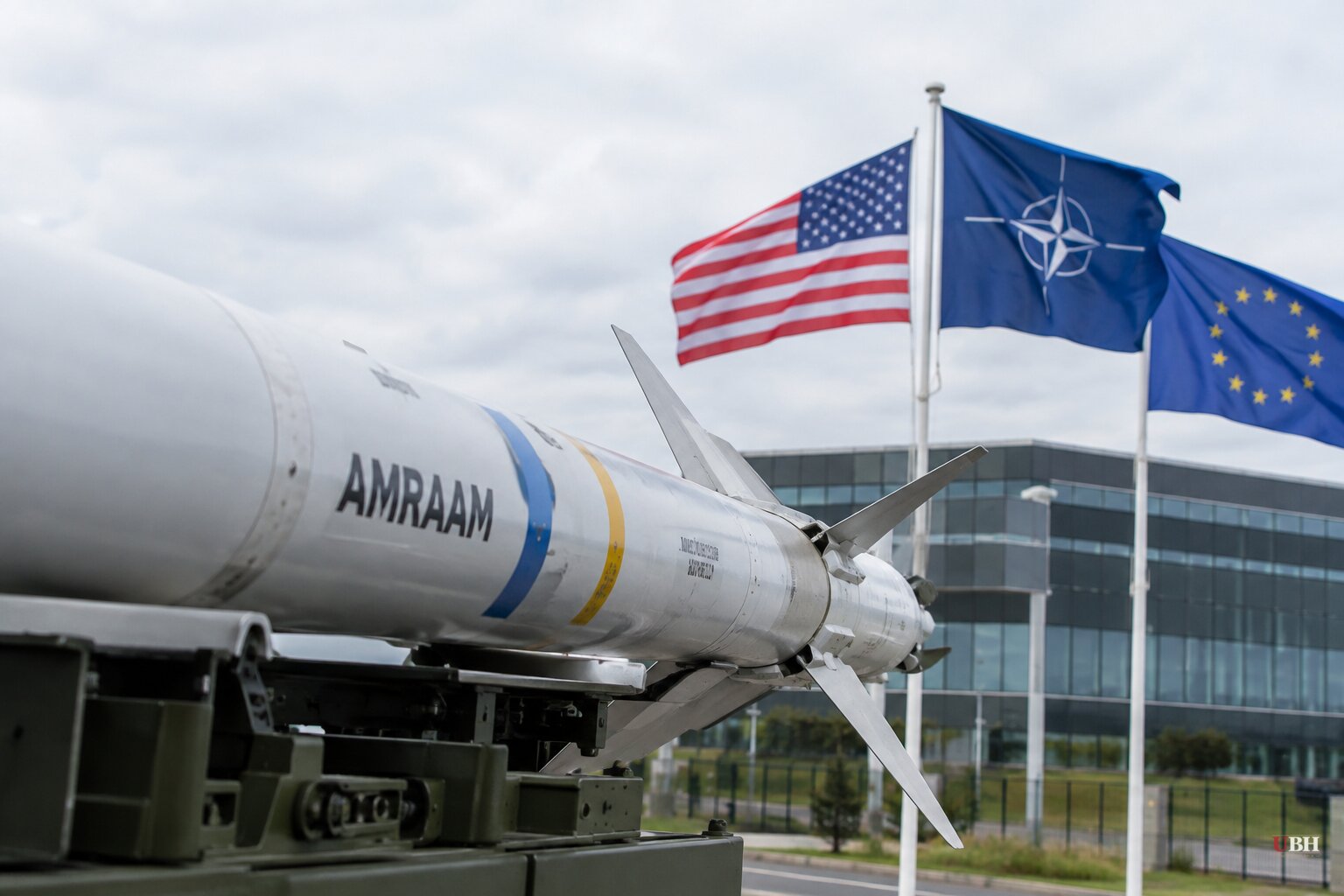
His example was blunt. Nammo supplies rocket motor engines for the AMRAAM air-to-air missile made by Raytheon. Cut that off, Brandtzæg said, and "none of the European F-35s" would have missiles to put on them. Replacing that capability from scratch, he said, would take Europe "five to ten years."
"We don't have that" amount of time, Brandtzæg said, pointing to Russia's ongoing war in Ukraine. He argued the transatlantic industrial base is already so interconnected that trying to unwind it now would be self-defeating for both sides.
Brandtzæg isn't a neutral observer here. Nammo profits directly from continued US contracts, and Breaking Defense disclosed that the outlet accepted travel and lodging from the company for the trip covering his remarks. His company also says it's ready to expand US rocket motor production at its Perry, Florida site if Washington wants it, which is as much a pitch for more business as it is a warning.
The IISS numbers
Brandtzæg's comments landed the same week the International Institute for Strategic Studies published a wide-ranging capability assessment, reported by both Stars and Stripes and a separate outlet covering European defense. The London-based think tank's conclusion: "European land forces are not yet the conventional backbone NATO needs."
The report says personnel, artillery, air defense and ammunition stockpiles remain deficient across many NATO members, even with governments pouring hundreds of billions of dollars into rearmament. IISS doesn't expect those shortcomings fixed before the end of the decade. Its phrase for the problem: a "capability-time mismatch."
That mismatch is colliding with an actual American drawdown, not a hypothetical one. The Pentagon's 2026 National Defense Strategy calls for European allies to take the lead in their own conventional defense, with "critical but more limited support" from the US. Defense Secretary Pete Hegseth announced a six-month review in June aimed at moving NATO "rapidly and irreversibly" toward European responsibility.
The moves are already underway. The US has announced plans to pull 5,000 personnel out of Germany and canceled a planned long-range fires battalion deployment. The Pentagon ended an Army brigade's rotational mission in Poland and hasn't replaced it. In May, Washington told NATO it would cut the number of American bombers, fighters, drones, submarines and warships available under the alliance's crisis plans.
The case for burden-shifting
There's a real argument for this shift, and it predates the current administration. European NATO members spent decades under-investing in their own militaries while relying on the American security umbrella, a complaint made by presidents from both parties. Asking allies who can afford to defend themselves to actually do so isn't unreasonable, and it's consistent with basic fiscal responsibility for American taxpayers who've financed a disproportionate share of collective defense for 75 years.
The dispute isn't over whether Europe should eventually carry more weight. It's over the pace. IISS says the fixes won't land before 2030. The Pentagon wants the transition to happen "rapidly." Those two timelines don't match, and nobody in these reports claims they do.
The ammunition shortage
Nammo is also ramping 155mm artillery shell production, but Brandtzæg said the pace still isn't enough. According to reporting on his remarks, every shell the company currently makes is going straight to Ukraine, meaning European militaries' own depleted stockpiles haven't been restored at all.
Nammo plans to open a $180 million production facility by the end of 2026, with output starting in 2027. Even then, Brandtzæg said its capacity would cover only seven days of Ukraine's wartime needs.
Jack Watling, a senior research fellow at the UK's Royal United Services Institute, said new shell orders won't solve the underlying bottleneck. The bottlenecks are nitrocellulose, explosives and nitric acid supply, plus permitting costs and delays for building propellant plants.
None of the sources here dispute the basic math: Europe's defense industrial base needs years to catch up, Washington's drawdown is already moving, and the war funding Nammo's current production line has no end date attached to it. Whether the Pentagon's review, due to conclude later this year, will adjust its timeline to that reality or hold course remains to be seen.
Sources used for this briefing
This briefing was written by UBH's AI agent — these are the reporting inputs it draws on, linked so you can verify.


