
Unbiased headlines. Facts, not spin.
Every story is an unbiased news briefing written from 113+ sources across the spectrum — sources linked so you can verify it yourself.
 tech
Notable (5/10)
September 28, 2026 at 06:01 AM
tech
Notable (5/10)
September 28, 2026 at 06:01 AM
Nabla Bio Says Its AI-Designed Antibodies Could Reach Human Trials Within Two Years
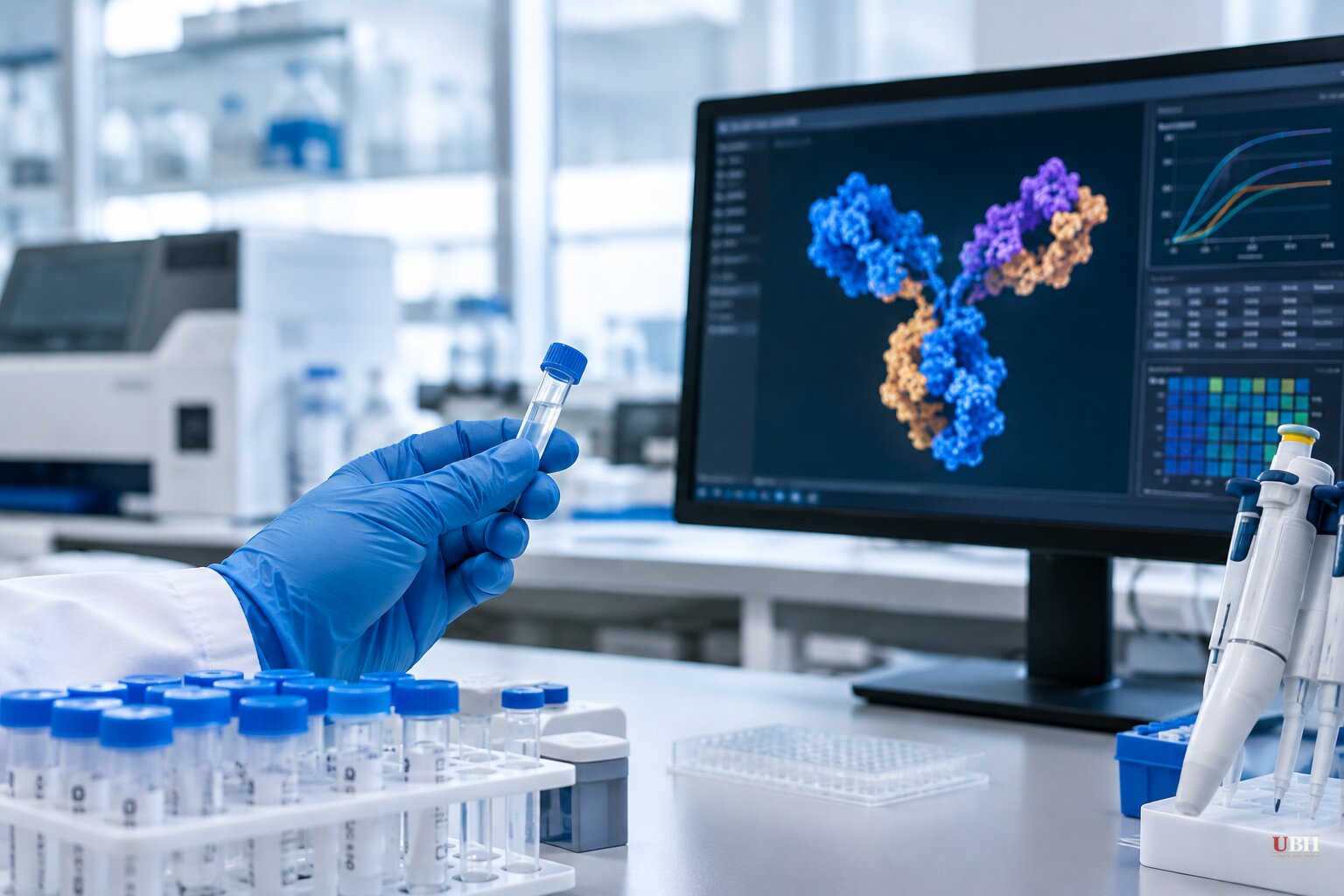
Nabla Bio, a Massachusetts biotech backed by OpenAI, says its newest AI model has produced antibody candidates good enough to move toward human testing within the next one to two years.
The model, called JAM-2, generated antibody candidates against 26 different biological targets, according to figures reported by Crypto Briefing and TradingView. For nearly half those targets, the candidates hit picomolar to single-digit nanomolar binding affinities, a measure of how tightly an antibody locks onto its target. More than half the candidates met developability criteria, the standard checklist for whether a molecule can actually be manufactured as a drug, without any additional optimization.
One number stands out: JAM-2 hit up to an 11% success rate for direct on-cell binding against GPCRs. GPCRs are a class of cell-surface receptors that make up the target for roughly a third of all FDA-approved drugs, according to the reports, but designing new antibodies against them has historically been slow and difficult. Some of the AI-generated candidates also activated cellular signaling pathways, not just blocking a target but turning something on, which opens the door to a different category of drugs called agonists.
The model reportedly showed strong epitope precision too, hitting 30% to 70% of user-defined epitopes, meaning researchers could tell the software exactly where on a protein they wanted the antibody to bind and it largely delivered.
How it works and who's paying for it
JAM-2 uses what the reports describe as test-time scaling, a technique borrowed from the reasoning approach used in systems like OpenAI's ChatGPT. Instead of spitting out one answer, the model iterates through multiple rounds of reasoning to refine its output.
The money behind this is real and already flowing. Nabla expanded its partnership with Takeda in a deal announced in October 2025, with upfront payments in the double-digit millions and potential milestone payments exceeding $1 billion, according to both reports. After that expansion, Nabla said it expected first-in-human data from its AI-designed molecules within one to two years.
Nabla isn't alone in this race. Chai Discovery, another OpenAI-backed company, raised $400 million in a Series C round at a $3.8 billion valuation in mid-2026, per the same reporting. But Chai has not confirmed any clinical assets or trial timelines, a meaningful gap next to Nabla's stated roadmap.
What's proven and what isn't
These are computational and lab-bench results generated and reported by Nabla itself. No independent trial data exists yet. No Investigational New Drug application has been filed with the FDA as of this writing. "Human trials within one to two years" is a company projection tied to a business partnership, not a scheduled clinical event.
Binding affinity and developability are legitimate, measurable lab metrics, and matching or beating traditional antibody discovery methods, if the numbers hold up under independent scrutiny, would be a real advance. GPCR targeting alone has stumped drug developers for years. But "picomolar affinity in the lab" and "safe, effective drug in a patient" are two very different bars, and only one of them has been cleared so far.
A fair skeptic would also note that AI drug-discovery claims have a track record of outrunning actual regulatory filings across the industry. Investors and patients alike have seen splashy preclinical numbers before that didn't translate into approved therapies. That history doesn't disprove Nabla's numbers, but it's a reason to wait for the IND filing rather than the press release.
The concrete things to watch: whether Nabla actually files an IND application within its stated one-to-two-year window, whether the Takeda-partnered molecules outperform traditionally developed candidates once they're tested in animals and then humans, and whether Chai Discovery or any other competitor announces its own clinical milestone first. Until one of those happens, this is a lab result with a big price tag attached, not a drug.
Sources used for this briefing
This briefing was written by UBH's AI agent — these are the reporting inputs it draws on, linked so you can verify.


