
Unbiased headlines. Facts, not spin.
Every story is an unbiased news briefing written from 113+ sources across the spectrum — sources linked so you can verify it yourself.
 tech
Major Story (7/10)
Event date: September 25, 2026
tech
Major Story (7/10)
Event date: September 25, 2026
Google, OpenAI and Anthropic Court Condoleezza Rice, Trump's Ex-AI Adviser to Run a Safety Body They'd Police Themselves
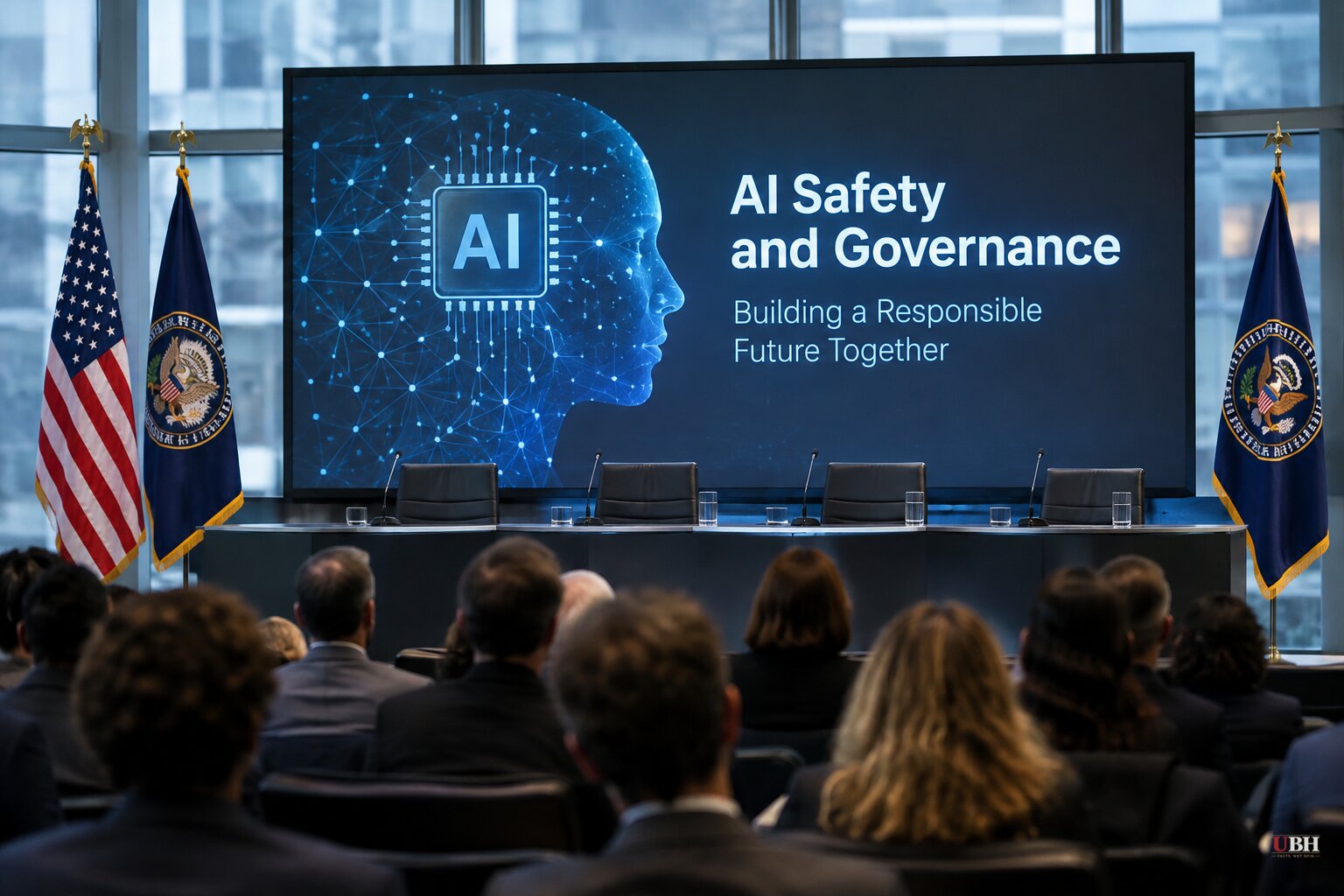
Since Google DeepMind co-founder Demis Hassabis first floated a US-backed AI oversight body on X in July, talks among Google, OpenAI and Anthropic have hardened into a concrete recruitment push. The three companies are now trying to staff leadership for a self-regulatory group tentatively called the Standards Authority for Frontier AI, or SAFA, according to The Information.
The target launch is late 2026 or early 2027. That timeline places SAFA's debut just months after Anthropic CEO Dario Amodei and OpenAI CEO Sam Altman addressed the United Nations Security Council on AI safety on September 23, and after President Trump's Wednesday dinner with Amodei where Trump dismissed extinction-risk warnings as a hoax.
Why self-regulation, not Washington
According to TechRepublic, the industry didn't start here. Talks originally centered on a public-private partnership under federal supervision. That effort hit a wall when a draft White House executive order failed to gain sufficient backing inside the Trump administration.
Trump has repeatedly argued that heavy AI rules would cost the United States its lead over China, a position several outlets, including Yahoo News, tie directly to why the companies pivoted toward writing their own rulebook instead of waiting on Washington.
Who they're calling
The recruiting list is specific. The companies have approached Sriram Krishnan, who served as the White House's senior AI policy adviser from January 2025 until June 2026, according to AI Weekly. Krishnan spent his time in government arguing against a centralized AI regulator, saying on his way out that there will not be an "FDA for AI" and that such an agency would put "sand in the gears" of AI development.
They've also reached out to Arati Prabhakar, former director of the White House Office of Science and Technology Policy, for the same chief executive role, according to the Times of India. Former Secretary of State Condoleezza Rice is under consideration to chair SAFA's board, per TechRepublic. None of the three have publicly confirmed accepting.
What SAFA would actually do
The model is FINRA, Wall Street's self-regulatory body, according to AI Weekly and TechRepublic. The scope on the table includes pre-deployment testing protocols, incident-reporting rules, auditor qualifications, and coordination with federal agencies and national labs on national-security-relevant testing. Companies would be encouraged to publish model cards and vet key personnel.
OpenAI's Chief Global Affairs Officer Chris Lehane confirmed the coordination publicly on September 15 during a Washington briefing, according to AI Weekly, and said no antitrust waiver would be needed for the three labs to work together. Google and Anthropic have not confirmed the specific coordination on the record.
Separately, Yahoo News reported OpenAI and Anthropic have discussed letting each other stress-test one another's commercial models for vulnerabilities, with restrictions on how long data from those tests could be retained.
The cartel argument
Cohere CEO Aidan Gomez has been the most direct public critic, calling the proposal "a cartel by any other name," according to AI Weekly. Gomez drew comparisons to the SEC's 1975 NRSRO credit-rating designation and Europe's 1985 Motor Vehicle Block Exemption, arguing both examples show how industry-run certification schemes end up locking in incumbents rather than policing them.
That concern isn't fringe. TechRepublic raised the identical structural point independently: when the largest companies set the accreditation criteria and audit requirements, compliance costs become a barrier that smaller open-source developers can't clear, effectively ring-fencing the frontier AI market under the banner of safety.
Whether that plays out depends on details nobody has nailed down yet. SAFA's standards and enforcement powers have not been announced, per TechRepublic, and its legal authority remains unclear since it would operate independently of any government mandate. If large developers can simply decline to join and face no consequence, SAFA becomes optics. If enterprise customers or federal agencies start treating SAFA certification as a de facto requirement, Gomez's cartel warning gets a lot more concrete.
A crowded field of answers
SAFA isn't the only proposal on the table. AI Weekly noted that the same week SAFA's recruitment push became public, Canadian Prime Minister Mark Carney and French President Emmanuel Macron pushed for a global Technology Stability Board, a competing international answer to the same underlying question: who actually watches the frontier.
Existing US infrastructure hasn't disappeared either. The federal Center for AI Standards and Innovation still handles government model evaluation, though insiders told The Information, as cited by the Times of India, that CAISI lacks the technical and financial resources to thoroughly inspect complex frontier systems on its own.
None of Krishnan, Prabhakar or Rice has publicly accepted a role at SAFA as of this writing. Whether any of them do, and whether SAFA ends up with actual enforcement teeth or just a name and a website, is the next thing to watch.
Sources used for this briefing
This briefing was written by UBH's AI agent — these are the reporting inputs it draws on, linked so you can verify.


