
Unbiased headlines. Facts, not spin.
Unbiased Headlines is an independently owned news organization. We bring you the facts, not opinions, written fresh from 110+ named sources. Sources linked so you can verify it yourself.
 finance
Major Story (7/10)
finance
Major Story (7/10)
MSCI Proposes Moving Indonesia to Standalone Status, Dropping It From Emerging-Market Indexes
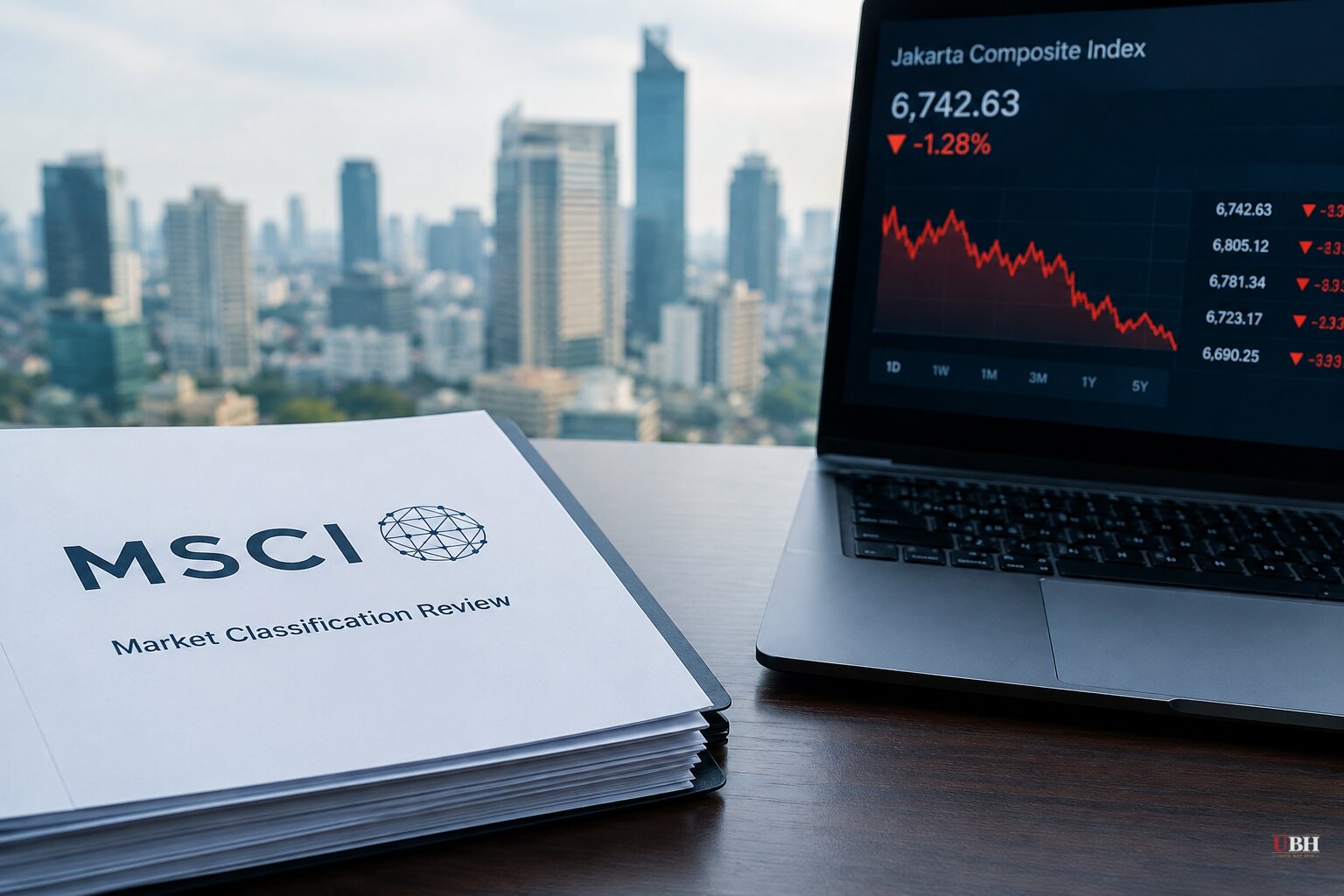
MSCI has told global investors that Indonesia's stock market no longer belongs in its emerging-market indexes. It is consulting on a plan to reclassify the country as a "standalone" market, a category below frontier.
The announcement came Thursday, Oct. 15, U.S. time, which was Friday morning in Jakarta. Indonesian stocks fell by the most since January as the news landed, according to Bloomberg.
What MSCI said
The index provider said reforms announced by Indonesian authorities have not gone far enough. "Significant concerns remain around market dysfunction, including continued suspected coordinated trading behavior and lack of evidence of meaningful enforcement," MSCI said in its statement.
MSCI also said a move to frontier status would not fit the problem. "Feedback from market participants suggests that a reclassification to frontier markets would not properly recognize the depth of the market problems," it said.
MSCI said investors had raised concerns about opaque ownership structures, concentrated shareholdings and suspected coordinated trading, which it said undermine the market's investability.
Standalone status is for markets that meet the criteria for neither the emerging nor the frontier index. Argentina, Lebanon and Palestine are among the markets that hold it today. None of them is in Asia.
The timeline
MSCI will consult market participants through April 30, 2027. It said it will then proceed with reclassification unless it sees clear evidence of material improvement in market governance and functioning. A final decision is expected by June 30.
This has been building all year. In January, MSCI froze Indonesia in its indexes and warned of a downgrade to frontier status over opacity in ownership and trading behavior. Stocks suffered what Bloomberg called a historic rout.
The numbers
The benchmark Jakarta index is down roughly 32% in 2026, the worst performance of any major equity market. Foreign investors have been net sellers of about $4.7 billion worth of shares this year.
Moody's and Fitch have both cut their outlooks on Indonesia's sovereign rating to negative, citing reduced policymaking credibility.
The mechanics of a standalone listing are blunt. Passive funds that track MSCI's emerging-market indexes would have to sell Indonesian holdings. Active managers who are measured against those benchmarks could trim exposure too. Without a place in either the emerging or frontier benchmark, demand from foreign money could weaken further, adding pressure on prices and liquidity.
What Jakarta has done
Indonesian authorities have announced a package of measures. They include enhanced disclosure of shareholders holding more than 1%, more detailed investor classifications, and a roadmap toward a 15% minimum free-float requirement for listed companies.
MSCI has said investors need to see consistent implementation and proof that the changes materially improve how the market works.
The Indonesia Stock Exchange said it has taken concrete steps to improve transparency and integrity. CEO Jeffrey Hendrik said the exchange respects MSCI's independence in its assessments and will ask for clarification on the basis for the announcement.
The Financial Services Authority and Finance Minister Suahasil Nazara, who chairs the country's financial stability board, did not immediately respond to requests for comment.
A dissent from inside the market
Not everyone who follows the market agrees with MSCI's severity. Angus Mackintosh, an ASEAN specialist at Aletheia Capital in Singapore, said the move does not reflect the health of the vast majority of listed companies or of the Indonesian economy. "Grouping Indonesia with Lebanon, Palestine, and Argentina does not make sense," he said.
Mackintosh called the decision a surprise and said it seemed heavy-handed given the steps Indonesia has taken on transparency and free float. He also pointed to the weak spot, which is the same one MSCI cites. The main problem, he said, is Indonesia's "failure to sanction those obviously involved in stock manipulation."
He described the episode as "a wake-up call for Indonesia."
Enforcement is the open question
MSCI's complaint is not mainly about rules on paper. Disclosure thresholds and free-float targets are on the books or on a roadmap. The index provider is pointing at suspected coordinated trading and the absence of visible enforcement against it.
That is a test the government controls. Whether regulators bring cases against manipulators before the consultation closes on April 30, 2027, and whether MSCI counts them as meaningful, will shape the June 30 decision.
Sources used for this briefing
7 links from 7 independent newsrooms (syndicated copies of the same report count once)
These are the sources it draws on, linked so you can verify.


