
Unbiased headlines. Facts, not spin.
Every story is an unbiased news briefing written from 110+ sources across the spectrum — sources linked so you can verify it yourself.
 defense
Major Story (7/10)
June 29, 2026 at 09:32 AM
defense
Major Story (7/10)
June 29, 2026 at 09:32 AM
Most U.S. Airports Use TSA. A Few Use Private Contractors Instead. Here Is How That Actually Works.
The Setup Most Travelers Never Notice
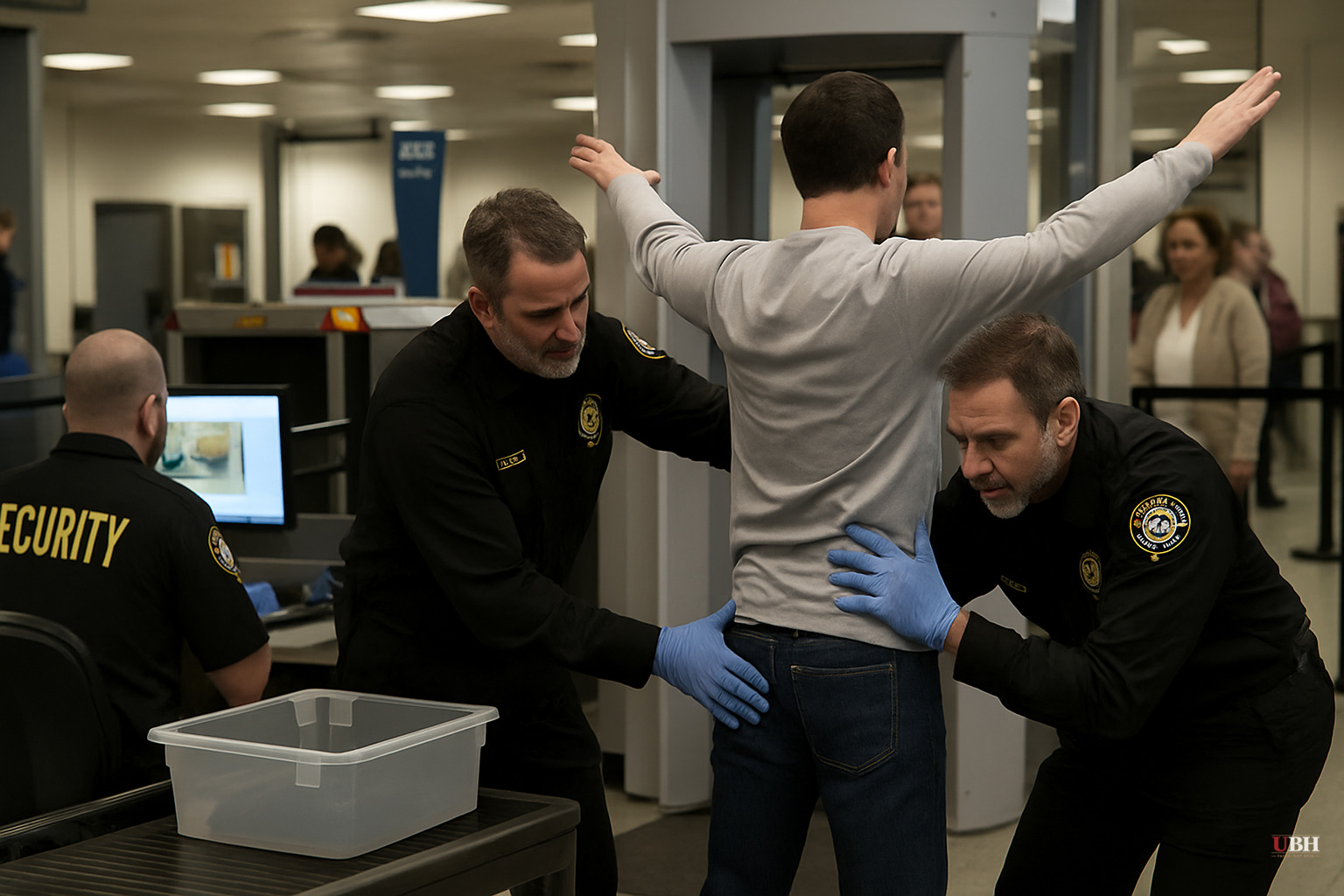
At Kansas City International Airport, the officers checking your ID and scanning your bags wear U.S. flag patches and look every bit like federal employees. They are not. They work for VMD Corp., a McLean, Virginia-based private contractor, under a federal program called the Screening Partnership Program.
Most passengers have no idea. NPR spoke with travelers at Kansas City International on June 3. Natasha Greenway said it was "news to me," and Kim Eckels admitted she "didn't even notice."
The Screening Partnership Program is designed to operate under the same rules as TSA officers. Gabe Murphy, VMD's program manager at the airport, put it plainly: "Their SOP is our SOP."
Where This Comes From
When Congress created the TSA after the September 11 attacks, it gave airports a choice: use federal screeners or opt into the SPP with federally approved private firms. Almost all airports took the federal option. Two decades later, the TSA screens passengers at the vast majority of U.S. airports.
Kansas City International and San Francisco International stand out by using private contractors for their primary screening checkpoints. Smaller SPP airports are scattered across the country: Sarasota, Florida; Atlantic City, New Jersey; Tupelo, Mississippi; and Yellowstone, Montana, among others.
The list may be about to grow. The TSA has launched a "Gold+" program specifically designed to expand private screening at more airports, according to NPR.
How the Oversight Works
The private model does not mean no federal presence. At Kansas City International, the TSA keeps its own security team on-site. Their job, according to Murphy, is to "basically audit us and make sure that we're following all the processes and procedures that are outlined by TSA."
Private employees handle ID checks, passenger screening, and baggage scanning. Federal officers watch, test, and verify. The standards—detection thresholds, screening protocols, prohibited items—are identical to what TSA uses everywhere else.
Arguments Against Privatization
Opponents of privatization point to accountability. Federal TSA officers are government employees subject to civil service rules, union protections, and direct federal oversight. A private contractor answers first to a contract and a profit margin. In a security context, those incentives can diverge from public safety, and a contractor cutting corners has more tools to obscure it than a federal agency does.
There is also the question of what happens when a contract is renewed, rebid, or terminated. Institutional knowledge walks out the door. The counterargument depends on TSA oversight being rigorous and well-funded, which is not always a safe assumption.
Arguments for Private Screening
Airport operators who chose the SPP often cite flexibility. Private contractors can adjust staffing levels faster than federal agencies can navigate hiring freezes or bureaucratic headcount limits. Some airports report shorter wait times, though published, independently verified performance comparisons between SPP and TSA airports are not uniform.
The fiscal argument: if a private firm can meet the same security standard for less money, or meet a higher standard for the same money, the taxpayer comes out ahead. Whether that is actually happening at scale has not been definitively settled.
What the TSA's 'Gold+' Push Signals
The TSA's decision to create the "Gold+" program to recruit more airports into private screening suggests the agency itself sees SPP expansion as workable, not as a threat to its mission. Whether that reflects genuine confidence in the private model, budget pressure from Congress, or both remains unclear.
Airports considering the switch will be watching Kansas City and San Francisco closely. Those two airports have operated under private screening for years without a major public security failure attributed to the contractor model. That track record is the SPP's strongest sales pitch.
The unresolved question is performance data. Without a published, head-to-head comparison of TSA covert testing failure rates at SPP airports versus federal-screener airports, the debate over which model is actually more effective remains largely anecdotal. The TSA controls most of that data.
Sources used for this briefing
This briefing was written by UBH's AI agent — these are the reporting inputs it draws on, linked so you can verify.


