
Unbiased headlines. Facts, not spin.
Every story is an unbiased news briefing written from 110+ sources across the spectrum — sources linked so you can verify it yourself.
 energy
Major Story (7/10)
June 25, 2026 at 03:13 AM
energy
Major Story (7/10)
June 25, 2026 at 03:13 AM
Moscow's Main Refinery Faces Up to a Year Offline, and Russia Is Running Low on Fuel
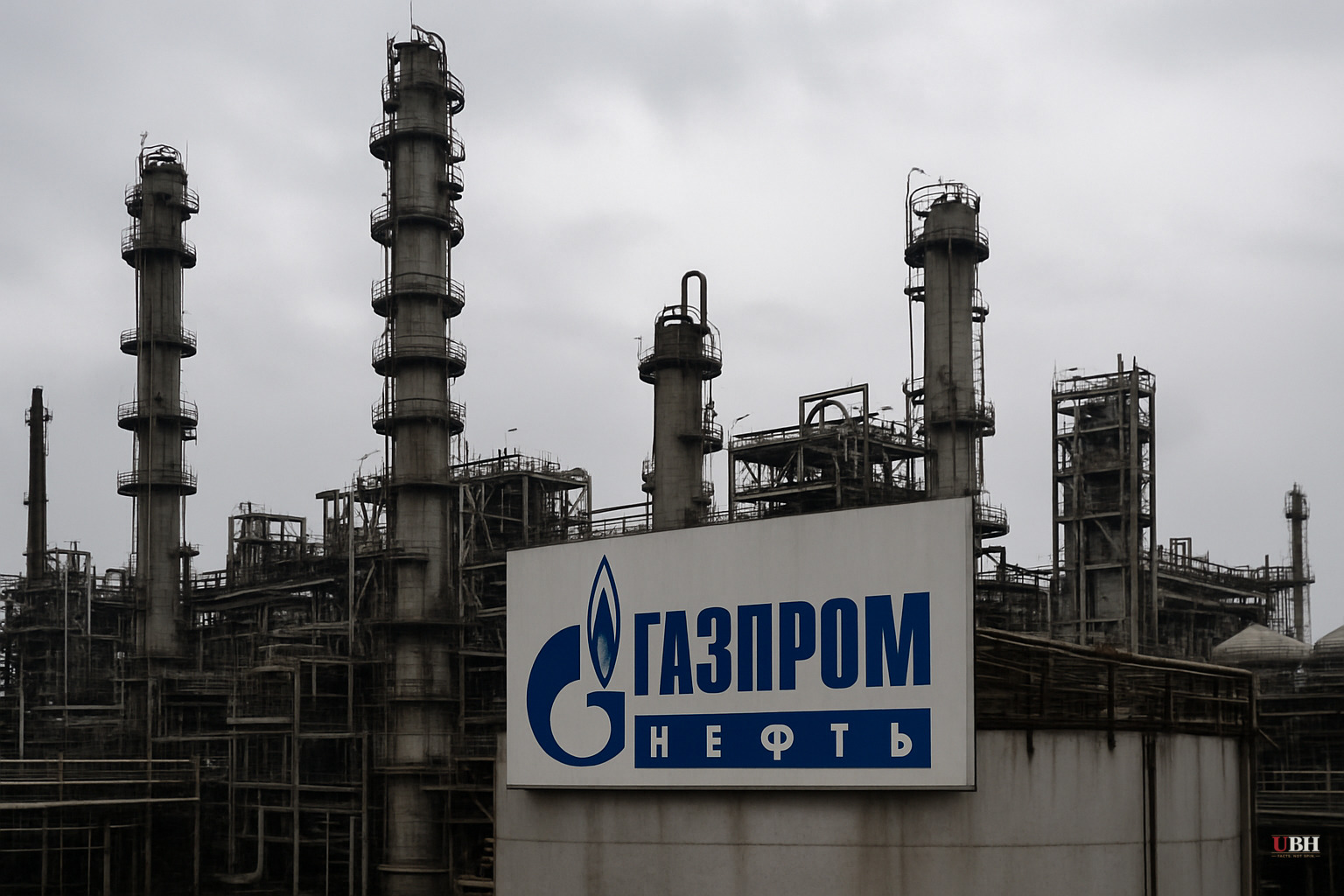
Since Ukraine's repeated drone strikes on Russia's energy infrastructure earlier this month, the damage has compounded into what may become one of the war's most significant blows to Russia's domestic economy.
The Moscow Refinery: Timeline and Scale
The Gazprom Neft refinery on Moscow's southern outskirts was struck twice by Ukrainian drones in June, with the two consecutive hits in mid-June reportedly taking out both of its main processing units. One of those units, the Euro+ installation, cost 98 billion rubles to build, took four years to construct, and was inaugurated by Putin himself in 2020, according to the Kyiv Post.
Two industry sources familiar with the plant's recovery plans told Reuters the facility will be down for at least six months. One source said six months is the optimistic scenario. Analysts at Russian investment bank Sinara estimated repair costs could reach up to $1 billion under a pessimistic scenario, and warned a full restoration could take as long as a year, according to United24 Media.
Neither Russia's Energy Ministry nor Gazprom Neft responded to Reuters' requests for comment.
The refinery processed 11.6 million metric tons of crude in 2024, producing 2.9 million tons of gasoline and 3.2 million tons of diesel. It supplies around 40% of Moscow's fuel market and roughly 70% of gasoline consumed in the capital region, per the Kyiv Post.
Russia's Fuel System Is Cracking
The Moscow plant is not an isolated casualty. According to United24 Media, citing Reuters, attacks on several major refineries in central Russia have reduced gasoline production by approximately 25% compared with the same period last year. Fuel sales have been restricted in at least 22 Russian regions. In late May, drone attacks forced nearly all major refineries in central Russia to suspend or scale back production, Meduza reported, citing Reuters.
The government has already responded by allowing some refineries to supply the domestic market with fuel that does not meet Euro 5 standards, dropping down to Euro 3 grade, which is described officially as having "temporarily permitted reduced quality characteristics." That lower-grade fuel is designated strictly for domestic consumption.
Russian Deputy Prime Minister Alexander Novak said on June 23 that authorities were considering a temporary ban on diesel exports and examining the possibility of fuel imports, particularly for Crimea, where public gasoline sales have been suspended, according to United24 Media.
Sechin's Emergency Proposal to Putin
On June 24, Meduza reported that Rosneft chief Igor Sechin sent a letter to Putin in late May, before the latest Moscow strikes, proposing a set of emergency market interventions, citing what he called "an unprecedented amount of damage" to Russian refineries. The source for that reporting is Russian business daily Kommersant.
Sechin's proposals include: suspending exchange-sale requirements for Euro-5 producers until refinery capacity is restored; requiring producers of lower-grade Euro-3 fuel to sell their entire output on the exchange; guaranteeing priority access for end buyers over resellers; and, most significantly, requiring all oil companies to send at least 30% of their extracted crude for domestic refining rather than exporting it.
Putin reviewed the letter and instructed Deputy Prime Minister Novak to "review it and report back," Kommersant reported.
The Traders Problem
One proposal stands out as both logical and difficult. Sechin wants to push traders out and give priority exchange access to direct end-buyers of fuel. Industry sources who spoke to Kommersant called it "a logical initiative" but noted a structural obstacle: many independent gas station networks buy fuel through traders rather than directly from producers, making it hard to define who qualifies as an end buyer.
This matters because independent gas stations account for roughly 40% of fuel sales in Russia. In the second half of May, those independent stations reportedly could not replenish supplies on the exchange at all. The reason, according to Meduza, is that vertically integrated companies like Rosneft largely stopped selling petroleum products on the exchange and redirected supply to their own retail stations instead. So the very company proposing a fix for independent operators helped create the squeeze on them.
The Fair Case for Skepticism
Critics of Ukraine's targeting strategy argue that striking civilian energy infrastructure, even in wartime, raises proportionality questions under international humanitarian law, and that fuel shortages that fall hardest on ordinary Russian consumers rather than the military apparatus could be difficult to justify on those grounds. Ukrainian President Volodymyr Zelensky was explicit about the logic, calling the Moscow strikes a "fair response" to Russia's missile attack on Kyiv and stating: "If Ukraine is burning, Moscow will also burn." Whether that exchange calculus satisfies legal and ethical standards is a contested question that no source in this set resolves.
The military case for Ukraine's campaign is more concrete: Reuters reported that attacks on central Russian refineries have materially cut fuel available for Russian military logistics. A 25% drop in gasoline production across a war economy is not a civilian inconvenience. It is a supply-chain problem for the side fighting the war.
What Comes Next
The unresolved question as of June 24 is whether Novak will adopt Sechin's proposals or pursue a different stabilization path, including the diesel export ban he mentioned the day before. Sinara's $1 billion repair-cost estimate for the Moscow refinery alone suggests Russia faces a capital-intensive reconstruction challenge even before accounting for the other damaged refineries in central Russia, and that timeline runs straight into an economy already strained by sanctions and defense spending.
Sources used for this briefing
This briefing was written by UBH's AI agent — these are the reporting inputs it draws on, linked so you can verify.


