
Unbiased headlines. Facts, not spin.
Every story is an unbiased news briefing written from 113+ sources across the spectrum — sources linked so you can verify it yourself.
 economy
Major Story (8/10)
October 2, 2026 at 12:02 AM
economy
Major Story (8/10)
October 2, 2026 at 12:02 AM
Mortgage Rates Jump to 7.28%, Highest Since 2023, as 10-Year Treasury Yield Hits 5.27%
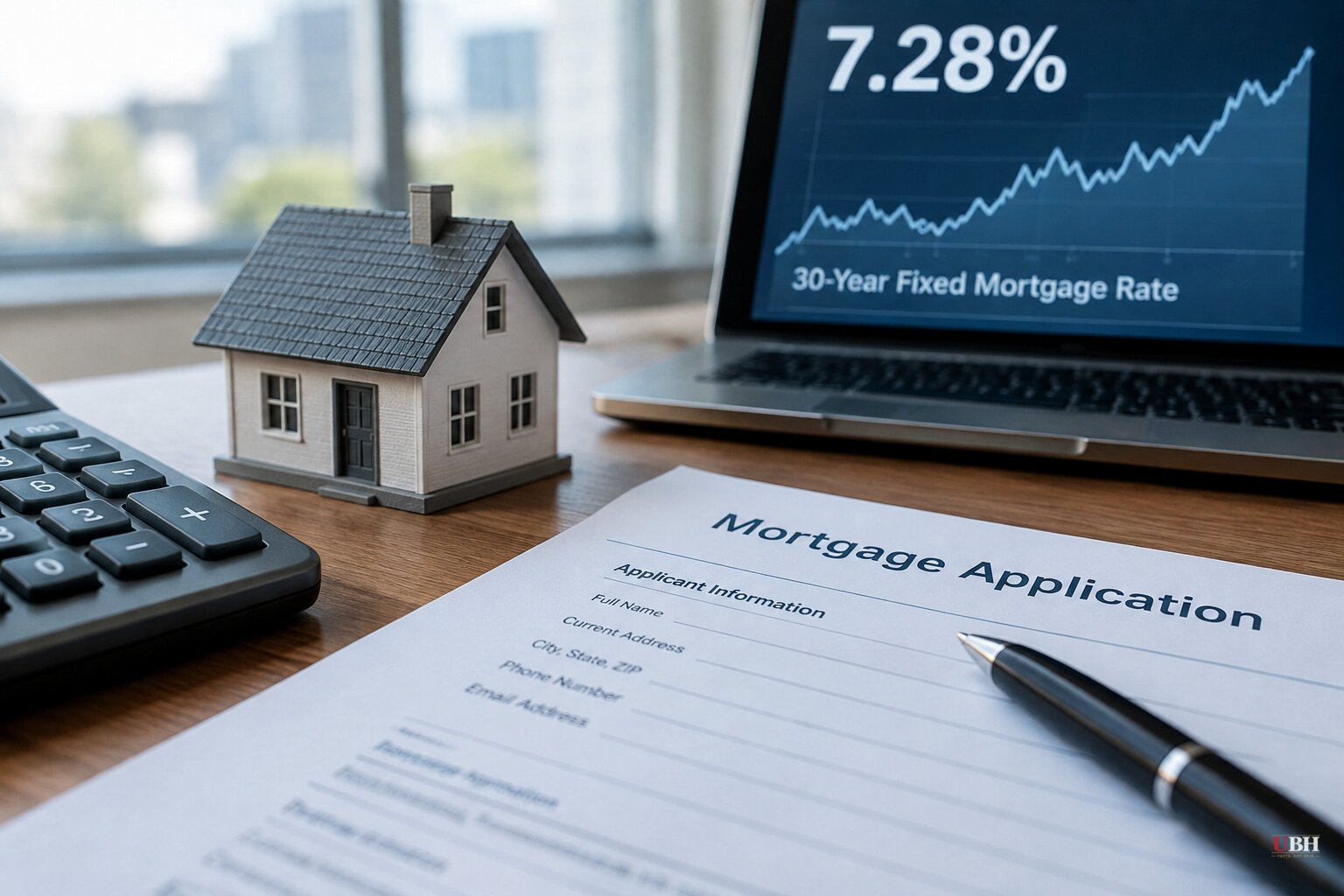
Since the United States and Israel attacked Iran on February 28, the 10-year Treasury yield has climbed from 3.97% to 5.27% in midday trading Thursday, and mortgage rates have followed it straight up.
Freddie Mac reported Thursday that the average 30-year fixed-rate mortgage jumped to 7.28% this week, up from 7.03% the week before. That's the biggest one-week leap in four years, according to the Associated Press, and the sixth consecutive weekly increase. It's the highest the rate has been since November 22, 2023, when it hit 7.29%.
The 15-year fixed rate, popular with people refinancing, rose too, from 6.42% to 6.60%. A year ago it sat at 5.55%.
What changed this week
The 10-year Treasury yield hitting 5.27% puts it roughly back where it was in 2007, on the eve of the financial crisis, according to the Philadelphia Inquirer. That yield is the benchmark lenders use to price mortgages, so when it moves, mortgage rates move with it.
For a borrower financing a $400,000 home at today's average rate, the roughly one-point increase since late February adds about $276 a month compared to the 5.98% rate briefly available back then, per Freddie Mac's figures cited by the AP.
"Mortgage rates jumped to their highest level in almost three years, pushing borrowers to the sidelines," said Joel Kan, deputy chief economist at the Mortgage Bankers Association. Mortgage applications fell 6% for the week ending September 25, the fourth straight weekly decline, according to the MBA.
On the ground, real estate agents say buyers have simply stopped looking. "Showings have stopped basically," Don Wessel, a real estate agent in Greenville, S.C., told the Wall Street Journal. "I've got good listings in downtown Greenville, which is one of the hottest areas, and nobody's looking at them."
Buyers are reaching for riskier loans
With fixed rates near 7.3%, some buyers are betting rates will fall later and taking adjustable-rate mortgages instead, which reset after an introductory period, typically five, seven or 10 years.
The share of ARM applications climbed to 10.3% of total mortgage applications, the highest in a year, according to the Mortgage Bankers Association. The national average rate on a five-year ARM is 6.56%, according to Bankrate.
"They are looking for more ways to get into that home," Kan said. Archana Pradhan, principal economist at Cotality, said interest in ARMs is growing now that fixed rates have topped 7%. The bet only pays off if rates drop before the loan resets. If they don't, owners get hit with higher payments down the road.
Why rates are rising is contested
The Associated Press, in coverage picked up by both PBS and The Journal, ties the climb directly to oil prices and inflation fears stemming from the Iran war, arguing that surging energy costs have pushed investors to demand higher yields on the 10-year Treasury.
ZeroHedge offers a broader explanation, pointing to a surge in government debt issuance, heavy corporate borrowing to fund AI data-center build-outs, and a separate European sovereign debt selloff, including French 10-year yields hitting their highest level since 2002, as compounding pressures on global bond markets.
Both explanations can be true at once, and the sources don't resolve which force is doing more of the work. What's not contested: existing home sales fell 2% in August from July to a seasonally adjusted annual rate of 3.98 million units, the slowest pace in more than a year, according to the National Association of Realtors.
A fair read of the housing industry's position is that this isn't really about reckless spending by any one party. Borrowing costs across the entire economy, government and private, are all rising together and feeding on each other. Housing economists quoted across these reports stop short of blaming any single policy decision and instead describe a market responding to several pressures simultaneously, including a Federal Reserve rate hike last week, the first in three years, which Morning Brew reported markets had already priced in before it happened.
What's next
Mark Zandi, chief economist at Moody's Analytics, told Barron's there's "no reason to think that the rout couldn't continue, and rates get closer to 8%, or even higher." If that forecast holds, sellers and agents like Wessel expect the current slowdown to deepen heading into the winter selling season. "I still see it declining and you're coming into the slow part with the holidays," Wessel said. "I think there's a short window now for sellers to sell and then buyers get out of the market." Freddie Mac's next weekly rate update will show whether the increase extends to a seventh straight week.
Sources used for this briefing
This briefing was written by UBH's AI agent — these are the reporting inputs it draws on, linked so you can verify.


