
Unbiased headlines. Facts, not spin.
Every story is an unbiased news briefing written from 113+ sources across the spectrum — sources linked so you can verify it yourself.
 economy
Notable (6/10)
Event date: September 25, 2026
economy
Notable (6/10)
Event date: September 25, 2026
Jobless Claims Fall to 197,000, Lowest Three-Week Stretch Since 1969
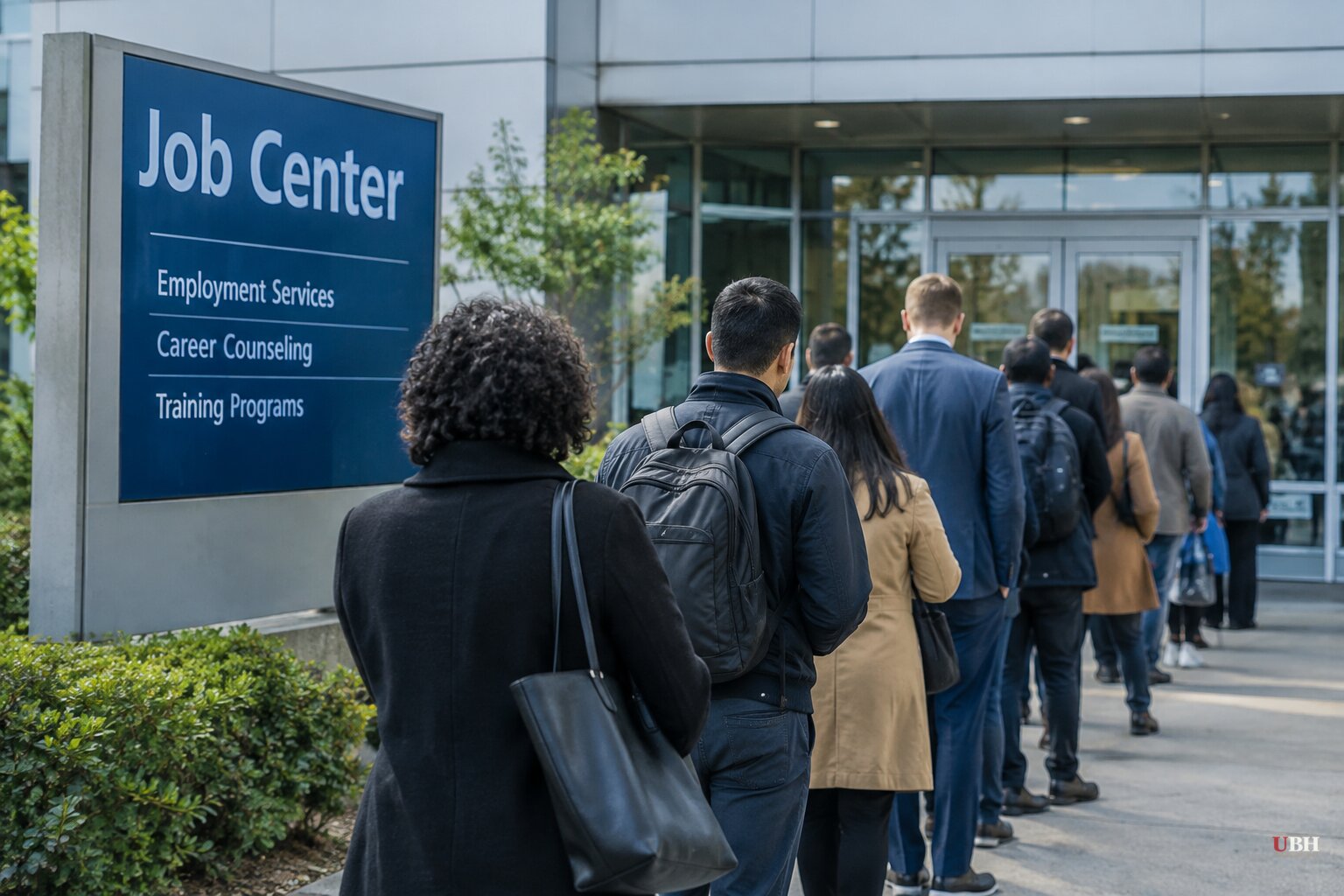
Claims Drop, Layoffs Stay Rare
The Labor Department reported Thursday that initial applications for unemployment benefits fell to 197,000 for the week ended September 26, down 1,000 from a revised 198,000 the week before, according to Reuters. That beat the 200,000 forecast from economists polled by the wire service.
Claims have now held below 200,000 for three straight weeks. TheStreet reported that's only the ninth week since 1969 that's happened, and every one of those weeks came after the pandemic.
The four-week moving average, which smooths out weekly noise, dropped to 200,000, down 2,500 from the prior week and roughly 34,000 lower than a year ago, according to TheStreet.
Year-to-date, claims are averaging just under 210,000 through September, according to Breitbart. That's the lowest January-through-September average since 1969. No year from 1970 through last year came close.
Continuing claims, people still collecting benefits week to week, fell 11,000 to 1,701,000 for the week ended September 19, the lowest level in three years, according to both Reuters and TheStreet. The four-week average of continuing claims dropped to 1,723,750, the lowest since May 2023, running below year-ago levels for 34 straight weeks.
Layoffs Down, Hiring Still Lukewarm
Separately, outplacement firm Challenger, Gray & Christmas reported that announced layoffs dropped 18% in September to 43,281, down 20% from a year earlier and down 43% for the third quarter overall, according to Reuters.
Hiring plans jumped to 90,787 announcements in September, up sharply from a weak 12,325 in August. But that's still down 23% from last September, and the lowest hiring-plan total for any September since 2011. Challenger said the usual seasonal hiring surge simply didn't show up this year, with companies in a wait-and-see period.
Carl Weinberg, chief economist at High Frequency Economics, told Reuters that strong corporate profits and resilient consumer demand are shielding workers from layoffs for now. His warning: "At some point, elevated energy costs and material prices will force firms to lay off marginal workers to protect profit margins, but there is no sign of that here."
Energy costs are elevated because of the war between the US and Israel against Iran, which began February 28 and has pushed diesel prices to record highs, according to Reuters and ABC News.
The Fed Already Hiked Into This
Last month, the Federal Reserve raised its benchmark rate by 25 basis points to a range of 3.75% to 4.00%, its first hike in three years, and signaled further increases are coming, Reuters reported.
Stephen Stanley, chief US economist at Santander US Capital Markets, told Reuters that historically low layoffs raise a new risk the Federal Open Market Committee is watching: an overheating labor market. "We do not appear to be close to that result yet," he said, "but this is a new risk that the FOMC appears to be watching."
Financial markets priced in roughly a 37.1% chance of another rate hike at the Fed's October 27-28 meeting, down from about 68.6% a week earlier, according to CME's FedWatch tool as cited by Reuters. An Institute for Supply Management survey released Thursday showed factory-gate inflation pressures building, which Reuters said makes it unlikely that August's cooler inflation readings will hold.
The Hiring Gap
Despite rare layoffs, actual job creation remains modest. Employers have added an average of 80,000 jobs a month so far in 2026, including 162,000 in August, according to the Associated Press's Paul Wiseman, writing for ABC News.
That's an improvement over 2025, when monthly job growth averaged just 9,700. The AP attributed that 2025 slowdown to high interest rates and President Trump's trade policy at the time, which it said discouraged hiring. That framing is the AP's own characterization, not a claim tied to a named economist in the jobs data itself, and it's worth separating the two: the claims and layoff numbers measure what businesses actually did, not why they did it.
Matthew Martin, senior US economist at Oxford Economics, told the AP that "jobless claims continue to defy expectations and remain exceedingly low, dovetailing with the JOLTS report's layoff rate which shows that while businesses aren't hiring at a rapid pace, they are reticent to let their current crop of workers go."
Tuesday's JOLTS report, cited by ABC News, showed job openings fell in August, layoffs fell, and the number of workers quitting their jobs, a sign of confidence in finding new ones, ticked down slightly.
The Labor Department is scheduled to release its September jobs report next week. Forecasters surveyed by FactSet expect employers added 90,000 jobs with unemployment holding at 4.1%, according to Ground News. That would keep 2026 hiring well below the 166,000 monthly average from 2023 and 2024, and nowhere near the 491,000-a-month pace during the 2021-2022 post-lockdown hiring boom.
The open question is whether a labor market this tight, combined with war-driven energy inflation and a Fed that just started hiking again, forces the October 27-28 FOMC meeting into a harder call than markets currently expect. Financial markets currently price in roughly a 37.1% chance of another hike, down sharply from about 68.6% the prior week, according to CME's FedWatch tool. That number could move fast if the ISM's inflation signal holds up in next month's data.
Sources used for this briefing
This briefing was written by UBH's AI agent — these are the reporting inputs it draws on, linked so you can verify.


