
Unbiased headlines. Facts, not spin.
Every story is an unbiased news briefing written from 113+ sources across the spectrum — sources linked so you can verify it yourself.
 economy
Major Story (8/10)
October 1, 2026 at 10:23 PM
economy
Major Story (8/10)
October 1, 2026 at 10:23 PM
Global Crop Prices Jump 13% in Q3, Biggest Quarterly Surge Since the 2022 Ukraine Invasion
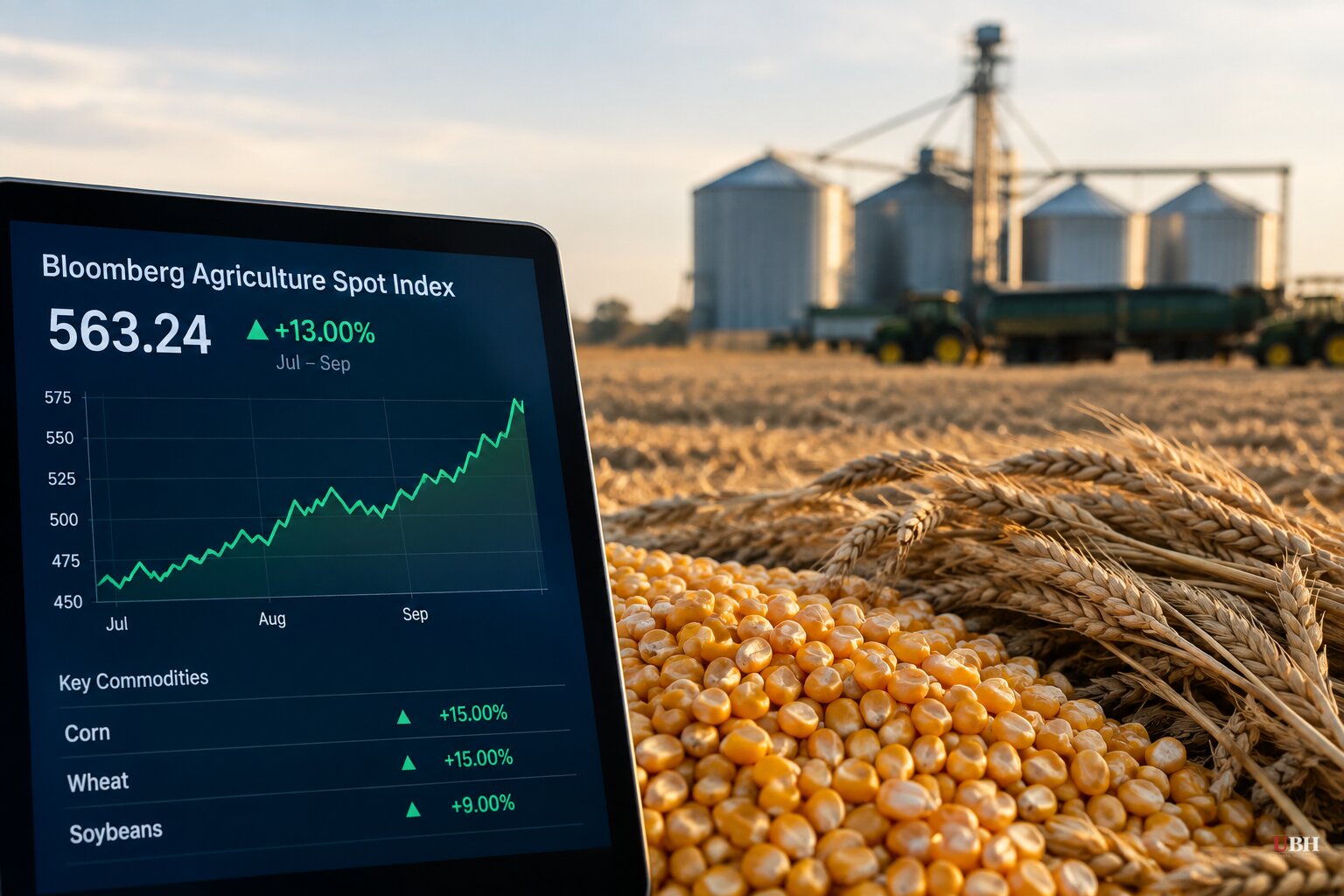
Global crop prices just had their worst quarter for consumers since Vladimir Putin's tanks rolled into Ukraine. The Bloomberg Agriculture Spot Index, which tracks 10 major crops including corn, soybeans, wheat, coffee, sugar and cocoa, rose 13% in the third quarter, according to Bloomberg. That's the biggest quarterly jump since March 2022.
Corn and wheat each climbed 15% on the Chicago Board of Trade. Soybeans gained 13%. This isn't one bad harvest. It's a basket-wide move hitting right as central banks worldwide are already fighting sticky inflation.
Why it's happening
Three things are doing the damage, according to Bloomberg's reporting. First, intensifying fighting between Russia and Ukraine has choked exports out of the Black Sea, a critical global supply route for grain and oilseeds. Importers across Asia and Africa are scrambling for other sources.
Second, extreme weather hammered wheat and corn production across the U.S. and Europe this growing season. Third, a strengthening El Niño, on track to rank among the strongest on record, is squeezing output of tropical crops like palm oil and cocoa. India just wrapped its weakest monsoon season in a decade, according to Bloomberg, which raises the odds of a smaller harvest and higher food prices there too.
ZeroHedge's coverage adds a fourth pressure point its competitors didn't flag: a crisis in the Strait of Hormuz, which it says is compounding diesel costs and the expense of moving food around the world. That specific claim doesn't show up in Bloomberg's own reporting or in the other outlets covering this story, so take it as ZeroHedge's independent framing rather than a corroborated fact.
The China wildcard
China kept buying U.S. soybeans through September, and optimism built ahead of a summit between the U.S. and Chinese leaders late last month, according to Bloomberg. Following that meeting, Beijing agreed to cut tariffs on U.S. wheat and corn as part of a broader trade package, while keeping additional duties on U.S. soybeans in place.
That's a win for American wheat and corn farmers specifically. Soybean growers didn't get the same relief. Bloomberg's reporting notes that a sustained pickup in Chinese demand, not just a one-time tariff cut, will be needed to keep that optimism translating into stronger grain markets going forward. Whether Beijing follows through at scale is still an open question.
The USDA threw cold water on it, briefly
After the U.S. Department of Agriculture released its latest supply report on September 30 projecting ample U.S. grain stocks, Chicago futures tumbled before clawing back some losses, according to The Edge Malaysia. By midday Singapore time on October 1, the Bloomberg Agriculture Spot Index was actually down 1.4%, with corn at $4.99 a bushel, wheat at $6.7275 a bushel, and soybeans at $12.8575 a bushel.
So the quarterly number is real and it's the worst since 2022, but the rally isn't moving in a straight line. The USDA's supply outlook is the main thing standing between this story and an even bigger spike.
Where it lands on a Jamaican grocery receipt
Columnist Janiel McEwan, writing in The Gleaner, traced how this shows up thousands of miles from any wheat field or Ukrainian port. The UN Food and Agriculture Organization's Food Price Index averaged 133.3 points in August, up 1.9% from July and the highest reading since late 2022, McEwan reported. Every one of the five commodity groups the FAO tracks—cereals, sugar, vegetable oils, dairy and meat—rose that month.
STATIN trade data show cereals among Jamaica's largest food-import categories, McEwan noted, with wheat and maize making up the bulk of the raw material behind flour, bread, animal feed and packaged goods on store shelves. A war in the Black Sea and a failed monsoon in India don't stay overseas. They show up as a higher number on a receipt in Montego Bay, or a Kroger in Ohio, months later.
What's unresolved
The U.S.-China agreement cut tariffs on wheat and corn but left soybean duties in place, and Bloomberg's own reporting says continued Chinese purchases are what's propping up grain sentiment right now, not a done deal. Whether Beijing keeps buying at volume, whether El Niño peaks as strong as forecasters expect, and whether Russia-Ukraine peace talks make any real progress will decide if this quarter was the top of the spike or just the start of a longer squeeze on grocery bills heading into 2027.
Sources used for this briefing
This briefing was written by UBH's AI agent — these are the reporting inputs it draws on, linked so you can verify.


