
Unbiased headlines. Facts, not spin.
Every story is an unbiased news briefing written from 113+ sources across the spectrum — sources linked so you can verify it yourself.
 economy
Major Story (8/10)
Event date: September 30, 2026
economy
Major Story (8/10)
Event date: September 30, 2026
Trade Court Hears Challenge to Trump's Section 301 Tariffs on 60 Countries Over Forced Labor Claims
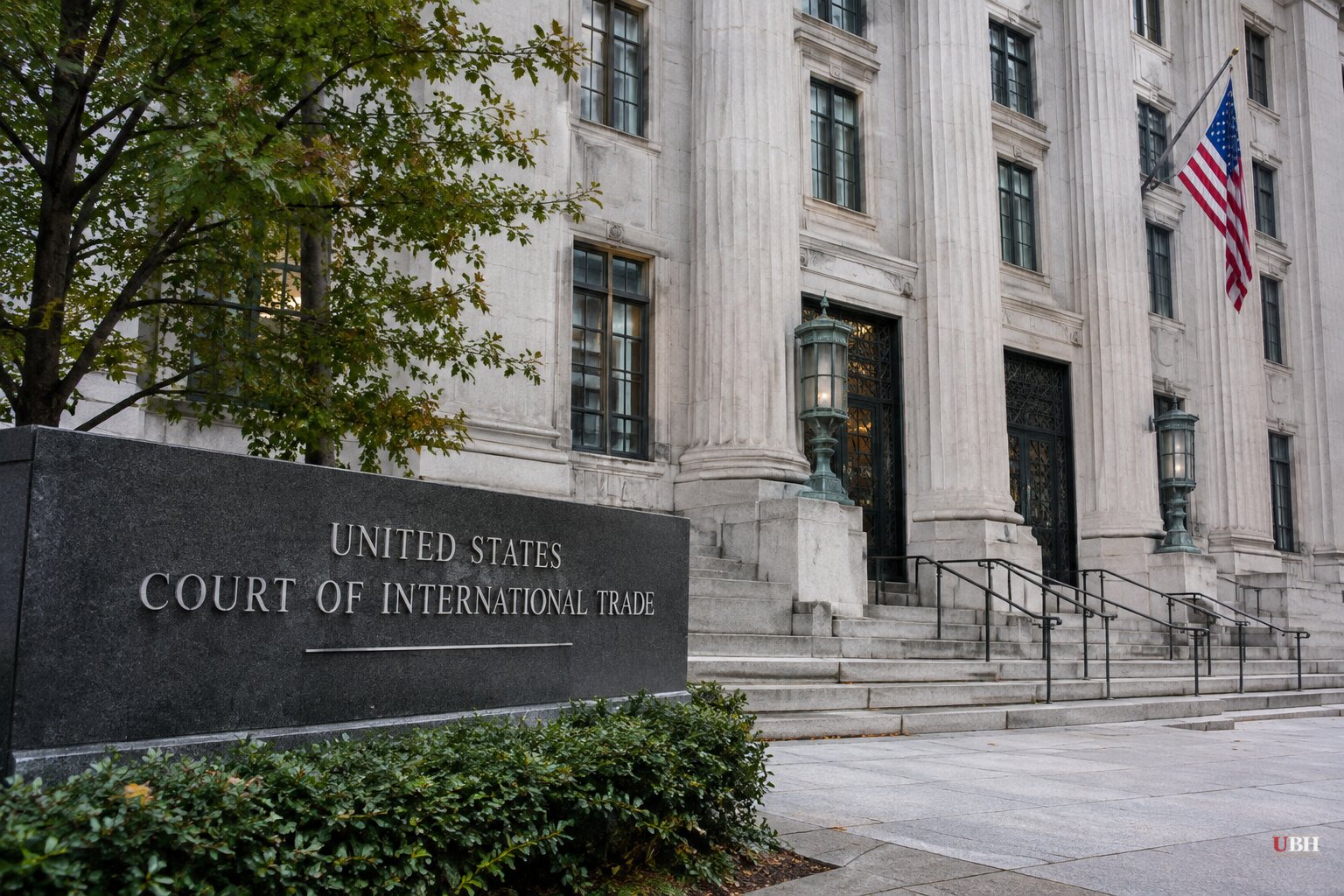
Since the Supreme Court struck down President Trump's IEEPA "Liberation Day" tariffs on February 20, 2026, the administration has cycled through two more legal theories to keep duties in place, and both are now under fire in federal court.
A three-judge panel at the U.S. Court of International Trade heard two and a half hours of arguments Wednesday, September 30, on whether Section 301 of the Trade Act of 1974 can be stretched to cover tariffs on 60 trading partners at once. According to the Epoch Times, judges repeatedly interrupted both sides with questions about how detailed each country-specific finding had to be.
How We Got Here
After the Supreme Court's February ruling, the administration began refunding IEEPA duties. CNN valued the refund process at roughly $168 billion; the Penn Wharton Budget Model put the figure closer to $175 billion; Ground News cited $166 billion. The White House then tried a temporary 10% worldwide tariff under Section 122. The Court of International Trade ruled that one unlawful on May 7, and an appeals court let it run only until it expired July 24.
That same day, the Office of the U.S. Trade Representative pivoted again, imposing 10% to 12.5% duties on 60 economies under Section 301, this time citing forced labor. USTR had opened 60 parallel investigations on March 12, 2026, and announced determinations on June 2. It found 54 countries, including Japan, Norway, Saudi Arabia, Switzerland and Vietnam, had failed to both impose and enforce bans on forced-labor goods. Six more, including Canada, Mexico, the European Union and Indonesia, had bans on the books but weren't enforcing them. U.S. Trade Representative Jamieson Greer framed the action in moral terms, calling the failure of major trading partners to police forced labor "unacceptable."
What's Actually at Stake
The plaintiffs, small businesses Burlap & Barrel, Collective Horology and Learning Resources Inc., represented by the Liberty Justice Center, argue Section 301 was written to hit a single, specific foreign practice, not to blanket nearly every trading partner on earth. Ground News reported the challengers call the tariffs "arbitrary and capricious," built on "generalized assertions" of economic harm rather than country-specific evidence. Twenty-five states led by Democratic attorneys general have joined the fight.
The strongest version of that concern: the statute's text refers to a "foreign country," singular, and Section 301 was historically used as what trade law veteran Alan Wolff calls a "rifle shot of retaliation" against one nation, as in the 1980s U.S.-Japan semiconductor dispute. Wolff should know. He drafted the provision as the Nixon administration's lead international trade lawyer, and he told CNN the current use "is being misused," adding, "The notion that you can write your own tariff against anyone and anybody is offensive. This isn't what we intended."
Wolff isn't alone. According to Tampa Free Press, former U.S. Trade Representative Carla Hills and former USTR general counsel Warren Maruyama filed amicus briefs backing the challenge, alongside Ed Gresser of the Progressive Policy Institute, a former Assistant USTR. Liberty Justice Center CEO Sara Albrecht said their combined experience confirms "Section 301 is an important trade-remedy law, but it is not a blank check for worldwide tariffs."
The Justice Department's countervailing argument deserves equal weight. DOJ attorneys told the panel, per the Epoch Times, that USTR conducted 60 separate country-by-country investigations and made 60 separate determinations, not one blanket finding, and that forced labor is a recognized unfair trade practice Congress intended Section 301 to address. The government's position is that courts should not second-guess the president's trade policy once the statutory process, investigation, public comment, determination, has been followed. Whether 60 parallel investigations opened on the same day and resolved within three months satisfy that process is exactly what the court must decide. Nothing in the record reviewed here shows the panel has ruled on that question yet.
The Bigger Bet
Businesses like Burlap & Barrel and Collective Horology are still waiting on roughly $166 billion in IEEPA refunds while simultaneously paying new duties, a cash-flow squeeze Ground News flagged as straining importers across multiple tariff cycles. If the Section 301 tariffs also fall, the administration's remaining tariff authority narrows to Section 232 national security actions and the largely untested Section 338 of the 1930 Smoot-Hawley Tariff Act, according to peacocktariffconsulting's analysis of the case. No ruling date has been set. The panel took the arguments under advisement.
Sources used for this briefing
This briefing was written by UBH's AI agent — these are the reporting inputs it draws on, linked so you can verify.


