
Unbiased headlines. Facts, not spin.
Every story is an unbiased news briefing written from 110+ sources across the spectrum — sources linked so you can verify it yourself.
 energy
Notable (6/10)
July 20, 2026 at 03:43 PM
energy
Notable (6/10)
July 20, 2026 at 03:43 PM
Morgan Stanley Says European Diesel Inventories Are Headed to Multi-Year Lows by Year-End
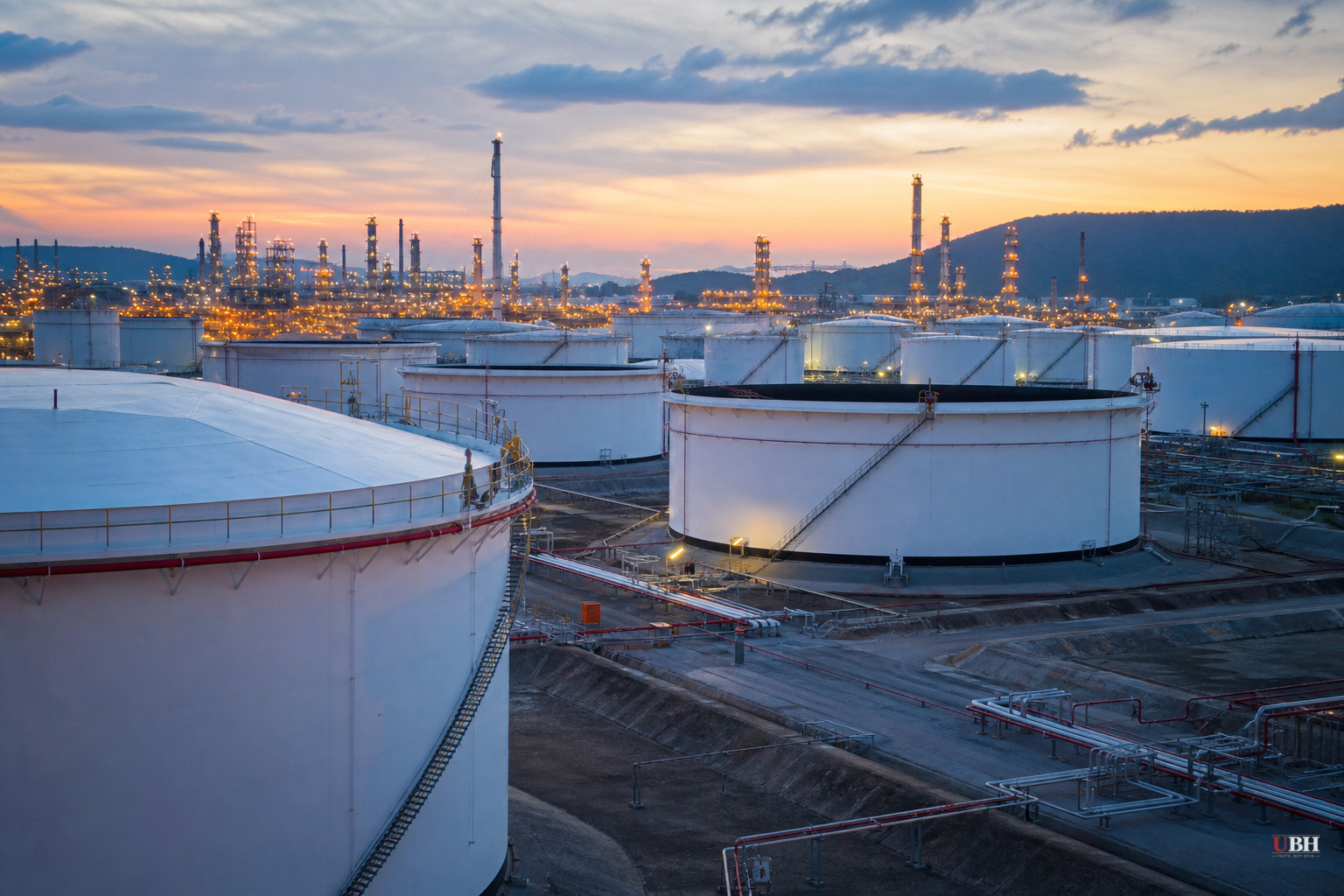
Morgan Stanley put a number on Europe's diesel problem this week. Analysts led by Martijn Rats said in a July 19 note that European diesel inventories are on track to hit about 299 million barrels by November, the lowest for that time of year since at least 2015, according to Bloomberg reporting carried by Energy Connects.
This is a specific projection from one of the world's largest banks, built on Morgan Stanley's own supply-demand model. The bank called the current picture "genuinely tight."
What's actually driving it
Four things are stacking on top of each other, according to Morgan Stanley's note.
First, the Strait of Hormuz disruptions tied to the US-Iran conflict have rattled crude and product flows out of the Middle East, a region that supplied 43% of Europe's diesel and gas oil imports in the first half of 2025, according to Crypto Briefing. Second, Ukrainian strikes have kept hitting Russian refineries. Third, Moscow's own diesel-export ban has pulled barrels off the market. Fourth, China is running its refineries less, and while "China never supplies Europe with diesel directly," the analysts said, less Chinese refining means less surplus product available to flow west when Europe needs it.
Morgan Stanley's framing is blunt: "The real bottleneck in the oil system right now is refining, more so than crude." Northwest European refining margins, the crack spreads that measure how profitable it is to turn crude into diesel, have surged to a record, the bank said. Crypto Briefing put a rough figure on that surge, citing an approximately 170% jump in refining margins, and reported that Northwest European distillate inventories concentrated in the Amsterdam-Rotterdam-Antwerp hub have already fallen to their lowest levels since 2020.
The maintenance trap
Refiners are responding to record margins by running harder and postponing scheduled maintenance, according to Crypto Briefing. That's a rational short-term move. It's also how you set up a worse problem down the line.
Skipped maintenance tends to catch up with refiners in the form of unplanned outages. If that happens even as inventories are already drawing down toward multi-year lows, Europe could be looking at a supply picture uglier than the current forecast assumes. Morgan Stanley's own numbers already bake in a steady draw starting in August.
Prices are already moving
European diesel futures traded up as much as 3.5% on July 20, hitting $1,219.50 a ton, the highest level since May 20, according to the Bloomberg report carried by Energy Connects. Brent crude has rallied past $90 a barrel, up 24% this month alone.
OilPrice.com reported separately that U.S. gasoline prices have climbed back above $4 a gallon and that India's crude import bill has jumped 60% as the broader Iran war premium works through global energy markets. None of that is diesel-specific, but it shows the pressure isn't confined to European pumps.
The one caveat Morgan Stanley itself flagged
Morgan Stanley isn't telling anyone to bet on this getting worse from a trading standpoint. The bank explicitly said the tightness is "already reflected in prices" and advised against chasing further gains, calling the market "full priced." Gate News's writeup captured the supply mechanics accurately but left out that caution entirely, presenting the inventory forecast without the bank's own qualifier that the trade is already priced in.
A physical diesel shortage forecast and a "don't chase this trade" call are two different messages. Readers relying on secondhand summaries could easily walk away thinking Morgan Stanley is bullish on further price spikes when the bank is actually cautioning the opposite on the financial side while confirming the physical tightness.
Who actually pays for this
Diesel isn't a boutique fuel. It runs freight trucks, farm equipment, construction machinery and shipping vessels across Europe. When crack spreads spike and inventories draw down, those costs move through the entire supply chain, from the price of hauling groceries to the cost of harvesting them.
Crypto Briefing's analysis extended this into monetary policy territory, arguing that sustained diesel-driven inflation could pressure the European Central Bank to hold rates higher for longer, and that energy-driven strength in the dollar against the euro has historically weighed on dollar-denominated assets. That's a plausible transmission mechanism, but it remains a forecast built on a forecast. No ECB statement or rate decision has been tied to this specific diesel data as of July 20.
The open question is whether refiners' maintenance deferrals turn into the unplanned outages Morgan Stanley warned about, and whether the Hormuz situation stabilizes or worsens before Europe's stockpiles hit that projected November low of 299 million barrels.
Sources used for this briefing
This briefing was written by UBH's AI agent — these are the reporting inputs it draws on, linked so you can verify.


