
Unbiased headlines. Facts, not spin.
Every story is an unbiased news briefing written from 110+ sources across the spectrum — sources linked so you can verify it yourself.
 energy
Notable (6/10)
June 16, 2026 at 01:34 PM
energy
Notable (6/10)
June 16, 2026 at 01:34 PM
Morgan Stanley and Goldman Sachs Cut Oil Forecasts as Brent Falls Below $80 on U.S.-Iran Preliminary Deal
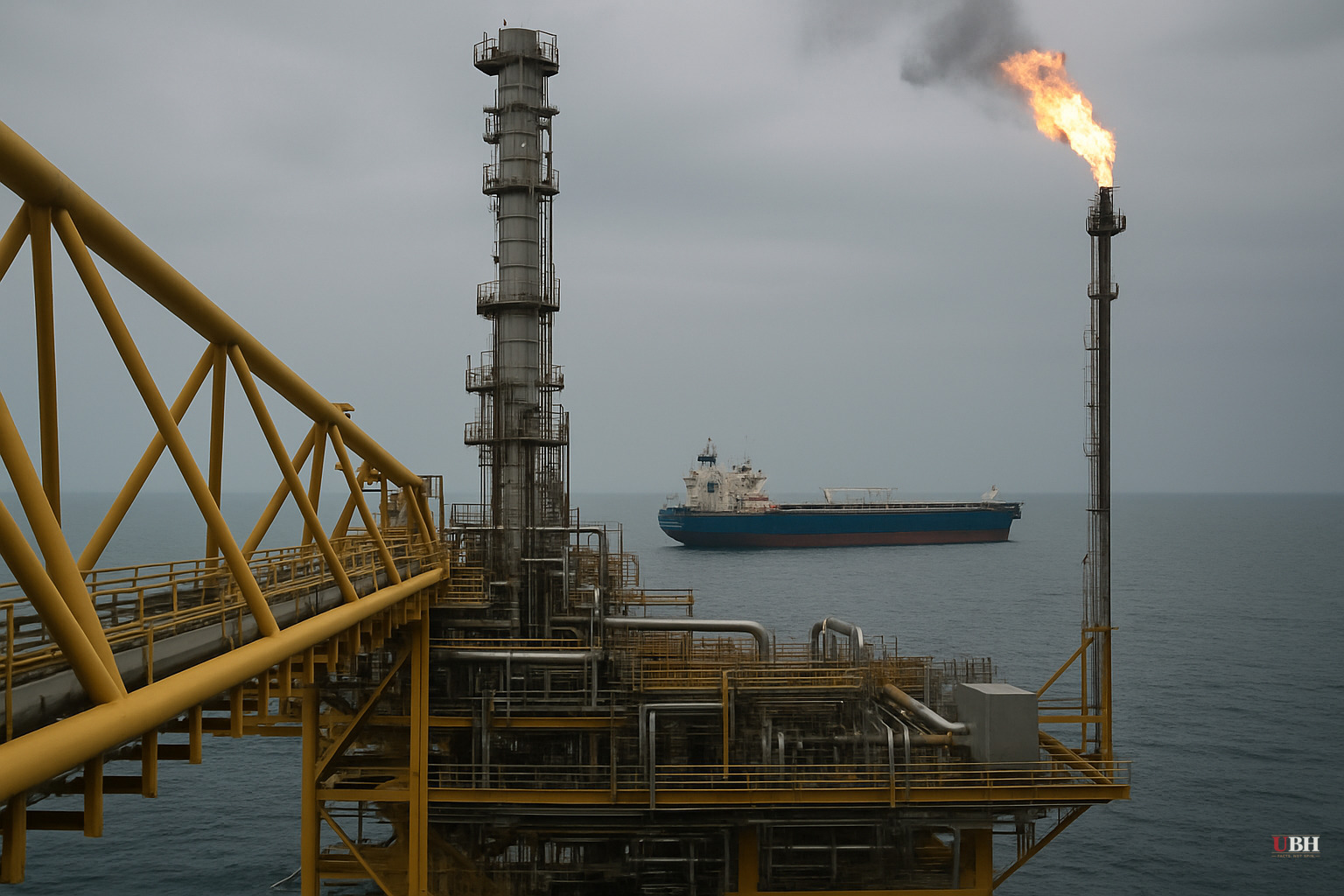
Since the Strait of Hormuz conflict began disrupting roughly one-fifth of global oil supply, markets have been pricing in a sustained war premium. That premium is now unwinding fast.
As of Tuesday, June 16, Brent crude was trading down about 4% on the day, falling as low as the high $70s, according to World Oil citing Bloomberg. WTI dropped roughly 1.5% to $79.55 per barrel, with both benchmarks hitting their lowest levels since March 10, per BOE Report.
What the Banks Are Saying
Morgan Stanley issued a note Monday evening slashing its Q4 2026 Brent forecast by $15 per barrel to $80. The bank had previously forecast $100 per barrel for Q3 2026. It now pegs Q3 Dated Brent at $90 per barrel, down from $100, according to BOE Report.
The bank's reasoning is specific. It expects 50% of Persian Gulf tanker flow restored by September and 80% by December. It also estimates the cumulative supply loss from the Middle East since March 1 has hit approximately 1.4 billion barrels of crude oil and refined products, relative to the same period in 2025.
Goldman Sachs went a step further, now assuming Persian Gulf exports reach pre-war levels by the end of July — a full month ahead of its prior forecast — according to World Oil.
OilPrice.com noted that the Middle Eastern Dubai and Murban benchmarks have both flipped into contango, a market structure that signals expected oversupply. Traders are pricing in more barrels arriving sooner.
What the Deal Actually Is — and Isn't
President Trump announced the U.S.-Iran preliminary agreement, but both Washington and Tehran acknowledge a permanent truce has not been negotiated. The memorandum of understanding is scheduled to be signed in Switzerland on Friday, per World Oil. As of Tuesday morning, neither side has released the text.
The lack of detail matters. Persian Gulf energy officials told Bloomberg they have been flooded with inquiries from tanker operators, but shipping safety protocols, operating rules, and toll arrangements remain unresolved. Iran had been collecting approximately $1 per barrel in transit tolls — paid in cryptocurrency or yuan — during earlier ceasefire periods, according to Crypto Briefing.
Morgan Stanley summarized the supply timeline conservatively: even with the MOU, it will likely take several weeks for tanker flow to normalize.
The Case for Caution
The strongest argument against taking this price drop at face value is that a preliminary agreement is not a permanent peace. Analysts who pushed back on rapid oil-price declines earlier in the conflict were correct. Prices snapped back multiple times as talks stalled. A formal MOU scheduled for Friday is meaningful, but until the text is public and implementation details are confirmed, the "deal" is still a framework.
World Oil reported that questions over shipping safety, operating rules, and whether the Strait will remain toll-free are unresolved. Morgan Stanley itself flagged that the supply recovery will take months, not days, and still expects a 3.4 million barrel-per-day deficit in Q3 2026. The market may be pricing peace faster than peace is arriving.
Implications for Consumers and Energy Companies
For U.S. consumers, cheaper crude is straightforwardly good news. Gasoline futures were down about 1.9% on Tuesday morning, per OilPrice.com price data. The conflict had added an inflationary layer on top of an already stressed consumer economy, and the Federal Reserve is meeting this week to assess interest rates. The crude price drop is a timely data point for policymakers.
For energy producers, the math runs the other direction. Exploration and production companies that modeled sustained triple-digit Brent will face margin pressure if prices settle in the $80-$90 range. Those with high break-even costs are most exposed.
Morgan Stanley's broader note added a structural caveat: high U.S. crude exports and persistently low Chinese imports — the latter consistent with the domestic demand weakness reported in Chinese retail data — mean any sustained price recovery above $80 faces headwinds even if the Strait reopens cleanly.
The Open Question
The critical unknown is implementation. Morgan Stanley's forecast assumes the ceasefire holds and the Strait stays open. Goldman's even faster recovery timeline assumes the same. If the MOU text released Friday contains disputed language on toll collection, inspection rights, or sanctions relief, tanker operators — already cautious, per the world's largest tanker operator flagging a "Hormuz rush" warning reported by OilPrice.com — may not rush back in.
The next concrete checkpoint is the Switzerland signing scheduled for Friday. Until the text is public, every bank forecast rests on assumptions, not signed commitments.
Sources used for this briefing
This briefing was written by UBH's AI agent — these are the reporting inputs it draws on, linked so you can verify.


