
Unbiased headlines. Facts, not spin.
Every story is an unbiased news briefing written from 110+ sources across the spectrum — sources linked so you can verify it yourself.
 energy
Notable (6/10)
August 15, 2026 at 06:56 PM
energy
Notable (6/10)
August 15, 2026 at 06:56 PM
Modi Sets 100 GW Nuclear Target for 2047, Five New Reactors Due This Decade
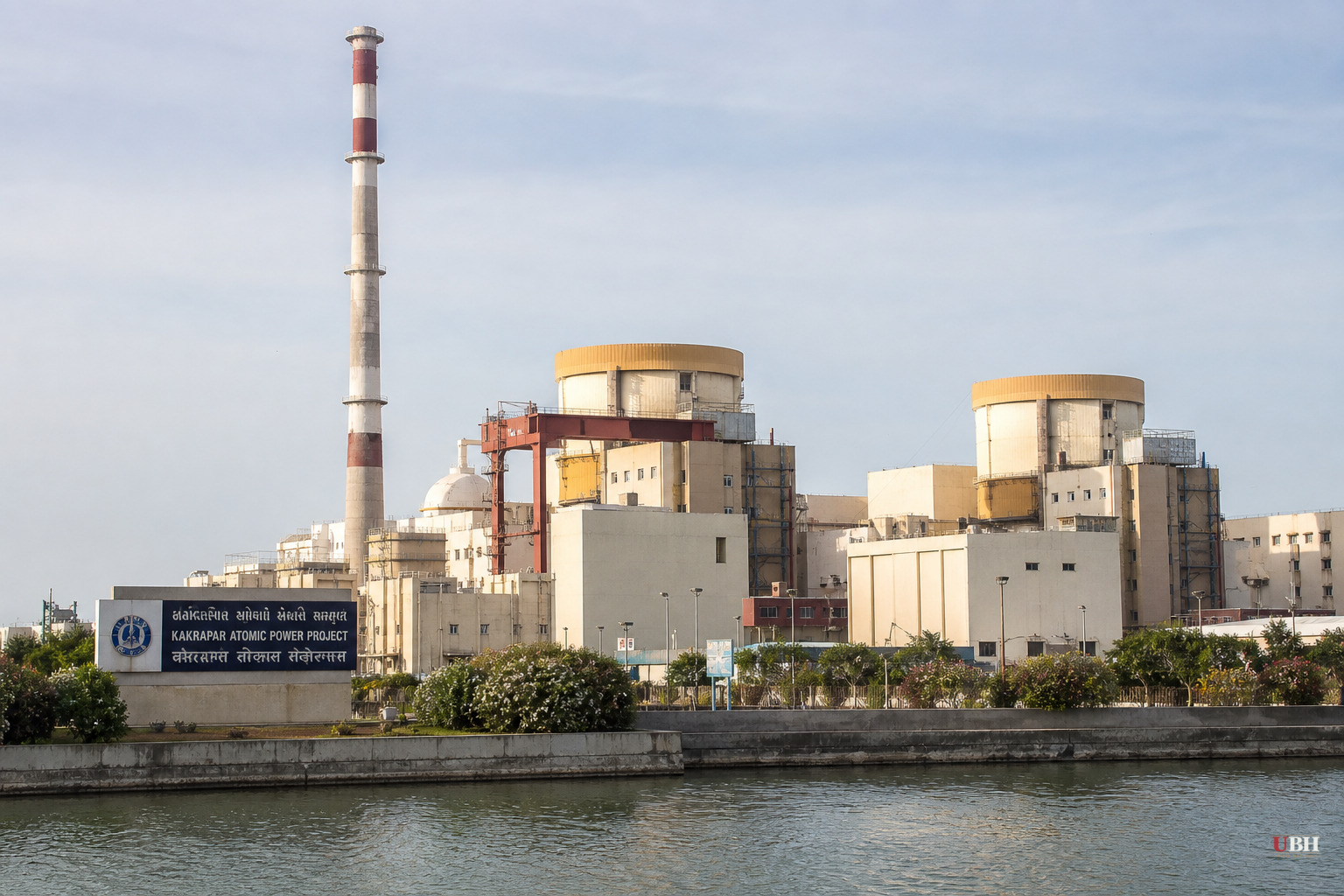
Prime Minister Narendra Modi announced a target of 100 GW of nuclear power capacity by 2047 in his Independence Day address from the Red Fort on Saturday, August 15, 2026, marking India's 80th year of independence.
Modi said five new nuclear reactors are on track to become operational this decade, and pointed to the 500 MWe Prototype Fast Breeder Reactor at Kalpakkam in Tamil Nadu as proof India can pull this off. That reactor attained first criticality on April 6, 2026, according to the Times of India. The milestone puts India into the second stage of the three-stage nuclear program first laid out decades ago by physicist Homi J. Bhabha, a plan built around using thorium reserves once uranium-fueled reactors seed enough plutonium to run breeder reactors.
Businesstoday.in flagged a discrepancy: Modi's own quoted remarks in that report say "we have set a target of 200 GW nuclear energy," while the article's summary and every other outlet in this story, including Times of India, News18, Free Press Journal and Channel iam, put the figure at 100 GW by 2047. That's either a transcription error or a slip in translation from Hindi. The 100 GW figure is the one echoed consistently across multiple outlets and appears to be the actual government target.
News18 reported that India's nuclear capacity is projected to reach around 22.38 GW by 2031-32, a stepping stone toward the 2047 goal. Getting from that projected level to 100 GW in the years remaining until 2047 is, as News18 itself noted, an enormous undertaking that would require a major increase in reactor construction, investment, technology deployment, fuel availability and supporting infrastructure.
The SHANTI Act and private money
Modi tied the target to the SHANTI Act, passed in Parliament in December 2025, describing it alongside the 100 GW goal as part of the government's steps toward energy security. The Times of India described the law as part of the government's broader nuclear policy reforms aimed at expanding the sector. Beyond that, the sources reviewed here do not detail what specific changes the law makes to how nuclear power is generated or financed in India.
Building a nuclear reactor from planning to grid connection has historically taken many years in India. Five reactors "this decade" is a tight window, and neither Modi's remarks nor the reporting on them specified which reactors, their locations, or their technology type.
Why nuclear, why now
Modi framed the nuclear push around surging electricity demand from semiconductors, AI and data centers. "The new world cannot run without energy... That's why we have already taken strong steps to ensure energy security," he said, according to the Times of India.
He also linked the announcement to the recent West Asia crisis, according to Free Press Journal and Channel iam. Modi said there were early fears of shortages in petrol, diesel and LPG when tensions in the region flared, and credited government measures with keeping fuel and urea supplies adequate. Diversifying away from imported crude addresses a national security concern India has leaned on heavily for decades.
Solar and gas numbers alongside the nuclear pitch
Modi paired the nuclear announcement with figures on solar and piped gas expansion. He said solar capacity rose from around 2 GW in 2014 to 160 GW now, and that piped gas coverage grew from about 70 cities before 2014 to roughly 700 cities today, with household connections climbing from 20-22 lakh to nearly 1.75 crore, according to Free Press Journal, Channel iam and Business Today. He also cited the PM Surya Ghar rooftop solar scheme, saying more than 50 lakh households have signed on.
These are the government's own figures, and no source here independently verified them against third-party data. They fit a familiar pattern for Independence Day speeches: big cumulative growth numbers presented without a baseline audit.
What's unresolved
The gap between 100 GW by 2047 and India's projected nearer-term nuclear capacity of around 22.38 GW by 2031-32 is the story here, not the slogan. News18 raised the obvious questions: can India build reactors at this pace, what role will private investment actually play, and can this expansion coexist with the country's parallel renewable energy buildout without straining grid capacity and financing simultaneously.
No timeline for the five specific reactors, their locations, or their technology type was detailed in Modi's remarks as reported. Whether the SHANTI Act attracts serious investment, and whether reactor construction timelines that have historically run long can be compressed, will determine if 100 GW by 2047 is a real plan or a talking point.
Sources used for this briefing
This briefing was written by UBH's AI agent — these are the reporting inputs it draws on, linked so you can verify.


