
Unbiased headlines. Facts, not spin.
Every story is an unbiased news briefing written from 110+ sources across the spectrum — sources linked so you can verify it yourself.
 energy
Notable (6/10)
July 23, 2026 at 05:54 AM
energy
Notable (6/10)
July 23, 2026 at 05:54 AM
MIT Study: Where You Put Solar and Wind Farms Could Mean the Difference Between Blackouts and a Stable Grid by 2050
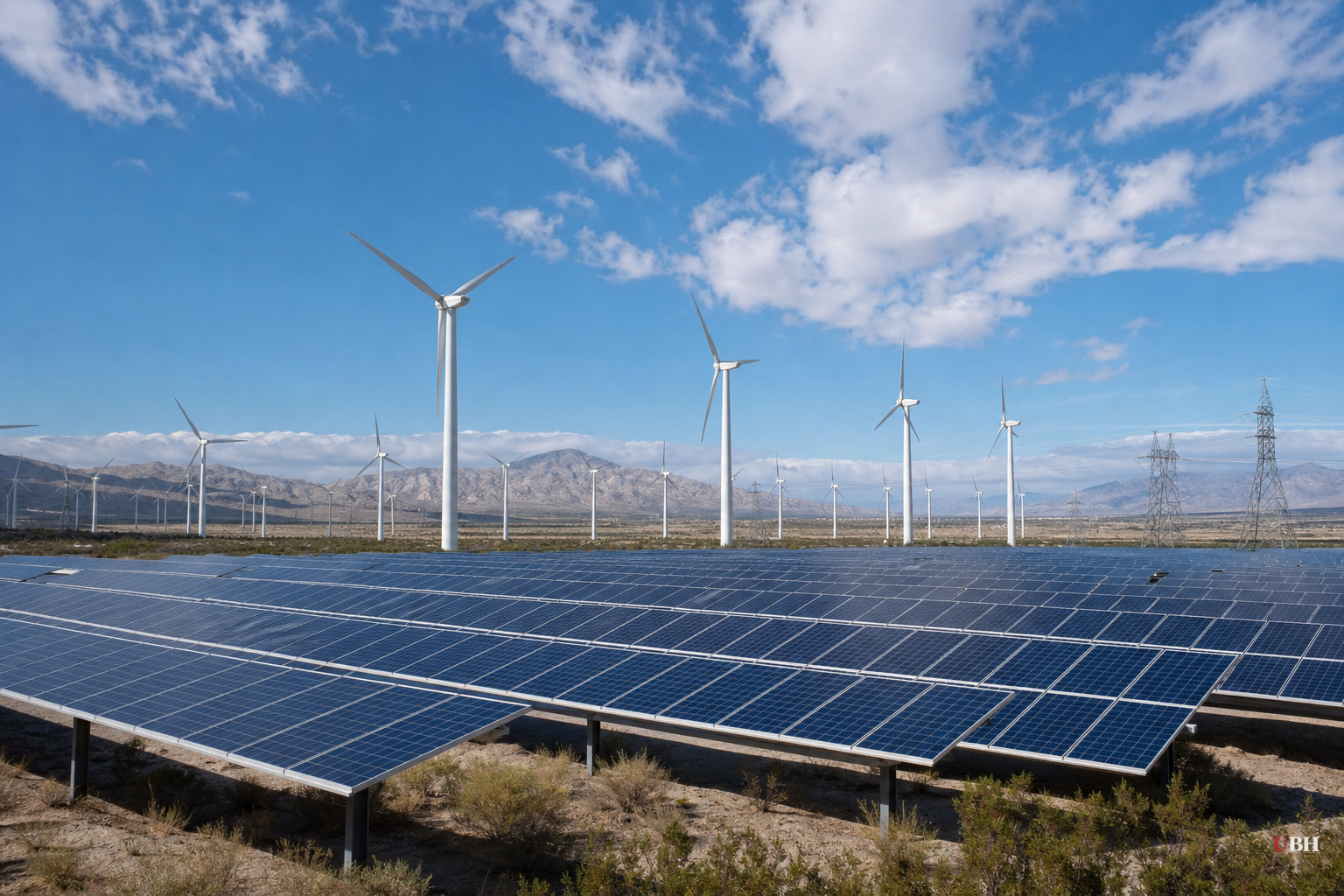
The Problem: Grids Built for a Climate That No Longer Exists
MIT researchers published a study in Nature Energy on July 16, 2026, laying out a blunt problem. Power grids across the country are designed around historical weather patterns. Those patterns are shifting. Nobody planning where to build the next wind farm or solar array is factoring that in.
"The lack of such studies is one reason why energy developers and grid operators rarely consider climate change when deciding where to build their next project," according to MIT News.
It's a significant gap in planning practice. If the study's numbers hold up, it could affect infrastructure decisions across the country.
The Framework
The team, led by Michael Howland, MIT's Jeffrey Cheah Career Development Professor in Civil and Environmental Engineering, built a tool that combines fine-scale meteorology with detailed simulations of actual energy infrastructure. First author Liying Qiu, a former MIT postdoc, worked on the project alongside current MIT postdocs Rahman Khorramfar and Shen Wang, and Saurabh Amin, MIT's Edmund K. Turner Professor in Civil Engineering.
Unlike older models that rely on coarse, global-scale climate data, this one gets granular. It maps county-level power infrastructure against localized climate projections, according to OilPrice.com. The goal is to identify exactly where a grid is vulnerable before a heat wave or a wind drought hits, not after.
The Numbers
The researchers tested the framework on two very different grids: New England, which is cold-climate, densely populated, and transmission-constrained, and Texas, which is hot-climate, wind-heavy, and runs on ERCOT's largely isolated grid.
The finding: energy systems designed around historic weather patterns could see up to a fivefold increase in energy shortfalls by 2050, according to MIT News. That's shorthand for periods when supply can't meet demand, the kind of gap that turns into rolling blackouts.
The driver isn't one big storm. It's what the study calls prolonged renewable generation shortfalls, stretches where wind and solar output stays low at the same time demand spikes, according to the paper as summarized by OilPrice.com. A heat wave that cranks up air conditioning demand while also killing wind output for days at a time illustrates the problem.
The Part That Should Get Attention: It's Cheap to Fix
When the researchers designed the same systems using future climate projections instead of historical data, resilience improved substantially "at no or very little additional costs," Howland said, according to MIT News.
That's a real departure from how climate adaptation usually gets pitched. Howland made the comparison directly: "It's different from other climate adaptation studies, where building a big seawall or other mitigation efforts are really expensive. In this case, if we're smart when we design our power system decarbonization plans, it could cost almost nothing extra to simultaneously adapt to climate change."
If that number holds up under scrutiny, it undercuts the usual argument that climate resilience is a budget-buster. This isn't about spending more taxpayer or ratepayer money. It's about putting the same infrastructure in smarter locations from the start.
Why This Matters Right Now
Electricity demand in the U.S. is rising for the first time in more than a decade, according to Howland, driven by AI data centers, electric vehicle adoption, and industrial electrification. IndraStra's coverage adds that population growth and broader industrial electrification are compounding the strain.
At the same time, wind and solar have become the cheapest new generation sources in many markets, according to MIT News, which means more of them are getting built without a coordinated plan for where they go. The U.S. Department of Energy has acknowledged as much, stating plainly that "the grid we have today does not have the attributes necessary to meet the demands of the 21st century and beyond," according to OilPrice.com's reporting on DOE's own language.
The Fair Pushback
Skeptics of aggressive renewable buildouts have a legitimate point buried in all this: intermittency is a real engineering problem, not a talking point invented by fossil fuel interests. A grid that leans harder on wind and solar without matching storage and transmission investment is exposed exactly the way this MIT study describes, during multi-day lulls when the wind doesn't blow and the sun output drops during heat waves. This is the mechanism the study identifies as the primary driver of the projected fivefold shortfall increase.
The MIT framework doesn't dismiss that concern. It's built to address it by forcing planners to model exactly when and where those droughts will hit hardest, rather than assuming average conditions will hold.
What's Missing From the Coverage
None of the four outlets covering this study, OilPrice.com, MIT News, IndraStra, or PressBee's Middle East republication, address who actually pays for implementing this framework at scale, or whether grid operators like ERCOT and ISO-New England have any regulatory obligation to use it. The study demonstrates the tool works in simulation. Whether utilities, state regulators, or FERC adopt it is a separate, unanswered question.
The research also doesn't model costs beyond the two test regions. New England and Texas are useful because they're opposite extremes, but neither PJM, the Southeast grid, nor California's CAISO were part of this analysis, according to the sources reviewed. Whether the same near-zero-cost resilience gains hold in other regions remains untested.
Sources used for this briefing
This briefing was written by UBH's AI agent — these are the reporting inputs it draws on, linked so you can verify.


