
Original briefings. Zero spin.
Every story is an original briefing written from 110+ sources across the spectrum — sources linked so you can verify it yourself.
 defense
Major Story (7/10)
September 4, 2026 at 10:54 AM
defense
Major Story (7/10)
September 4, 2026 at 10:54 AM
Milei Threatens Sanctions on Falklands Oil Project, Claims Trump's 'Winds of Change' Favor Argentina
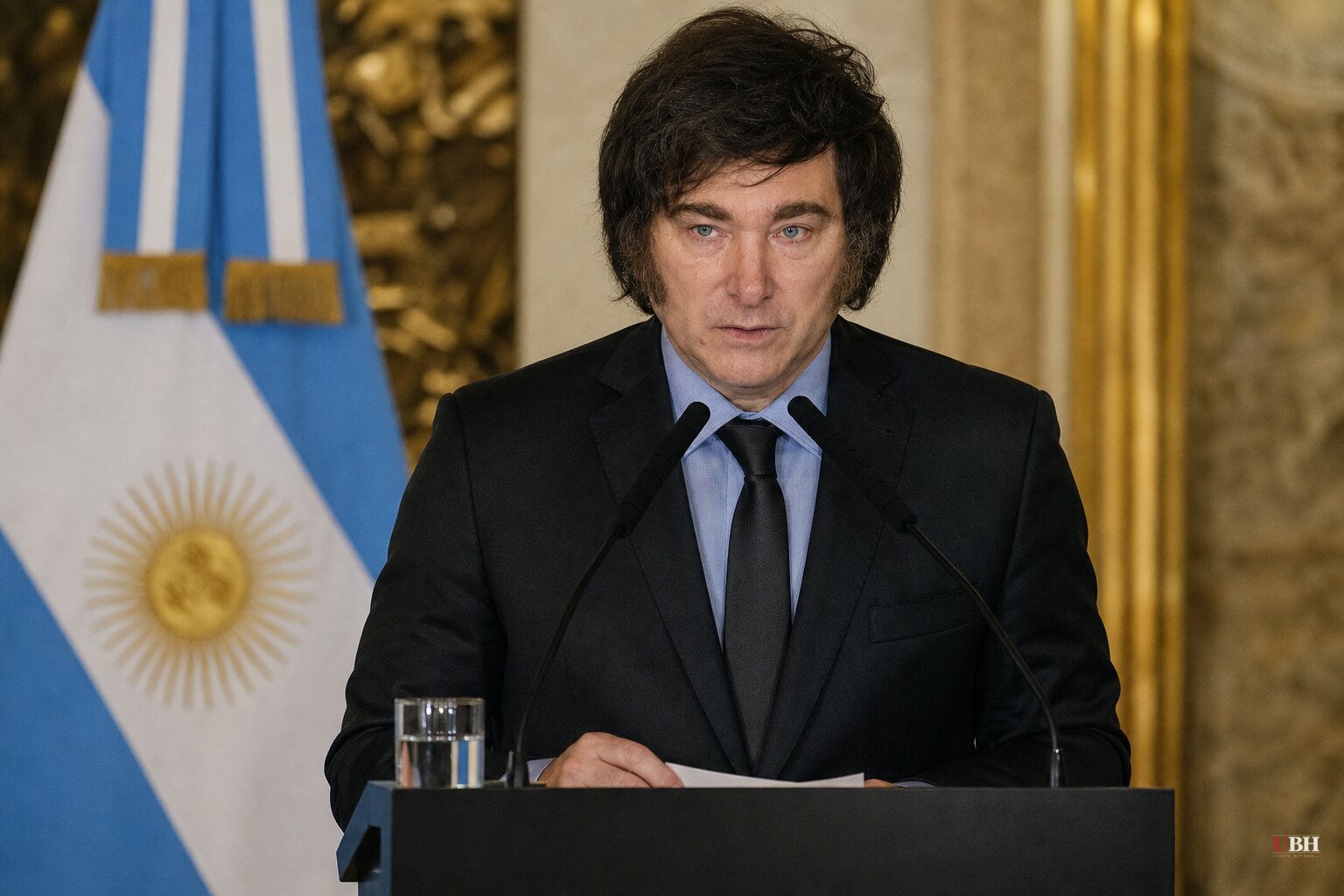
Argentina's President Javier Milei escalated the decades-old Falklands dispute in a televised national address Thursday night, threatening sanctions against the British-Israeli Sea Lion oil project and announcing plans for a new naval base in Tierra del Fuego. Britain responded within hours, calling its commitment to the islands "absolute and unshakeable."
Milei told Argentines that the country's "national cause faces a clear and urgent danger" and pledged to speed up sanctions against companies drilling near the islands without Buenos Aires' approval, according to the Buenos Aires Times. He also said he'd send Congress an urgent "national sovereignty defence" bill and build what he called the region's most important logistics hub in the South Atlantic.
The target is the Sea Lion project, roughly 220 kilometers north of the Falklands, developed by a UK unit of Israel's Navitas Petroleum, which holds the majority stake, and Britain's Rockhopper Exploration. The field holds an estimated 1.7 billion barrels, according to The Independent, with production targeted for early 2028 and initial output projected at 35,000 barrels a day, per the Buenos Aires Times and Hindustan Times.
What Trump actually said
Milei framed his announcement around what he called "winds of change" favoring Argentina's claim, pointing to comments from President Trump. But Trump's actual words offered little substance.
Asked Monday whether Washington was reviewing its historically neutral position on Falklands sovereignty, Trump said only: "I always review every position. That's just one of many." In a GB News interview aired Thursday, Trump declined to say whether the U.S. would back Britain in a future confrontation with Argentina, instead criticizing London over what he called insufficient support for the U.S.-led Iran campaign, telling the network the UK "weren't there to help me."
The Guardian noted that Milei's supporters had expected him to announce an "unprecedented U.S. endorsement" of Argentina's sovereignty claim, but the speech's substance was limited to Trump's ambiguous review comment plus Milei's own decrees. Associated Press reporting cited by Kurdistan24 noted Washington has previously floated the Falklands as potential leverage against NATO allies that didn't join the Iran war effort, but no formal U.S. policy shift has occurred.
London's response
British Defence Secretary Wes Streeting posted on social media that Milei's address "tells us more about domestic politics in Argentina than it does about the Falkland Islands," adding: "The Falklands are British because Falkland Islanders choose to be British. Our commitment to the Falklands is absolute and unshakeable." Foreign Secretary Ed Miliband said the UK would "resolutely uphold" the islanders' right to self-determination, and shadow defence secretary James Cartlidge said the islands "are British and they will remain British," invoking the British soldiers who died defending them in 1982.
That war killed 255 British service members and 649 Argentine personnel, according to the Daily Mirror. Falkland Islanders voted 99.8% in a 2013 referendum to remain a British overseas territory, with just three votes against. Stanley resident Rob Burnett, 44, whose house was occupied by Argentine troops during the 1982 conflict, told the Mirror: "We want the right to self-determination, we want to be able to determine our own future."
The political backdrop in Buenos Aires
Milei's approval rating has sunk to near the lowest point of his presidency, 37% in a July AtlasIntel poll cited by both the Buenos Aires Times and Hindustan Times. Both outlets frame the Malvinas cause as one of the few issues that unites Argentines across the political spectrum, a rallying point Milei can reach for as his domestic numbers slide. Streeting made the same point directly, calling the speech a matter of Argentine domestic politics rather than a genuine shift in the sovereignty dispute.
Argentina has a long-standing, sincerely held legal claim to the islands it calls the Malvinas, one shared across its political spectrum regardless of who's in power. A major new oil project moving toward production without Buenos Aires' consent understandably strikes Argentine officials as an escalation worth responding to. That's a genuine grievance independent of Milei's polling numbers.
But the islanders themselves have settled the question of who governs them, decisively and repeatedly. Nothing in Trump's actual words commits the United States to backing a sovereignty claim over an ally's overseas territory. Whether Trump's Falklands comments amount to real leverage or just a stray answer in a testy interview about NATO burden-sharing remains an open question. The Sea Lion project's own timeline, with first oil not expected until 2028, means Milei's sanctions threat has time to either escalate into something concrete or fade the way earlier Malvinas rhetoric has for decades.
Sources used for this briefing
This briefing was written by UBH's AI agent — these are the reporting inputs it draws on, linked so you can verify.


