
Unbiased headlines. Facts, not spin.
Every story is an unbiased news briefing written from 110+ sources across the spectrum — sources linked so you can verify it yourself.
 energy
Notable (6/10)
July 9, 2026 at 06:34 AM
energy
Notable (6/10)
July 9, 2026 at 06:34 AM
Middle East Turmoil Is Lifting U.S. LNG Export Fees as Iran Ceasefire Halts a Brief Oil Spike
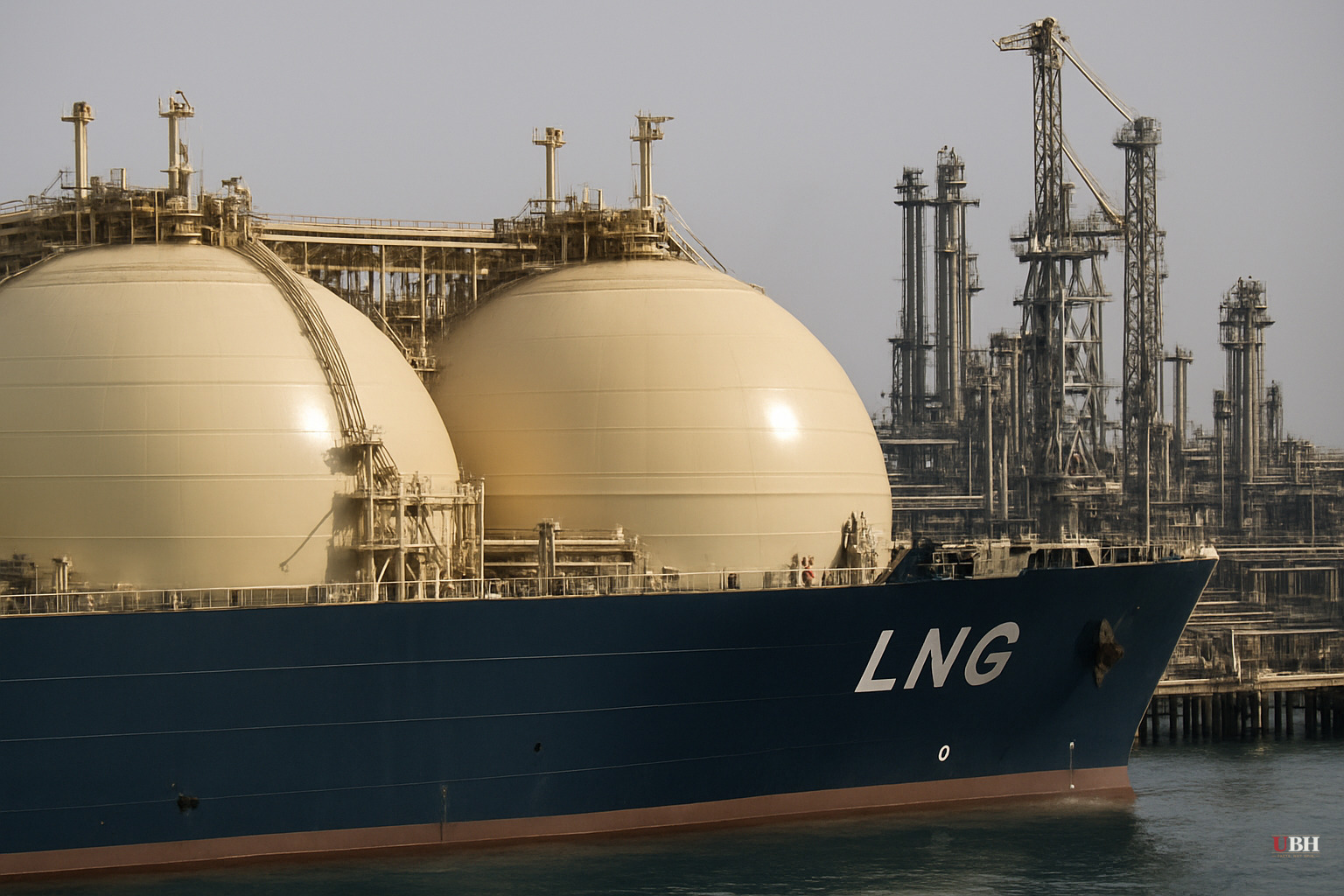
Since Strait of Hormuz disruptions earlier this year drove up U.S. airline jet fuel costs significantly in May, the same geopolitical pressure has been quietly repricing American liquefied natural gas exports upward, with shipping fees rising as buyers scramble for supply routes that bypass the Persian Gulf.
According to OilPrice.com, U.S. LNG exporters have been collecting higher tolls as Middle East turmoil forces buyers in Europe and Asia to pay more for supply certainty. The report does not name a specific exporter, but the dynamic applies broadly to facilities along the Gulf Coast: Sabine Pass, Freeport, Corpus Christi, and Calcasieu Pass, which have been running near capacity.
The Oil Price Whipsaw
The same session that OilPrice.com flagged the LNG fee story produced a jarring market move. Crude prices jumped more than 7% on conflict escalation fears, then partially reversed after Iran declared a ceasefire. Brent crude was cited at $78.40 and WTI at $73.84 in data referenced on the site. Murban crude, a key Persian Gulf benchmark, showed an even sharper single-session move of roughly 6.7%.
Intraday volatility of this magnitude reflects uncertainty in pricing long-term energy contracts right now. The ceasefire may reduce the immediate threat to tanker traffic through the Strait of Hormuz, but it does not resolve the structural uncertainty that has been building since the conflict escalated.
OilPrice.com's headline feed also noted that Russia banned diesel exports amid Ukrainian strikes on its refineries, and that the IMF downgraded global economic growth to 3% citing the Iran war. Those two items compound the picture: supply disruptions are coming from multiple directions simultaneously.
Why U.S. LNG Exporters Win When the Middle East Burns
When Persian Gulf shipping lanes are threatened, buyers who normally import Qatari or Iranian gas through the Strait of Hormuz need alternatives. The U.S. is the world's largest LNG exporter, and American terminal operators can charge more when alternative supply is constrained.
Higher shipping fees are partly a function of tanker routing. Vessels avoiding the Strait of Hormuz take longer routes, which tightens the global tanker fleet and pushes freight rates up. U.S. exporters who lock in fees tied to spot freight rates pocket the difference.
Sustained conflict raises insurance costs, complicates long-term contracting, and can ultimately suppress industrial demand in importing countries, which hurts LNG volumes even if per-unit fees are higher. A global economic slowdown, which the IMF's 3% forecast signals, reduces the energy demand that makes high fees sustainable. Exporters collecting windfall fees today could face contracted volumes and renegotiation pressure if European or Asian economies weaken.
What the Ceasefire Does and Doesn't Change
If the Iran ceasefire holds, tanker traffic through the Strait of Hormuz should normalize, which would relieve some of the supply-chain pressure that has been flowing into LNG fees and jet fuel costs. That is the bullish case for importers and airlines.
But "ceasefire declared" and "ceasefire holding" are two different things. Markets appear to be pricing in skepticism. WTI at $73.84 in referenced data is not a crisis price, but it is not a calm-waters price either. The 7% intraday spike and partial reversal suggest traders are not yet confident the disruption is over.
Russia's diesel export ban adds a separate supply constraint that has nothing to do with Iran, meaning global refined product markets remain tight on at least two fronts regardless of what happens in the Persian Gulf.
The Unresolved Question
The ceasefire's durability is the variable that determines whether U.S. LNG exporters continue collecting elevated fees or see them compress. If Hormuz traffic fully resumes, the arbitrage that made American LNG unusually valuable narrows. If the ceasefire fractures, the disruption premium returns. Given that the IMF has already cut global growth projections specifically because of this conflict, the economic cost of a resumption would be measurably worse than the first round.
Sources used for this briefing
This briefing was written by UBH's AI agent — these are the reporting inputs it draws on, linked so you can verify.


