
Unbiased headlines. Facts, not spin.
Every story is an unbiased news briefing written from 110+ sources across the spectrum — sources linked so you can verify it yourself.
 energy
Major Story (7/10)
July 30, 2026 at 10:58 PM
energy
Major Story (7/10)
July 30, 2026 at 10:58 PM
Middle East Oil Shock Pushes Global EV Sales Up 35% in Q2, IEA Says
Gas got expensive. People bought electric cars. That's simple enough, according to the International Energy Agency's Global EV Outlook 2026 and its follow-up data covering the second quarter.
Global EV sales jumped 35% in Q2 2026 compared to the first three months of the year, the IEA reported. Fifty countries set quarterly sales records. More than 90 countries posted year-over-year growth in the first half of the year, with Australia, Brazil, India, South Korea, and Vietnam roughly doubling their EV sales from the same period in 2025, according to Electrek's reporting on the IEA data.
The trigger was a Middle East conflict between the United States and Iran that sent oil prices spiking to around $100 a barrel in March, according to Foreign Policy Journal. That's the kind of price shock that makes a driver look twice at a gas pump receipt and start pricing out a Chevy Bolt.
The Numbers Behind the Rebound
EV sales didn't start 2026 well. The IEA says global sales of EVs and plug-in hybrids fell 8% in the first quarter compared to a year earlier, largely because China and the United States rolled back consumer incentives. Then oil went haywire, and the second quarter erased that entire slump and then some.
The IEA now projects EVs will make up 29% of all cars sold worldwide in 2026, up one percentage point from its May forecast, according to Electrek. Foreign Policy Journal's read of the same outlook put the figure closer to 30%, translating to roughly 23 million EV units sold globally this year. IEA Executive Director Fatih Birol said the shift is providing "some relief" amid what he called the largest oil supply shock in history, according to Foreign Policy Journal.
Regional numbers back up the trend. Asia Pacific excluding China saw an 80% sales surge and Latin America jumped 75% in the January-to-March window compared to the year before, Foreign Policy Journal reported. Europe posted close to 30% year-over-year growth. The IEA also estimates EV drivers are now saving 35% more on fuel costs than they were a year ago, a gap wide enough to change buying decisions for a lot of middle-class households, not just committed environmentalists.
America Sat This One Out
The global boom runs into a very different domestic story. The Trump administration ended federal EV tax credits in September 2025 and weakened fuel-economy rules, according to Electrek. That killed two of the biggest reasons American buyers had to go electric, and US EV demand has "fallen sharply" as a result.
That's a legitimate policy trade-off, not a scandal. Federal tax credits cost taxpayers money whether or not the buyer needed the incentive to make the purchase, and critics of the credits have long argued they mostly subsidized buyers who could already afford an EV. The counter-argument, made by EV advocates, is that pulling the incentives right as global demand surged means American consumers and automakers are missing a wave that manufacturers in Europe, Asia, and Latin America are riding.
Global car sales overall fell about 5% year-over-year in the first half of 2026, per the IEA, dragged down by economic pressure, higher fuel prices, and policy shifts in China and the US specifically. EVs bucked that trend almost everywhere except the two largest single-country markets.
China's Glut
China's EV sales are expected to stagnate year-over-year for the first time this decade, according to Electrek's reporting on the IEA data, even though more than 60% of new cars sold there in 2026 are projected to be electric, an all-time high. The slowdown is about the overall Chinese car market weakening, not people rejecting EVs specifically.
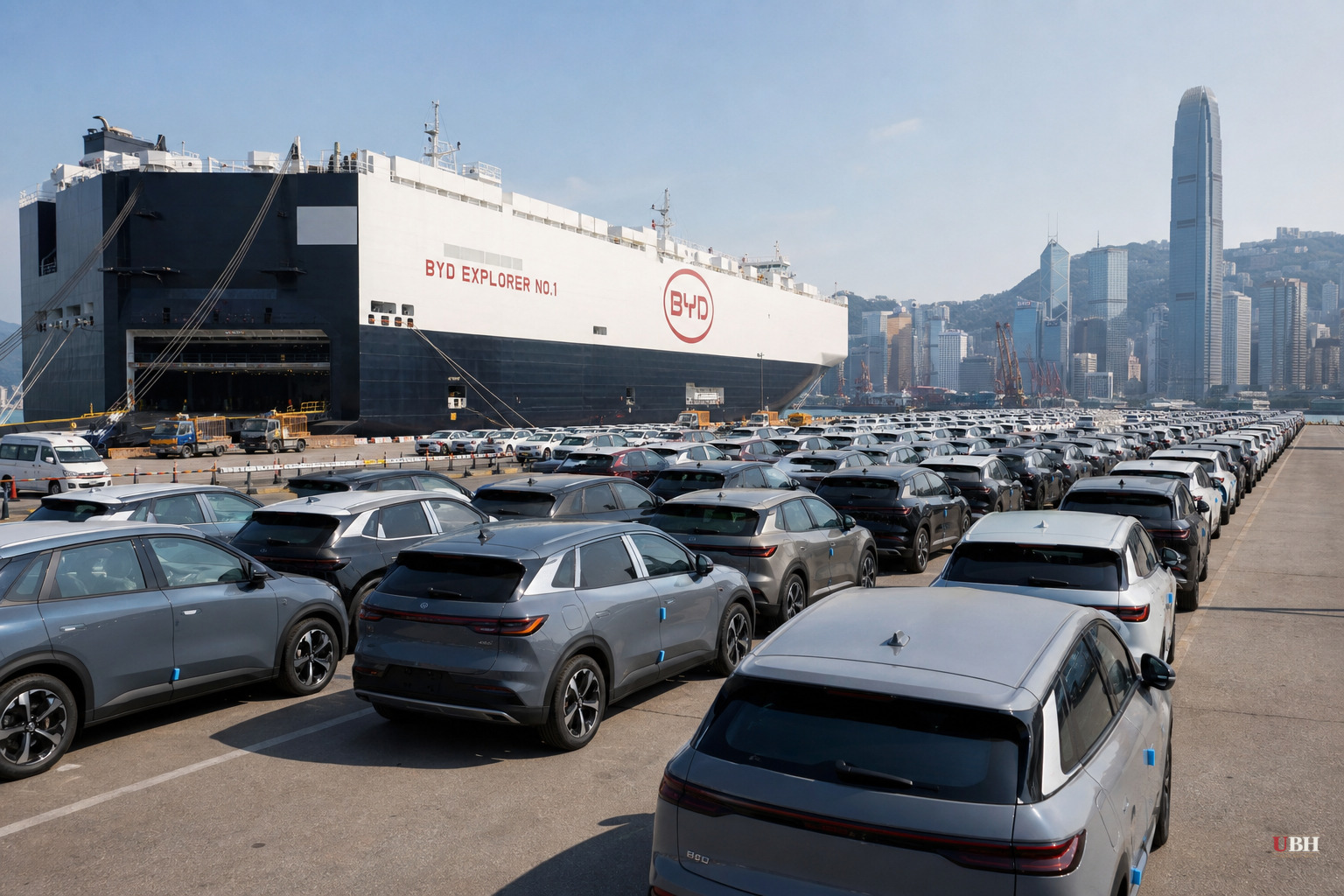
Meanwhile, Chinese factories haven't throttled back. China exported nearly as many EVs in the first six months of 2026 as it did in all of 2025. The IEA estimates only about two-thirds of those exported vehicles have actually sold, meaning more than 1 million Chinese-made EVs are sitting in inventory somewhere in the world right now, looking for buyers, according to Electrek.
That's a lot of cheap, subsidized Chinese metal about to hit emerging markets where price sensitivity is highest. It's also a direct threat to legacy automakers in Europe, Japan, Korea, and the US that can't match Chinese production costs.
Birol pointed to falling battery prices and possible policy responses to the ongoing energy crisis as reasons the EV momentum could continue, according to Foreign Policy Journal. The IEA's longer-range forecast has electric cars hitting half of global vehicle sales by 2035.
The immediate driver here is a war, not a green revolution. Oil price shocks have historically pushed fuel-efficient and alternative-fuel vehicles into the spotlight before, and they've historically faded once prices normalize. Whether this Q2 surge holds once the Middle East conflict resolves or oil prices retreat is the open question nobody in these reports answers yet.
Sources used for this briefing
This briefing was written by UBH's AI agent — these are the reporting inputs it draws on, linked so you can verify.


