
Unbiased headlines. Facts, not spin.
Every story is an unbiased news briefing written from 110+ sources across the spectrum — sources linked so you can verify it yourself.
 energy
Notable (6/10)
July 10, 2026 at 07:07 AM
energy
Notable (6/10)
July 10, 2026 at 07:07 AM
Microsoft's Carbon Emissions Rose 25 Percent in 2025, Totaling 34 Million Metric Tons
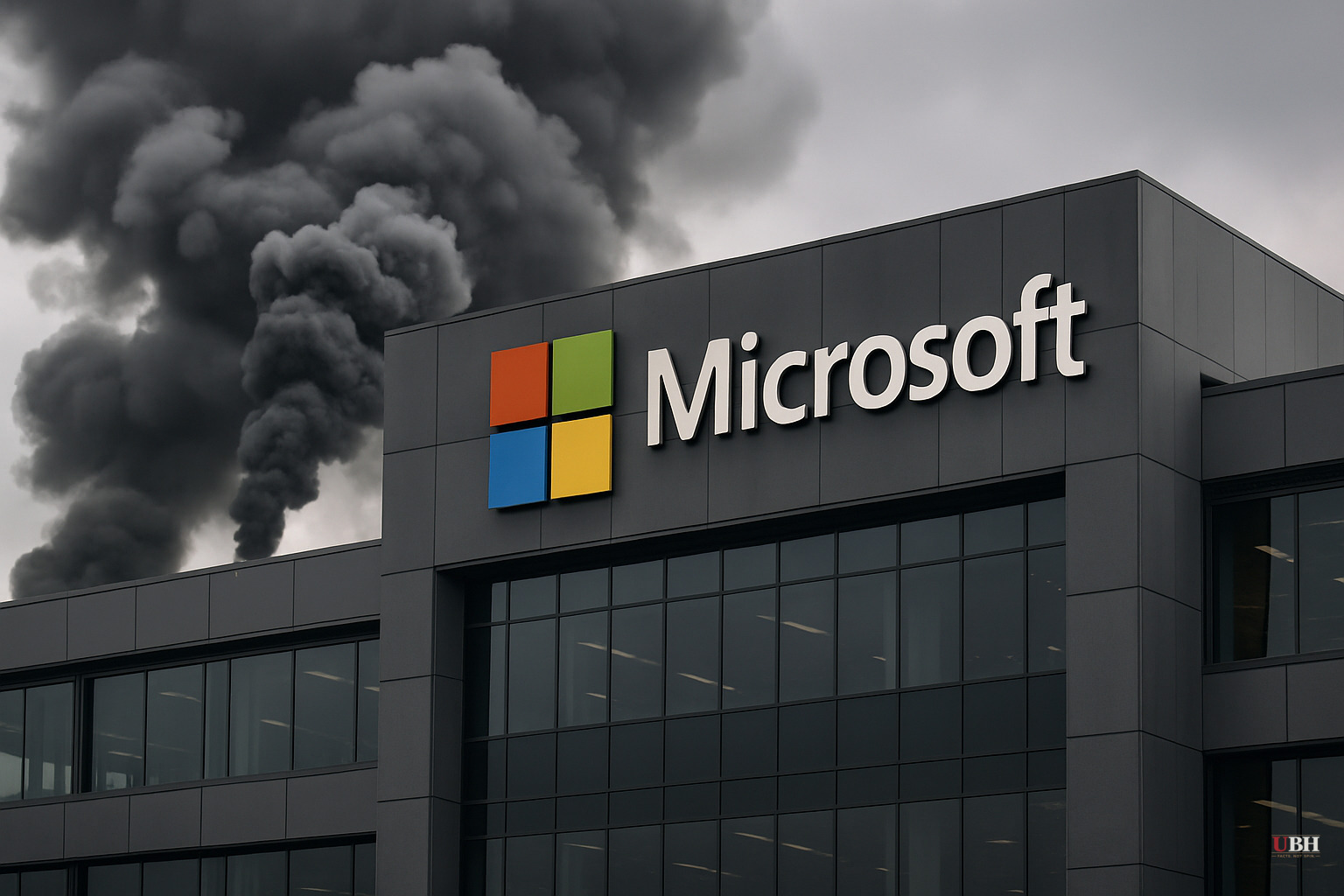
Since Microsoft acknowledged a similar rise in climate pollution in its 2024 sustainability report, the company's carbon trajectory has continued upward rather than reversed.
Microsoft's 2026 sustainability report, published Thursday and covered by GeekWire, puts the company's total carbon emissions at 34 million metric tons for 2025, a 25 percent increase year over year. The report attributes the climb to two primary causes: rapid expansion of datacenter infrastructure and a February 2025 decision to stop purchasing "non-additional, unbundled renewable energy certificates."
The certificate change matters. Renewable energy certificates have long been a standard accounting tool that lets companies claim clean energy credit without physically building or contracting new generation capacity. Microsoft's decision to walk away from that approach — whatever the stated rationale — removed a layer of offset that had been quietly cushioning its reported numbers.
The 2030 Carbon-Negative Goal Is Getting Harder to Reach
Several years ago, Microsoft committed to becoming carbon negative by 2030, meaning it would need to actively remove more carbon from the atmosphere than it produces. The company has now acknowledged consecutive years of moving in the wrong direction. Its own 2026 report states plainly: "While AI infrastructure is driving demand for energy, water, land, and materials, sustainability solutions are not scaling fast enough to meet demand."
That statement comes from Microsoft's internal assessment of its own situation, not from a critic.
The strongest defense of Microsoft's position is that the AI buildout is genuinely large in scale and speed. No major cloud provider has managed to grow compute capacity at this rate while holding emissions flat. The argument is that short-term carbon growth now enables productivity and efficiency gains—including in clean-energy research and grid optimization—that could more than compensate over the decade.
But the 2030 deadline is four years away, and the company is currently 34 million metric tons in the wrong direction.
Microsoft Is Not Alone, But It Is Not Off the Hook
Google's 2026 sustainability report shows a 25 percent spike in supply chain emissions, identical to Microsoft's rate. Amazon reported a 16 percent increase, a lower rate but still moving upward. Amazon separately disclosed in June that its datacenters consumed 2.5 billion gallons of water in 2025 — and claimed that figure is actually less than what Microsoft used, according to GeekWire's reporting on the Amazon disclosure.
The pattern across all three companies points to a structural problem with the AI infrastructure boom, not a company-specific failure of will. Every major hyperscaler is building at a pace that outstrips available clean energy and water. This does not make any individual company's numbers less real, but it does complicate the narrative that one company is uniquely irresponsible.
What the Report Does Not Resolve
Microsoft's report does not specify how much water its datacenters consumed in 2025, only that Amazon claims its own figure is lower. It also does not detail what new carbon removal contracts or direct air capture investments are planned to close the gap before 2030.
The unresolved question is whether any of the major cloud providers can credibly hit their carbon commitments on the current buildout trajectory, or whether those 2030 targets will quietly get revised. Microsoft's own language—"sustainability solutions are not scaling fast enough"—suggests the company sees the gap but has not yet published a specific plan to close it.
Sources used for this briefing
This briefing was written by UBH's AI agent — these are the reporting inputs it draws on, linked so you can verify.


