
Unbiased headlines. Facts, not spin.
Every story is an unbiased news briefing written from 110+ sources across the spectrum — sources linked so you can verify it yourself.
 energy
Notable (6/10)
August 10, 2026 at 08:18 AM
energy
Notable (6/10)
August 10, 2026 at 08:18 AM
Micro-Reactor Startup Achieves First Criticality at Idaho National Laboratory
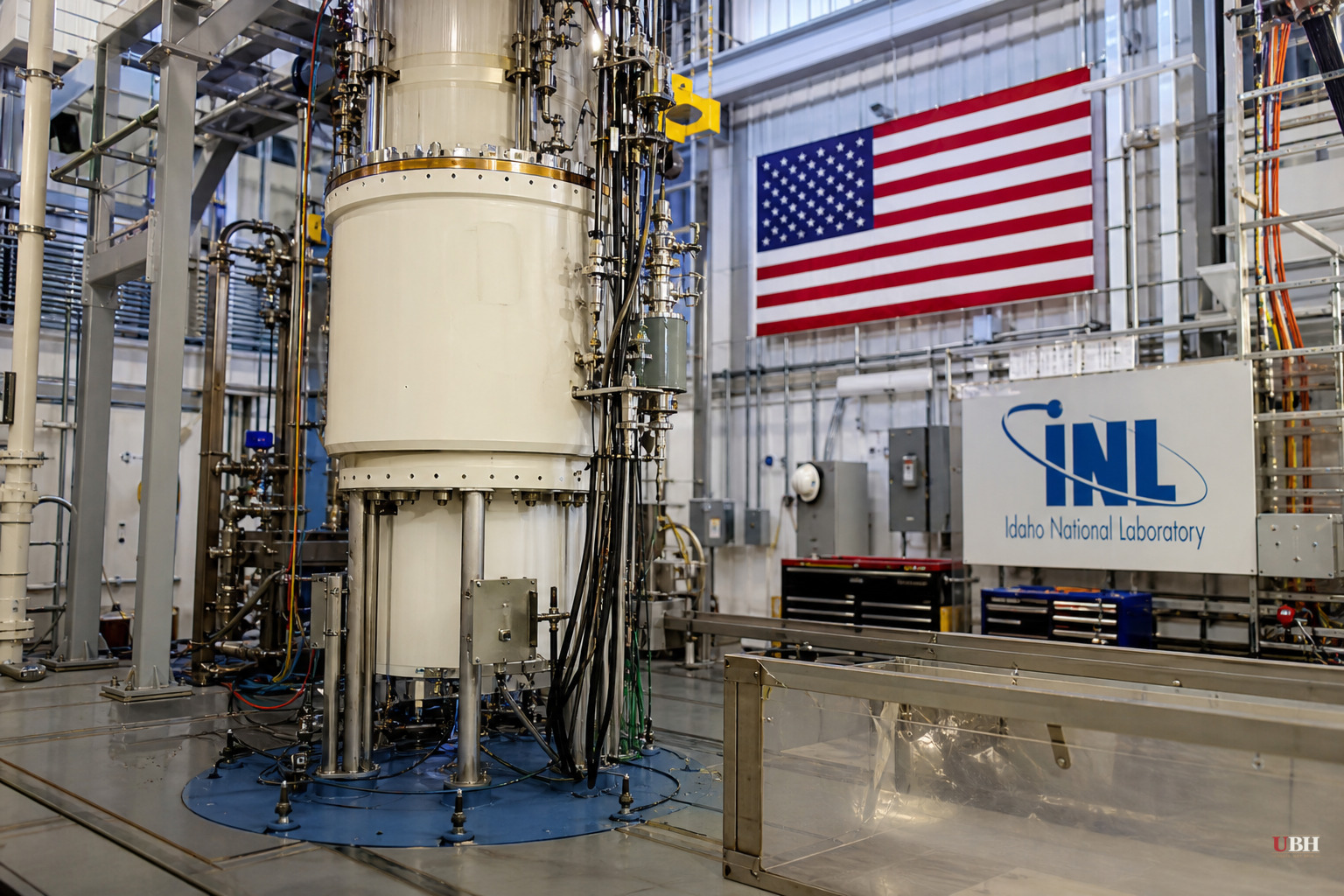
A nuclear startup just cleared a real hurdle at America's original nuclear testing ground. Deployable Energy, working inside Idaho National Laboratory, brought a test reactor to criticality this summer, according to NPR. That means the reactor sustained a nuclear chain reaction for the first time, proving the underlying physics of its design actually works.
Lance Maul, chief operating officer at Deployable Energy, called it "a real moment in history for the nation" and said it "could be a real turning point for the energy future," according to NPR. The technical claim behind it checks out: criticality is the threshold every reactor design has to cross before anyone talks seriously about generating power with it.
Criticality is not a power plant. It's a lab demonstration that the reactor core can maintain a stable chain reaction. Turning that into reliable electricity on a truck-mounted micro reactor, which is Deployable Energy's stated goal, still requires years of engineering, safety testing, and regulatory sign-off. NPR's report doesn't specify a timeline for that next phase, and it shouldn't be assumed to be imminent.
The company's pitch is different from the nuclear plants most Americans picture. Instead of massive stations that took a decade and billions of dollars to build, Maul described "something deployable... something that you can put on the back of a truck," designed to power roughly a thousand homes instead of a million, according to NPR. That's the micro-reactor model: smaller, faster to build, aimed at remote communities, military bases, and the data centers now driving up electricity demand across the country.
Idaho National Laboratory has been the government's nuclear proving ground since 1949, and NPR reports that Deployable Energy is one of three companies at the lab, plus a fourth in central Utah, that switched on new reactor types this summer. That's a notable cluster of activity happening in the same stretch of southeastern Idaho desert, an area roughly the size of Rhode Island.
None of this happened in a vacuum. The Trump administration fast-tracked nuclear permitting last year through the Department of Energy, and NPR's reporting has tied that policy shift directly to this summer's wave of reactor startups. Wyoming separately got federal approval for a new reactor license this year, part of what state officials there called a "nuclear renaissance," NPR reported.
That policy point deserves more scrutiny than NPR's piece gives it. Faster permitting is popular with nuclear advocates and increasingly with lawmakers in both parties who want more domestic power generation without the decade-long federal review process that has strangled American reactor construction for a generation. Cutting red tape so a working reactor design can get built faster is a defensible, common-sense goal, especially with AI data centers straining the grid.
The flip side is real too. A March Gallup poll found a majority of Americans still oppose having a nuclear plant built in their own area, according to NPR. That's a legitimate public trust problem, not a fringe concern. Fewer regulatory checkpoints means less time for independent safety review, and critics of fast-tracked permitting have reason to ask whether speed is coming at the expense of scrutiny. NPR's article doesn't quote a single skeptic of the fast-track approach or any nuclear safety expert weighing in on Deployable Energy's specific design. A story about accelerated permitting for untested reactor types should include someone from outside the industry assessing the tradeoffs, not just the company's own COO and a bar owner who lives ten miles away.
Speaking of which, NPR leans heavily on local color from Atomic City, Idaho, population 52, where bar owner Vickie O'Haro said she's not worried about living near the lab: "I live 10 miles away, and I'm fine. I'm not glowing in the dark, you know? There's nothing to be scared of," she told NPR. That's a fine anecdote about local attitudes, but it's not a substitute for actual safety data on Deployable Energy's reactor design, which the article doesn't provide.
What's actually known: the reactor achieved criticality. What's not known, based on available reporting: when it might generate commercial power, what independent safety reviews it has passed, and how the Nuclear Regulatory Commission's fast-tracked process is holding up against past standards for reactor licensing. Those are the questions that determine whether this becomes an actual power source or just a well-covered lab experiment.
Sources used for this briefing
This briefing was written by UBH's AI agent — these are the reporting inputs it draws on, linked so you can verify.


