
Unbiased headlines. Facts, not spin.
Every story is an unbiased news briefing written from 110+ sources across the spectrum — sources linked so you can verify it yourself.
 energy
Notable (6/10)
August 15, 2026 at 05:25 PM
energy
Notable (6/10)
August 15, 2026 at 05:25 PM
Mexico Spends $115 Million to Fight Record Seaweed Bloom Choking Caribbean Beaches
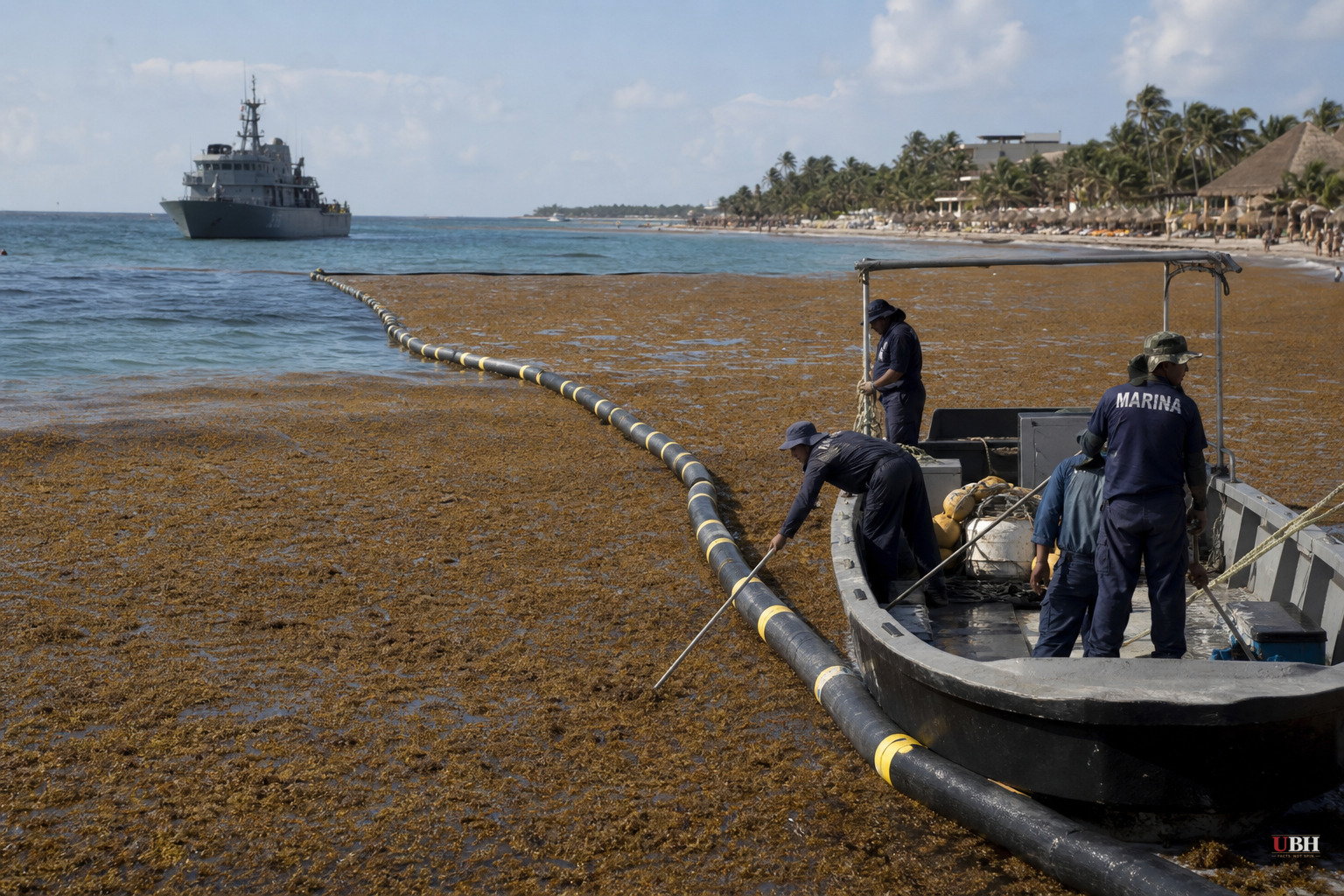
Mexico has a seaweed problem that's turned into a $2 billion-a-year headache, and this year is shaping up to be one of the worst on record.
Sargassum, a brown algae that floats in mats on the ocean surface, has been washing onto the Caribbean coast in growing volumes for 15 years. This year Mexican authorities have already collected roughly 96,151 metric tons, up from 92,783 tons last year, according to government data cited by Reuters. The University of South Florida's Optical Oceanography Lab expects 2026 to rank as at least the second-largest year on record for sargassum abundance in the region.
Brian Barnes, a research assistant professor at USF's College of Marine Science, told Reuters the growth trend is stark. Total sargassum in the tropical Atlantic went from about 1 million metric tons in 2011 to 40 million metric tons last year, he said, and the mass could be doubling roughly every five years. Barnes also said the phenomenon is new enough, and seasonal enough, that predicting where it lands next remains genuinely difficult.
The seaweed didn't always plague the Caribbean this way. Reuters reports it was historically confined to the Sargasso Sea in the North Atlantic until unusually strong winds around 2010 pushed it into nutrient-rich waters off West Africa, where it thrived. It's now a self-sustaining belt riding currents from West Africa to northern Brazil, through the Caribbean and into the Gulf of Mexico, feeding on nutrients from the Amazon, Orinoco and Congo rivers plus Saharan dust and warming sea temperatures.
The daily grind, and the price tag
Along the Riviera Maya, hundreds of hotel workers, tractor operators and Mexican Navy personnel head out at dawn every day to shovel and haul rotting sargassum off the sand, according to Reuters. Sargassum smells like rotten eggs and releases methane as it decomposes, according to OilPrice.com. While it isn't considered a major public health threat, it can affect workers and vulnerable people who are regularly exposed to it.
The economic toll is real. OilPrice.com reports Mexico spends around $2 billion a year managing sargassum, equal to about 11% of the local GDP tied to the tourism zone. Hotels across the Caribbean have cut rates and poured millions into cleanup, according to Reuters, because tourists avoid beaches buried in stinking seaweed and increasingly choose destinations that haven't been hit, like Mexico's Pacific coast.
Mexico's plan: stop it before it lands
In July, Mexican President Claudia Sheinbaum announced a $115 million plan to intercept sargassum before it reaches shore, according to OilPrice.com. The plan includes two large ships to capture seaweed at sea and roughly 30 miles of containment barriers around the most affected spots, including Playa del Carmen, Cancún, Tulum, Puerto Morelos and Mahahual.
"The effort so far has been titanic, but we have to do more to prevent sargassum from reaching the beaches," Sheinbaum said, according to OilPrice.com.
Mara Lezama, governor of Quintana Roo state, made the strategy explicit at a press conference reported by Reuters: "Experience has taught us the best way to face sargassum is to intercept it in the sea before it hits our coasts." Federal officials are expecting a new open-sea sargassum vessel to arrive within a month of that late-July report, and Mexico is looking to source more ships from Japan while supplying smaller Mexican-built vessels to the Dominican Republic.
Mexican authorities and private companies currently have the capacity to collect close to 2,200 metric tons of sargassum a day between sea and shore operations, according to OilPrice.com. The government wants to nearly double that, to around 4,000 tons daily by 2027.
Turning waste into revenue
Japan is partnering with Mexico on the effort, providing ocean-monitoring technology, robotics, sensors and financial support, according to OilPrice.com. Researchers on both sides are exploring what to do with the seaweed once it's collected, including biofuel and fertilizer production. The Portugal News reported that Mexico plans to host an international conference in Cancun later this year to coordinate collection efforts and develop commercial uses for the algae across the wider Caribbean region.
Some companies have also pursued carbon credits by baling collected sargassum and sinking it to the sea floor. Reuters reported this method is meant to prevent the methane released during decomposition from reaching the atmosphere. Whether that approach scales, or whether biofuel and fertilizer conversion becomes commercially viable, remains unproven. No source in this reporting cites a completed cost-benefit analysis showing the biofuel plan will pay for itself or reduce the $2 billion annual cleanup bill.
Whether interception at sea can actually keep pace with a bloom that, by Barnes' estimate, is doubling roughly every five years remains to be seen. Mexico is betting $115 million and a Japanese technology partnership that it can. The next real test comes as peak sargassum season continues through the rest of 2026, when the new vessel and expanded barrier network are expected to be operating at full capacity for the first time.
Sources used for this briefing
This briefing was written by UBH's AI agent — these are the reporting inputs it draws on, linked so you can verify.


