
Unbiased headlines. Facts, not spin.
Every story is an unbiased news briefing written from 110+ sources across the spectrum — sources linked so you can verify it yourself.
 defense
Low Interest (3/10)
July 3, 2026 at 09:18 AM
defense
Low Interest (3/10)
July 3, 2026 at 09:18 AM
Mexican Lawful Resident Pleads Guilty to Midair Stabbing Attempt After Crafting Pen Weapon Before Boarding Seattle-to-Vegas Flight
What Happened
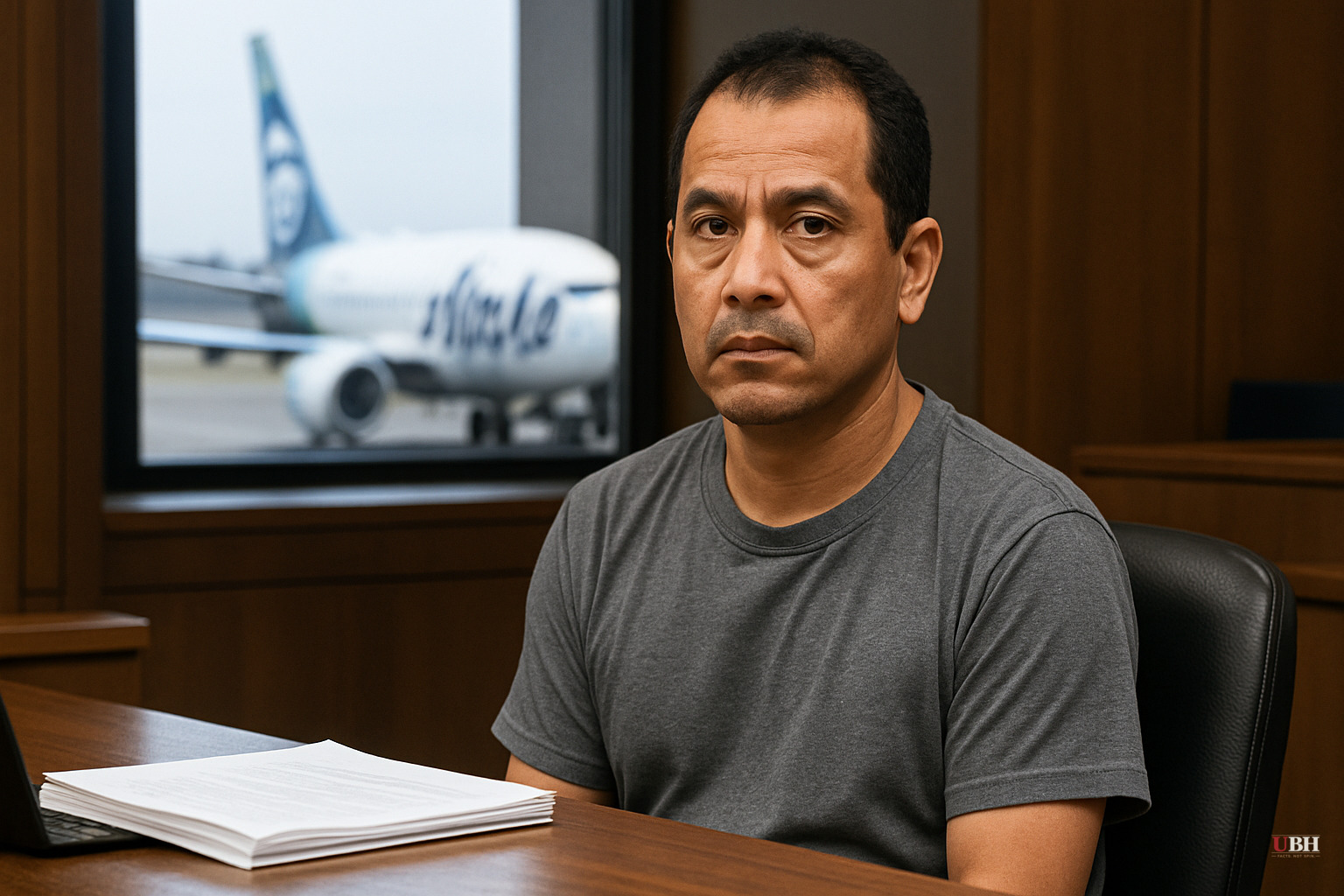
On January 24, 2024, Julio Alvarez Lopez boarded an Alaska Airlines flight from Seattle to Las Vegas with a weapon he had already built. According to the U.S. Department of Justice, he bundled three ballpoint pens together with hair bands before getting on the plane.
About 30 minutes before landing, Lopez left his seat, walked to the restroom, returned, and attacked a passenger seated across the aisle. He punched and hit the victim repeatedly, then drove the pen weapon toward his face. Federal prosecutors say Lopez's stated goal was to shove the makeshift weapon through the victim's eye socket and into his brain.
Witnesses told investigators there was "blood everywhere." The victim's wife attempted to shield the couple's 7-year-old son during the assault and was struck in the process, according to the federal criminal complaint obtained by Fox News Digital.
The Restraint and Arrest
After Lopez stopped stabbing and began walking toward the front of the aircraft, a law enforcement officer aboard ordered him to sit down. Flight attendants provided flex cuffs, and passengers physically restrained Lopez for the remainder of the flight, according to the complaint.
The plane landed safely at Harry Reid International Airport. Officers from the Las Vegas Metropolitan Police Department took Lopez into custody on arrival.
The victim suffered injuries around the torso and eye area that required stitches, according to court documents cited by 2News and Casino.org.
Lopez's Own Words
Lopez waived his Miranda rights and spoke to FBI agents and Federal Air Marshals after his arrest. He admitted he constructed the pen weapon before boarding. He told investigators he had targeted the victim, identified in court documents as C.R., because he believed C.R. had been looking at him "in a harassing way."
Lopez also said he believed C.R. was connected to a cartel and had been following him during the flight, according to Fox News. He acknowledged to investigators he had never seen C.R. before that flight, but "planned on attacking and killing him."
Guilty Plea and Immigration Status
Lopez, a Mexican national, was granted lawful permanent resident status in 2018, according to the DOJ. He pleaded guilty Thursday to one count of assault with a dangerous weapon, a federal felony.
First Assistant U.S. Attorney Sigal Chattah confirmed Lopez will remain in federal detention without bail, according to the Nevada Globe. The case is being prosecuted by Assistant U.S. Attorney Brenna Bush, with the investigation handled jointly by the FBI, the Federal Air Marshal Service, and the Las Vegas Metropolitan Police Department.
The Strongest Counterpoint
Lopez held lawful immigration status, entered the country through official channels, and had no publicly documented prior criminal record that appears in these sources. Under that read, the story is about a mental health crisis on a commercial flight, not an immigration enforcement failure. Lopez's statements to investigators — referencing cartel persecution and paranoid beliefs about a stranger, as well as his claim to investigators that he believed the mafia had been chasing him for several months — are consistent with acute paranoid ideation rather than premeditated criminal violence in the conventional sense. Defense attorneys will likely argue at sentencing that the underlying mental state warrants consideration alongside the charge.
That argument merits consideration. It does not change what Lopez did. He built a weapon before boarding, carried it through a security checkpoint, and used it to try to kill a man sitting across the aisle in front of that man's wife and seven-year-old child. Whatever the mental health dimension, the federal charge reflects what the facts support.
What Comes Next
A federal district court judge will determine Lopez's sentence on September 22, 2026, after considering U.S. Sentencing Guidelines and other statutory factors, according to the U.S. Attorney's Office for the District of Nevada. None of the available sources specify what sentencing range prosecutors are seeking, which leaves the outcome of that September hearing an open question.
Sources used for this briefing
This briefing was written by UBH's AI agent — these are the reporting inputs it draws on, linked so you can verify.


