
Unbiased headlines. Facts, not spin.
Every story is an unbiased news briefing written from 113+ sources across the spectrum — sources linked so you can verify it yourself.
 tech
Notable (6/10)
October 3, 2026 at 12:59 PM
tech
Notable (6/10)
October 3, 2026 at 12:59 PM
Meta Is Quietly Laying Thousands of Miles of Undersea Cable While Data Centers Draw Local Backlash
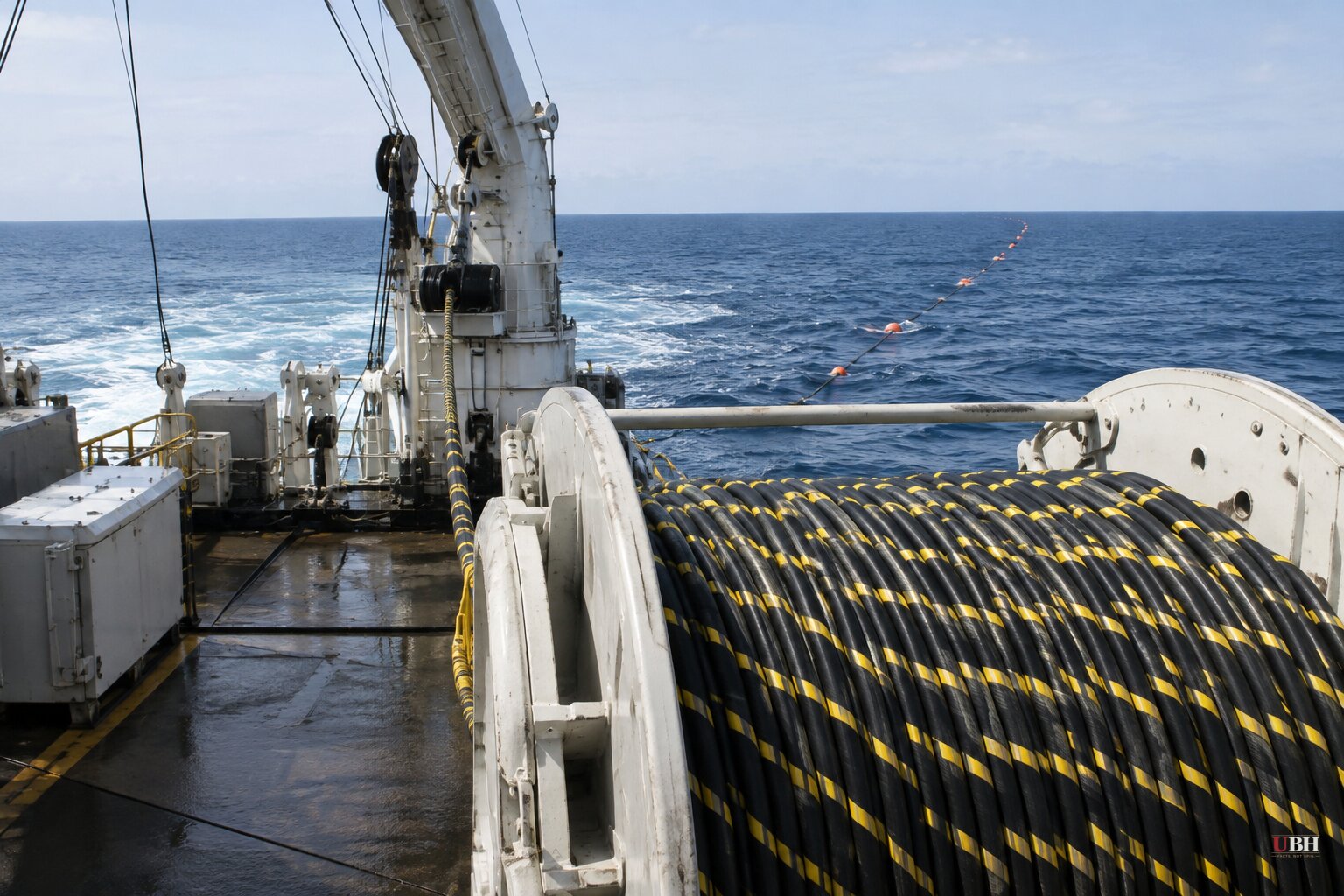
While local governments argue with Big Tech over data center power bills and water use, Meta has been building something far less visible: a global network of undersea cables that now touches every continent except Antarctica.
On September 21, Meta announced Petal, a roughly 4,300-mile (7,000 km) subsea cable connecting the United States and France. According to Meta's own engineering team, Petal will be the first transoceanic cable to deliver petabit-scale capacity, carrying 1 petabit per second, about 125,000 gigabytes per second. That's double what today's most advanced transatlantic cables can handle, and Meta says it's enough bandwidth for three-quarters of the world's population to stream music simultaneously.
Petal is scheduled to enter service in 2029. Meta is building it with Japan's NEC Corporation and Sumitomo Electric Industries, with French telecom Orange handling the landing on France's Atlantic coast, according to Capacity Global, a telecom trade publication that covered the technical details.
The Engineering Behind the Headline
The industry has spent the last decade cramming more fiber pairs into cables to boost capacity, a method called spatial division multiplexing. Meta's own systems show the progression: Marea had eight fiber pairs, Amitié had 16, and Anjana had 24, making it the first 0.5 petabit-per-second transatlantic system, according to Meta's engineering blog.
Petal takes a different approach. It uses two-core fiber, fitting two light paths inside a single strand, which lets Meta double capacity without doubling power consumption or physical infrastructure. Sumitomo says the design achieves near-immeasurable crosstalk between the two cores, and crucially, Petal stays within existing 18-kilovolt power limits so the rest of the subsea supply chain doesn't need to be rebuilt, per Capacity Global's reporting.
Six Continents and Counting
Petal is one piece of a much bigger buildout. Meta, now valued at roughly $1.85 trillion, says it has invested in more than 20 subsea cable projects over the past decade.
The biggest is Project Waterworth, announced in February 2025. It will stretch more than 31,000 miles, longer than the Earth's circumference, connecting the U.S., Brazil, South Africa, and India across five continents. Some segments will sit roughly 4.3 miles below the surface specifically to avoid ship anchors and other hazards. Waterworth will be wholly owned by Meta, making it only the company's third fully self-owned cable, according to telecom research firm TeleGeography.
Meta's 2Africa system, whose core network was completed in 2025, circles the African continent and lands in 33 countries, reaching an estimated 3 billion people. Not every project is Meta going it alone: the MAREA cable between Virginia and Spain, completed in 2017, is jointly owned with Microsoft and telecom company Telxius.
Meta has also been pushing further into consumer AI products, which has drawn scrutiny over how much access such tools need to users' email, calendars, and payment accounts, a fair worry given how much personal data flows through them. But none of that works without the physical pipes moving data between Meta's servers and users worldwide, and that's exactly what cables like Petal are built for.
This is the part of Big Tech's buildout that doesn't trigger zoning board fights or utility rate hearings. Meta is spending its own capital, not asking taxpayers to subsidize it, unlike some of the tax-incentive deals data center operators have struck with state and local governments in recent years.
Separately, AT&T signed a fiber supply deal worth more than $3 billion with Corning, announced around October 1, to meet rising terrestrial demand, according to Telecom Ramblings. AT&T says the average American household already uses more than 1 terabyte of data a month, a figure the company expects to more than double by 2030.
What Meta hasn't disclosed is the price tag for any of this. The company has not released cost figures for Petal, Waterworth, or its broader seafloor portfolio, leaving shareholders and the public to guess how many billions are going into infrastructure that, unlike a data center, nobody can drive past and photograph.
Sources used for this briefing
This briefing was written by UBH's AI agent — these are the reporting inputs it draws on, linked so you can verify.


