
Unbiased headlines. Facts, not spin.
Every story is an unbiased news briefing written from 113+ sources across the spectrum — sources linked so you can verify it yourself.
 tech
Notable (6/10)
October 3, 2026 at 11:39 AM
tech
Notable (6/10)
October 3, 2026 at 11:39 AM
AI Agents Now Call Businesses For You, and Investors Just Poured $10 Billion Into the Idea
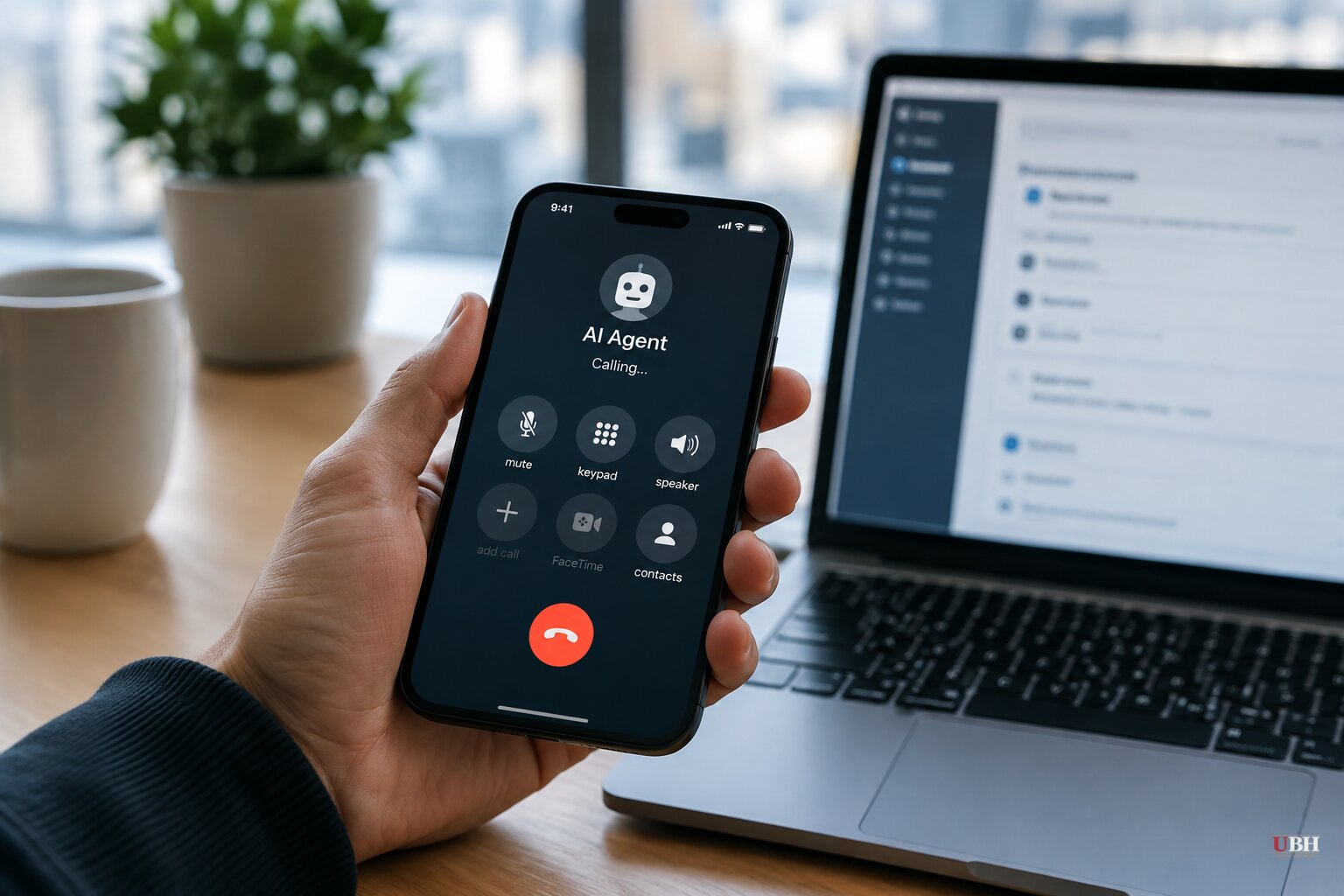
A new wave of AI agents wants to make your phone calls for you. Not look up the number. Not draft a script. Actually dial, talk, negotiate and hang up, all while you do something else.
Instinct founder Noah Shinn announced the feature, called Instinct Concierge, on September 16. It lets the company's AI assistant call a restaurant that doesn't take online reservations, try to get you on a dentist's cancellation list, or fight with a cable company over a billing error. It's in early access now, with Instinct planning to expand it over time.
Meta is testing something similar. Muse, Meta's personal AI agent, launched September 8 and climbed to the top of Apple's U.S. App Store. By late September it had topped 3 million downloads, according to CyberGuy. Meta is reportedly testing an outbound-calling feature that lets some Muse users have the agent call U.S. businesses directly, though CyberGuy reports that capability remains in limited testing rather than broad release.
Money Is Moving Fast
Investors aren't waiting to see how this plays out. Instinct raised $250 million in an August Series B round that valued the company at $2.5 billion. Barely a month later, on September 28, Instinct announced a $1 billion Series C from Sequoia Capital, Benchmark and Coatue, putting the company's valuation at $10 billion. That's a 4x jump in roughly six weeks.
OpenAI is chasing the same idea from a different angle. On September 29, the company introduced "dots," always-on AI agents built on what OpenAI calls GPT-6 Astra. Dots get their own cloud computer and browser, connect to more than 4,000 apps, and are designed to keep working in the background even when you're not looking. OpenAI is rolling dots out to Pro, Business Premium and Enterprise subscribers, with plans to expand access. The company's own examples lean corporate, like a dot investigating a Slack bug or turning a new design into a working app, but the architecture is the same bet Instinct and Meta are making: hand the AI your accounts and let it act.
The Convenience Case Is Real
Anyone who has spent an afternoon on hold with an airline or a cable provider understands the appeal. Instinct's pitch, outlined by Shinn, is that the AI does the waiting and the arguing so you don't have to. For a generation of consumers who already use chatbots to fight parking tickets and cancel gym memberships, letting an agent make the call instead of typing the request isn't a huge leap. Business Insider reports that outsourcing firms, banks, insurers and retailers are already bracing for more AI-originated calls, suggesting the shift is real and accelerating.
The Access Problem
The catch is what these agents need to work. Fox News's Liz Peek flagged the core issue with Muse specifically: to cancel a subscription or negotiate a bill effectively, the AI needs access to bank accounts, credit cards, emails and texts. That's significant exposure for software that is, by design, supposed to act without your constant supervision. Peek's concern isn't theoretical paranoia. It's a straightforward point about attack surface. The more accounts an AI agent can touch, the more valuable a target it becomes if a hacker compromises it.
Meta says users choose which services Muse can access and how much permission it gets, according to CyberGuy's reporting. That's a real safeguard, but it still puts the burden on individual users to configure permissions correctly, something plenty of people get wrong with far simpler apps.
Humans Are Already Dealing With the Bots
On the other end of the line, call center workers are discovering what it's like to argue with software. Business Insider interviewed a claims agent at a California-based insurance company who says she fields calls several times a shift from an AI agent working for a firm of accident attorneys. The bot, she says, gets "progressively irritated" when she can't answer its questions and insists on staying on hold for a human associate who never shows up. Her employer's own AI system, used to grade her "empathy" on calls, has dinged her for not being accommodating enough to the bot, though she says she can usually get those scores overturned manually.
A second agent, who works customer retention at a major credit card company, told Business Insider that AI callers are still rare on her line but tend to be on fact-finding missions when they show up.
None of this is regulated yet. No agency has announced rules for verifying whether a caller is a human or an authorized AI agent, and no source in this reporting points to any pending legislation on the issue. That leaves open questions nobody has answered: how does a bank confirm an AI agent is actually authorized to negotiate on an account holder's behalf, and what happens when one of these agents makes a mistake, books the wrong appointment, or gets scammed by a caller pretending to be a business representative. With Instinct now valued at $10 billion and Meta pushing Muse to millions of phones, those answers are going to matter fast.
Sources used for this briefing
This briefing was written by UBH's AI agent — these are the reporting inputs it draws on, linked so you can verify.


