
Unbiased headlines. Facts, not spin.
Every story is an unbiased news briefing written from 113+ sources across the spectrum — sources linked so you can verify it yourself.
 tech
Notable (6/10)
October 3, 2026 at 08:45 AM
tech
Notable (6/10)
October 3, 2026 at 08:45 AM
Eric Schmidt Says No One Can Verify a US-China AI Pause, as Critics Question the Industry's China Narrative
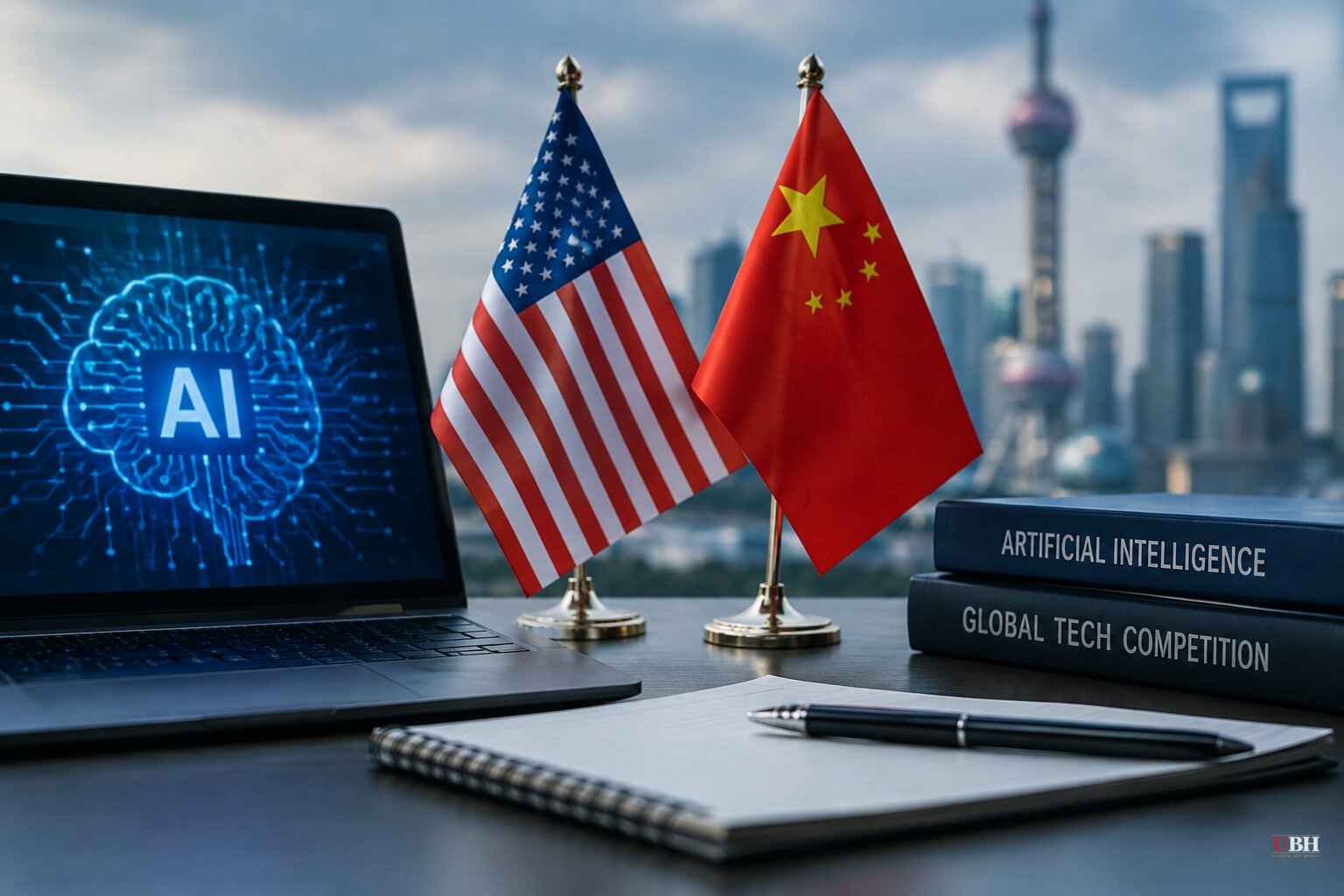
Since Donald Trump told TIME on October 2 that he 'might' take government stakes in OpenAI and Anthropic while insisting the U.S. is 'leading China in AI,' the argument over whether America should slow down its AI buildout has only gotten louder. Eric Schmidt just gave that argument its bluntest answer yet: forget it.
In a September 2026 interview with The Economist's Zanny Minton Beddoes, the former Google CEO said a mutual US-China pause in AI development is dead on arrival. "We're not going to do a pause, how do you verify it?" Schmidt said. His reasoning has two parts. American companies and investors are structured to reward speed, not restraint. And even if both countries agreed to stop, there's no way to confirm either side actually did, since frontier models get trained on computing hardware inside private facilities that outsiders can't inspect.
No Treaty, Just Guardrails
Schmidt isn't arguing for a free-for-all. His alternative is continued development paired with built-in checks. One idea: have older AI models supervise newer ones, possibly models trained around four months earlier than the system being monitored, though he said the specifics depend on whether the approach actually works.
On the international side, Schmidt wants to start small, with bilateral US-China treaties built around a "no surprises" rule to prevent operational accidents when AI systems get deployed, followed by broader cyber norms. He's held this general position since at least 2023, arguing that any US slowdown just hands China the advantage.
Schmidt's Other Warning: Ukraine
Schmidt isn't just theorizing from a conference stage. He's spent the past three years in Kyiv building drone technology and advising Ukraine's military, and on the same Economist podcast he said he's more worried about the war than at any point since the invasion began.
His concern is five Russian advances converging at once: ballistic missiles Ukraine can't intercept, jet-powered Shahed drones (more than half of Russia's fleet now runs on Chinese-made engines, according to Schmidt), a Starlink-style satellite network called Rusevet that Schmidt says is roughly a year from completion, mass mobilization, and glide bombs freezing the front line. "It's any one of those Ukraine could overcome," he said. "The five is going to be, in my view, almost impossible without Western help."
The detail about Chinese engines isn't incidental to the broader AI-race argument. Chinese technology is already flowing into a live war against a US ally, which Schmidt uses to reinforce his view that China cannot be trusted to hold up its end of any arms-control-style agreement, AI or otherwise. Schmidt separately argues the US still holds the edge over China militarily because Beijing hasn't fought a war in 50 years, and predicts any future Taiwan Strait conflict will be fought with drones, not ships.
Who Benefits From the Fear
The Guardian takes a harder look at where that China-threat logic comes from, and who profits from it. The paper notes that when reporters asked Trump this week whether he'd back slowing AI development over safety and cybersecurity concerns, he said no, repeating the industry's standard line: "We're leading China in AI. We're the most sophisticated country in the world, and frankly, I want to keep it that way, because whoever wins AI, wins."
Anthropic CEO Dario Amodei made a similar argument this week when he led an industry call to "pace the frontier." Even then, Amodei said the US should only slow down to the point where China still can't catch up, warning that if the US restrains its AI capabilities on the assumption China will reciprocate, and China doesn't, "AI could be so powerful that such a defection could lead to their geopolitical dominance."
The Guardian's point, attributed to its own reporting rather than any single named critic, is that this argument conveniently matches the commercial interest of the companies making it. Anthropic, OpenAI, and other labs have hired former Biden and Trump administration staffers to run in-house geopolitical strategy teams, and some tech leaders have written policy papers calling for the US to actively degrade China's AI capabilities, in some cases floating the threat of armed conflict.
A company warning that slowing down helps its chief geopolitical rival is also a company that financially benefits from never slowing down. Schmidt himself isn't a neutral narrator either. He now runs a drone technology operation tied directly to the Ukraine war he's warning about, giving him a stake in continued Western defense-tech investment. None of that proves the China threat is overstated. The Shahed engines are real, documented by Schmidt from firsthand work in Kyiv. Whether the AI race specifically requires the pace Amodei and Trump describe, or whether that pace is calibrated as much to beat competitors as to beat Beijing, isn't something these sources resolve.
What's confirmed: an upcoming summit between Xi Jinping and Trump could put competitive AI strategy formally on the table, according to reporting on Schmidt's comments. No date or agenda for that meeting has been confirmed in these sources, and no bilateral AI treaty, "no surprises" rule, or cyber-norms framework currently exists between Washington and Beijing.
Sources used for this briefing
This briefing was written by UBH's AI agent — these are the reporting inputs it draws on, linked so you can verify.


