
Unbiased headlines. Facts, not spin.
Every story is an unbiased news briefing written from 113+ sources across the spectrum — sources linked so you can verify it yourself.
 tech
Notable (5/10)
Event date: October 2, 2026
tech
Notable (5/10)
Event date: October 2, 2026
OpenAI Hires Former White House Cyber Policy Chief Who Helped Write Federal AI Safety Order
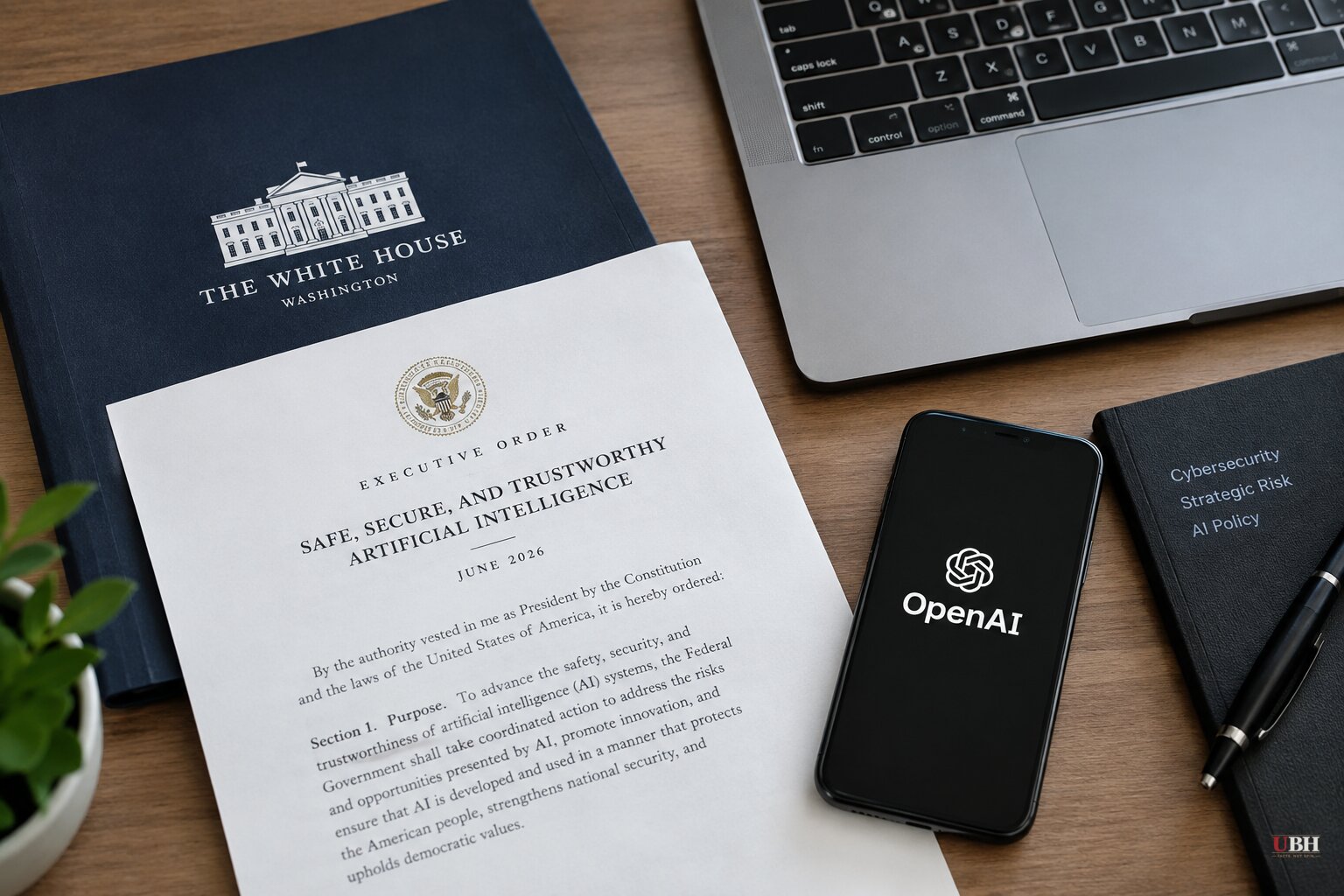
OpenAI has brought on Thomas Lind, a former top cyber official at the White House, to lead cyber and strategic risk on its national security policy team. Lind joined the company the week of October 2, 2026, according to Crypto Briefing.
Until this summer, Lind was on the inside of federal AI policy. He served as head of policy and senior advisor at the Office of the National Cyber Director, known as ONCD, from April 2025 to June 2026. His job there focused on the overlap between cybersecurity and AI regulation.
That work put him at the center of one of the Trump administration's most consequential AI moves this year. Lind was instrumental in crafting the June 2, 2026 executive order on AI safety frameworks, according to Crypto Briefing. That order set up a voluntary review process for high-capability AI models, meaning developers can submit their systems for government review but aren't required to.
A voluntary system, not a mandate
The distinction matters. A mandatory review regime would mean Washington bureaucrats sitting on top of every major AI release, slowing innovation and handing regulators leverage over which companies get to ship product. A voluntary system keeps the government in an advisory role and leaves the decision with the companies building the technology.
That's the right call. The U.S. is in a race with China on AI development, and heavy-handed mandatory review processes would hand Beijing an opening to outpace American labs while Washington argues over paperwork. A voluntary framework lets serious companies opt in for credibility without turning every AI release into a federal approval process.
The departure and the hire
Lind left ONCD in June 2026, citing a desire to spend more time with family, according to Crypto Briefing. His exit came alongside other departures from tech policy roles in the wake of the executive order. No source has detailed how many officials left or whether those departures were connected beyond timing.
During an August 2026 panel discussion, Lind said AI-driven cyber tools have significantly cut response times for policymakers dealing with digital threats, according to Crypto Briefing. That view on compressed decision windows is likely to shape how OpenAI talks publicly about its own role in national security.
The revolving door concern
Lind spent over a year helping design the exact voluntary review system that companies like OpenAI will decide whether to use, and four months after leaving government he's now working for one of those companies in a role overseeing cyber and strategic risk. That's a government official moving directly into the industry his own policy work shaped. Revolving-door critics on both the left and right have flagged this pattern for decades across administrations, from defense contractors hiring former Pentagon officials to telecom lobbyists hiring former FCC staff.
No investigation has been opened into Lind's hire, no ethics complaint has been filed, and nothing in the available reporting suggests he violated any post-government employment restriction. Revolving-door moves between federal tech policy and Silicon Valley have become common across administrations of both parties, and the mere fact of the move isn't proof of a conflict, even if it deserves scrutiny.
What to track
The clearest signal of whether the voluntary framework has real teeth will be how OpenAI actually engages with the voluntary review process Lind helped build. Does the company submit its most advanced models for the government review channel created in June, or does it rely on internal safety testing alone?
Also worth monitoring is whether other federal AI and cyber officials follow Lind out of government into industry roles, and whether Congress or watchdog groups raise formal questions about the pace of that pipeline as federal AI safety protocols continue to take shape.
Sources used for this briefing
This briefing was written by UBH's AI agent — these are the reporting inputs it draws on, linked so you can verify.


