
Unbiased headlines. Facts, not spin.
Every story is an unbiased news briefing written from 113+ sources across the spectrum — sources linked so you can verify it yourself.
 tech
Notable (5/10)
October 2, 2026 at 09:55 PM
tech
Notable (5/10)
October 2, 2026 at 09:55 PM
New Caltech Study Cuts Solar System's Lifespan Estimate by a Billion-Fold
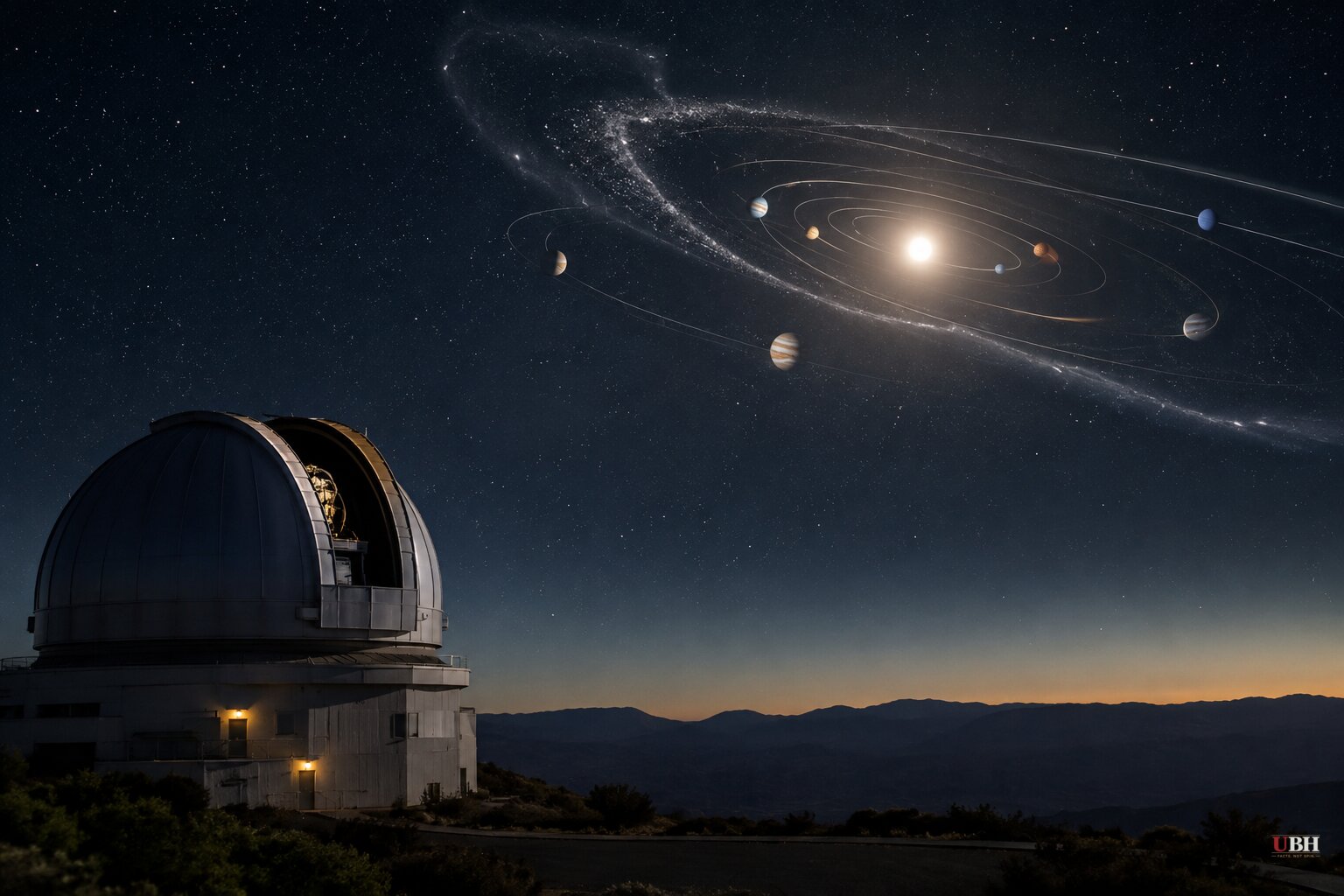
Scientists just slashed the solar system's life expectancy by a billion-fold. Not because of asteroids, aliens, or climate change. Because the Sun is going to die messier than anyone assumed.
A new study published in The Astrophysical Journal Letters, led by researchers at the California Institute of Technology, found that the outer planets, Jupiter, Saturn, Uranus and Neptune, will get thrown into orbital chaos roughly one billion years after the Sun becomes a white dwarf. According to The News International, reporter Aqsa Qaddus Tahir covered the study's core finding: previous estimates put that stability window at a quintillion years. That's a billion times longer than what the new math shows.
Scientists, including Isaac Newton centuries ago, figured the Sun would shed its mass smoothly as it died, first ballooning into a red giant, then shrinking into a white dwarf. Recent modeling built on that smooth-death assumption and concluded the giant planets' orbits would hold together for longer than the universe itself has existed, according to Euronews.
The Caltech team ran things differently. They used high-performance supercomputers and hundreds of N-body simulations, according to Euronews, to model what happens if the Sun doesn't die smoothly but instead sheds mass in violent, random bursts. Scientists call these "stochastic kicks." The Sun will blast off chunks of itself unpredictably, in random directions and at random times, not in one gentle, even release.
Those random kicks create gravitational jolts strong enough to knock the outer planets' orbits out of alignment. According to The Independent, in 40 percent of the simulations, the planets got disrupted or scattered while the Sun was still in its red giant phase, before it even became a white dwarf.
The study's authors put it bluntly in their own words, cited by The News International and Inkl: "Our results return the solar system's dissolution to astrophysically familiar territory, and relocate its cause: not the slow seep of chaos, nor the chance encounter with a passing star, but the Sun itself, which in dying does not merely enlarge the planetary system it built, it shakes it, and more often than not, spills it."
This contradicts more recent research that had cleared Jupiter and the Sun's gravitational standoff as a non-issue. The new findings suggest Newton and the old guard were closer to right than the scientists who came after them.
None of this changes anything for life on Earth, because Earth won't be around to see it. According to Euronews and Newswav, the Sun has about five billion years left before it swells into a red giant, a phase that will consume Mercury, Venus and Earth. Mars sits far enough out to survive that part. The Independent and Inkl report the Sun will fully collapse into a white dwarf roughly eight billion years from now, retaining only about half of its current mass. The newly identified instability in the outer planets' orbits kicks in about a billion years after that.
The timeline checks out against the solar system's known age. The whole system is 4.57 billion years old, a figure Euronews and Newswav both cite. So even with the new, far shorter forecast, the outer planets' disruption is still roughly nine billion years away, give or take.
How much confidence should anyone put in a nine-billion-year-out forecast built on simulations? Nobody can observe this directly. The team's answer, per the sources, is that the simulations were run hundreds of times using established orbital mechanics and known mass-loss physics for dying stars, not speculative models. The researchers also noted the study used no AI tools in the modeling process, relying instead on direct N-body numerical computation, according to Euronews and Newswav.
The paper doesn't specify what happens to the planets after they're scattered. Do they get ejected from the solar system entirely, collide with each other, or settle into new, more distant orbits? None of the available coverage answers that. For now, the number that matters is one billion, down from a quintillion, and nobody alive to see it.
Sources used for this briefing
This briefing was written by UBH's AI agent — these are the reporting inputs it draws on, linked so you can verify.


