
Unbiased headlines. Facts, not spin.
Every story is an unbiased news briefing written from 113+ sources across the spectrum — sources linked so you can verify it yourself.
 tech
Low Interest (4/10)
October 3, 2026 at 06:14 AM
tech
Low Interest (4/10)
October 3, 2026 at 06:14 AM
Kyrgyzstan Reaches Orbit for $130,000 While Britain's Only Rocket Startup Pushes Its Launch Debut to 2030
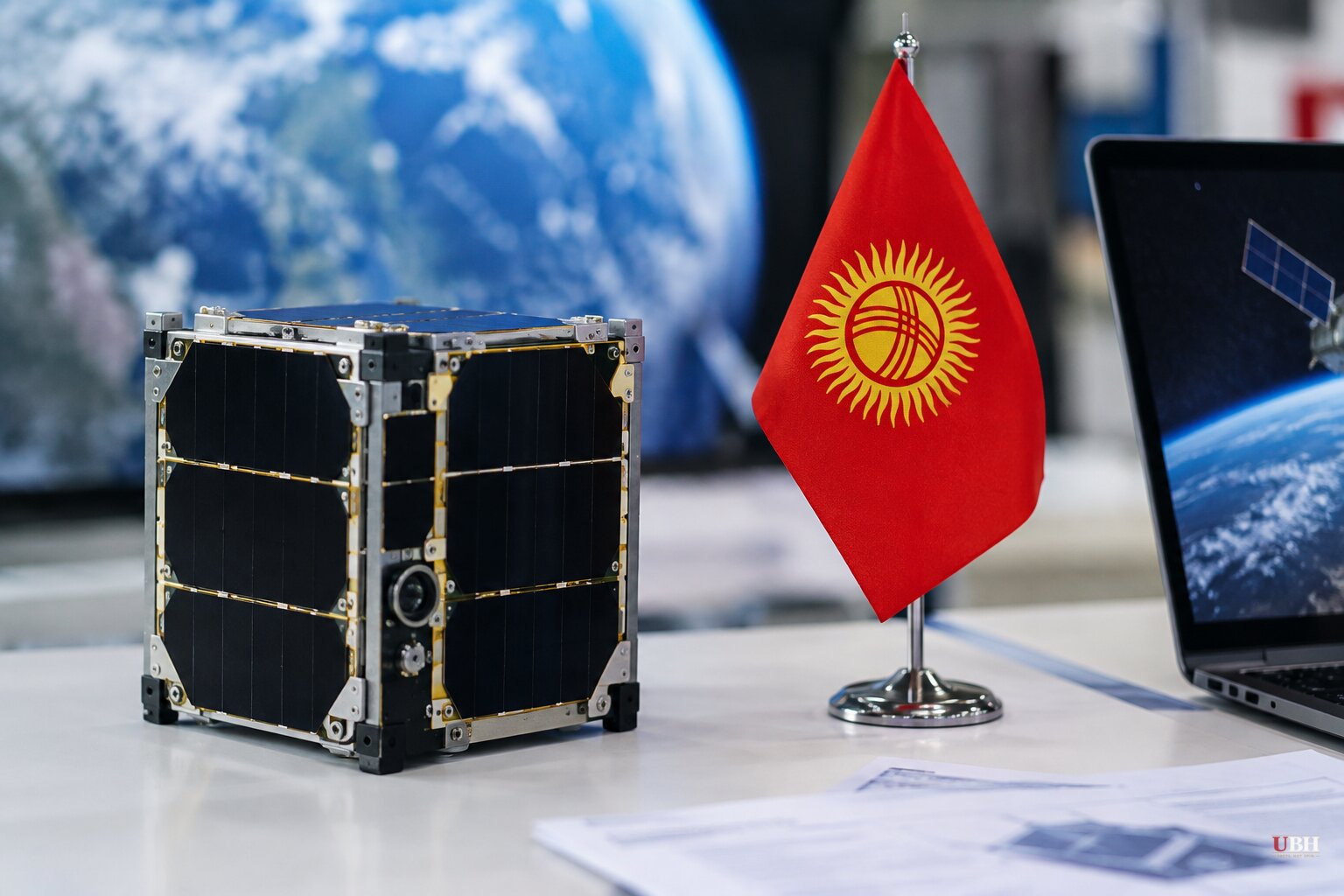
Kyrgyzstan became a spacefaring nation on October 1, 2026, when its first national satellite launched aboard a SpaceX Falcon 9 from Vandenberg Space Force Base in California, according to a statement from the Kyrgyz presidential administration carried by Xinhua and Qazinform. President Sadyr Japarov attended the launch in person during a working visit to the United States.
The satellite rode along on SpaceX's Transporter-18 rideshare mission, which The Times of Central Asia reported was carrying 130 payloads total, with a 58-minute launch window opening at 11:18 a.m. Pacific Time on October 1. SpaceX's own mission manifest didn't call out the Kyrgyz spacecraft by name, which is normal for rideshare flights where dozens of small satellites from different customers share one rocket.
A Satellite for $130,000
The satellite weighs about 5 kilograms, was built by roughly 10 Kyrgyz engineers over two and a half years, and cost somewhere between $115,000 and $140,000, according to figures reported by The Times of Central Asia, pivot.uz and Streamline Feed, which converge on approximately $130,000.
A team the size of a small startup, working for less than it costs to buy a house in most American cities, put a working Earth-observation satellite in orbit.
The satellite will be run from a mission control center in Bishkek and is designed to track agricultural land, glaciers, rivers, forests and pastures, according to the presidential statement cited by Xinhua. Officials say the data will help spot illegal mining, unauthorized dumping, and give earlier warning on droughts, floods, landslides, mudflows and wildfires.
The sources disagree on one key point. Qazinform and Streamline Feed both report the project was built jointly with the United Arab Emirates. The Times of Central Asia quotes Ilya Cherny, director of Kyrgyz Electronics, saying most of the satellite's technology was Russian, and that building every system from scratch would have taken far longer. The state-owned firm Kyrgyz Asman is named across multiple reports as the entity responsible for assembly. None of these sources reconcile the UAE-partnership claim with the Russian-technology claim, and neither Kyrgyz Asman nor the presidential administration has publicly addressed the discrepancy.
Regionally, Kyrgyzstan is catching up, not leading. Kazakhstan already runs its own communications and Earth-observation satellites. Uzbekistan has a Chinese-built satellite, Samarkand-2028, carrying an Uzbek-developed AI module that launched in August, though Uzbekcosmos has said that spacecraft is not the country's official national satellite. Uzbekistan's own Mirzo Ulugbek scientific satellite is planned for 2028. Kyrgyz developers have said the country may eventually need four or five satellites to fully cover its monitoring needs, per The Times of Central Asia.
Skyrora's Retreat to 2030
Building the rocket yourself is a different problem entirely, and Skyrora's situation shows why. The Edinburgh-based company, Scotland's only remaining orbital launch startup, completed a 45-second hotfire test of a subscale version of its 70 kN first-stage engine, Payload Space reported, and used the occasion to confirm its first orbital launch attempt is now targeted for 2030, four years later than the date it set just a year earlier.
The engine uses a staged combustion cycle running on hydrogen peroxide, an architecture that has never been commercially qualified for that propellant combination. Staged combustion is the same closed-cycle design used in the Space Shuttle's main engines and SpaceX's Raptor, but both of those run on cryogenic propellants that have been studied for decades. Skyrora is attempting something genuinely novel, which is also exactly why it's hard.
Skyrora COO Jack-James Marlow defended the delay to Payload Space in blunt terms: "Our strategy is not to sprint towards orbit. We've seen other companies increase their opex, grow drastically. I see rocket companies want to be rocket companies, rather than stable businesses. Where my view is, we've got to be a stable business first, rather than one big 10-year gamble."
That argument has some real logic behind it. Burning cash to hit an arbitrary launch date has sunk plenty of aerospace startups before they ever flew. A company that survives to try again is better than one that flames out chasing a deadline.
But the comparison Payload Space draws is hard to ignore. Isar Aerospace, a German launch company founded a full year after Skyrora, reached orbit on September 5, 2026, on just its second test flight, launching from Andøya Spaceport in Norway. Isar raised more than €400 million ($444 million) to get there, versus Skyrora's roughly $65.9 million in total venture financing. Isar also beat the European Launcher Challenge's 2027 orbital deadline by a full year.
Kyrgyzstan proved that a rideshare seat and $130,000 is enough to get a flag in orbit. Skyrora is finding out that building the rocket itself, especially with an unproven engine architecture, takes vastly more time and money than anyone initially pitches investors. Whether Skyrora's full-size 70 kN engine ever gets qualified for flight, and whether nine of them can be built and flown reliably by 2030, remains an open question Payload Space says the company has not yet answered in detail.
Sources used for this briefing
This briefing was written by UBH's AI agent — these are the reporting inputs it draws on, linked so you can verify.


