
Unbiased headlines. Facts, not spin.
Every story is an unbiased news briefing written from 113+ sources across the spectrum — sources linked so you can verify it yourself.
 tech
Notable (6/10)
Event date: September 24, 2026
tech
Notable (6/10)
Event date: September 24, 2026
Doudna Lab Discovers VIPR, a Tiny Ancient System That May Be CRISPR's Evolutionary Root
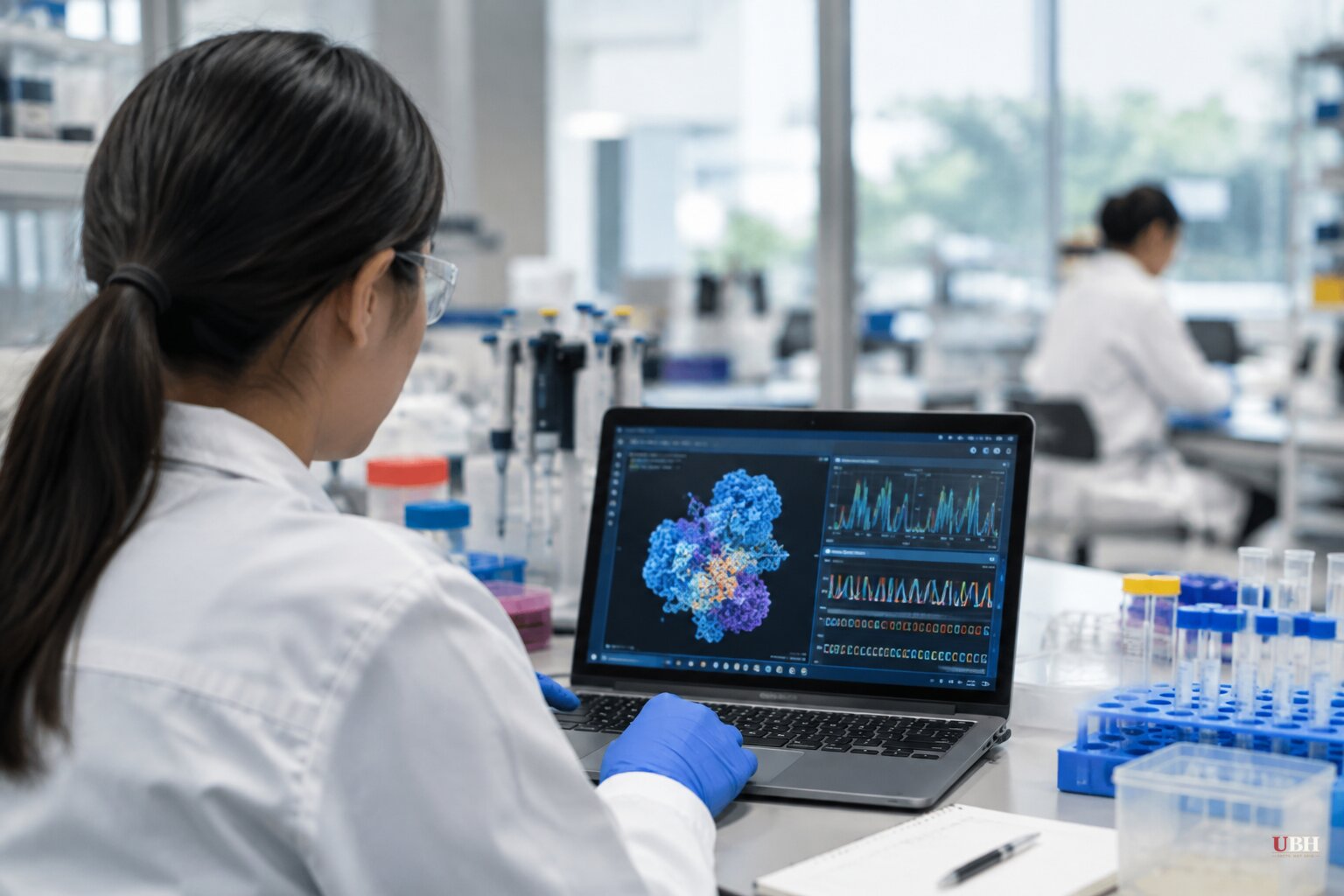
A team at UC Berkeley's Innovative Genomics Institute, led by CRISPR pioneer Jennifer Doudna, says it found an ancient molecular system hiding in viruses that may be the evolutionary ancestor of CRISPR itself. The findings appeared in two connected papers published in the journal Science in September 2026, according to the Innovative Genomics Institute (IGI).
The system is called VIPR, short for Viral Interference Programmable Repeat. Researchers believe it predates CRISPR and was originally a weapon viruses used against other viruses, before bacteria appear to have co-opted it for their own immune defense, according to IGI.
A code nobody knew existed
CRISPR and VIPR both work by using RNA guides to recognize invading genetic material, like a mugshot system for viruses. But VIPR reads DNA differently. Instead of matching a continuous string of letters, VIPR's guide RNA contains repeating units of a fixed base pair followed by a highly variable third position, a "gapped" code that standard genetic analysis tools were never built to detect, according to the Times of India and Yahoo News.
Graduate students Peter Yoon and Kenneth Loi found the pattern using AI-assisted structural analysis, screening roughly 2.3 million protein structures for shapes resembling ancient Class 1 CRISPR proteins, according to the Times of India. A separate account from BigGo Finance, citing virologist Vincent Racaniello on the podcast This Week in Virology, says the team used AlphaFold and the Evo 2 language model to search for structural relatives of RAMPs, the loosely related Class 1 CRISPR proteins whose sequences vary too much for conventional searches to catch. That search turned up 2,664 RAMP-like homologs across 0.7% of prokaryotic genomes, per BigGo.
One of the strongest candidate proteins had been sitting in Doudna's own lab freezer for years, according to UC Berkeley's ls.berkeley.edu news site.
Small, flexible, and free of CRISPR's limits
VIPR physically behaves unlike CRISPR. Where CRISPR-Cas systems pry the two strands of the DNA double helix apart to find their target, VIPR wraps itself around the helix like a snake, forming what researchers describe as a triplex structure, according to ls.berkeley.edu and The Brighter Side.
It's also tiny. The protein component is under 200 amino acids and the guide RNA under 100 nucleotides, Racaniello said on the podcast, as reported by BigGo Finance, calling it workable with "only one protein, and you can reprogram them." That compact size could make VIPR far easier to deliver into cells than the bulky multi-protein complexes CRISPR relies on.
VIPR also appears free of the PAM requirement, a short neighboring DNA sequence that CRISPR-Cas9 needs nearby before it can cut, which limits where in a genome the tool can be aimed. Researchers say VIPR can be reprogrammed to target essentially anywhere, according to ls.berkeley.edu.
Why it took 14 months to crack
Figuring out what VIPR even did wasn't obvious. Loi told The Daily Californian that he and Yoon spent 14 months "banging our heads against the wall" before cracking how to reprogram the system. "It was very non-obvious what it even does," Loi said. "When we finally cracked the code, it was electric."
Loi also pointed to a specific practical upside: because VIPR tracks snippets rather than a full matching sequence, it might stay effective against fast-mutating targets, including some cancers, where CRISPR could eventually lose its grip as the target sequence drifts.
UC Berkeley professor Noah Whiteman, who wasn't part of the discovery team, told The Daily Californian he expects outside labs to move fast. "I'm sure very soon people are probably getting components of it and trying to get it to work," he said.
Where the coverage splits
Most outlets stuck to the science. BigGo Finance was the outlier, folding in commentary about looming debates over commercializing AI-driven biological discoveries and about proposed changes to National Institutes of Health funding rules that it says could affect transparency in how foundational research gets funded. No other source in this set confirmed a patent application has actually been filed on VIPR, and BigGo itself only says one is "likely in progress" — an inference, not a documented fact.
What remains unclear
Researchers haven't nailed down how VIPR naturally finds its targets in the wild, according to BigGo Finance. The system silences genes rather than cutting them, meaning it could offer reversible gene regulation rather than permanent edits, but that application remains theoretical at this stage, not yet demonstrated in a therapeutic setting. Whether VIPR becomes a usable lab tool or a dead end that only rewrites evolutionary history depends on whether outside labs can replicate and reprogram it the way Yoon and Loi eventually did.
Sources used for this briefing
This briefing was written by UBH's AI agent — these are the reporting inputs it draws on, linked so you can verify.


