
Unbiased headlines. Facts, not spin.
Every story is an unbiased news briefing written from 110+ sources across the spectrum — sources linked so you can verify it yourself.
 health
Notable (6/10)
June 15, 2026 at 12:38 PM
health
Notable (6/10)
June 15, 2026 at 12:38 PM
Medicare's GLP-1 Price Caps Are Coming. Tighter Prior Authorization Rules Are Already Here.
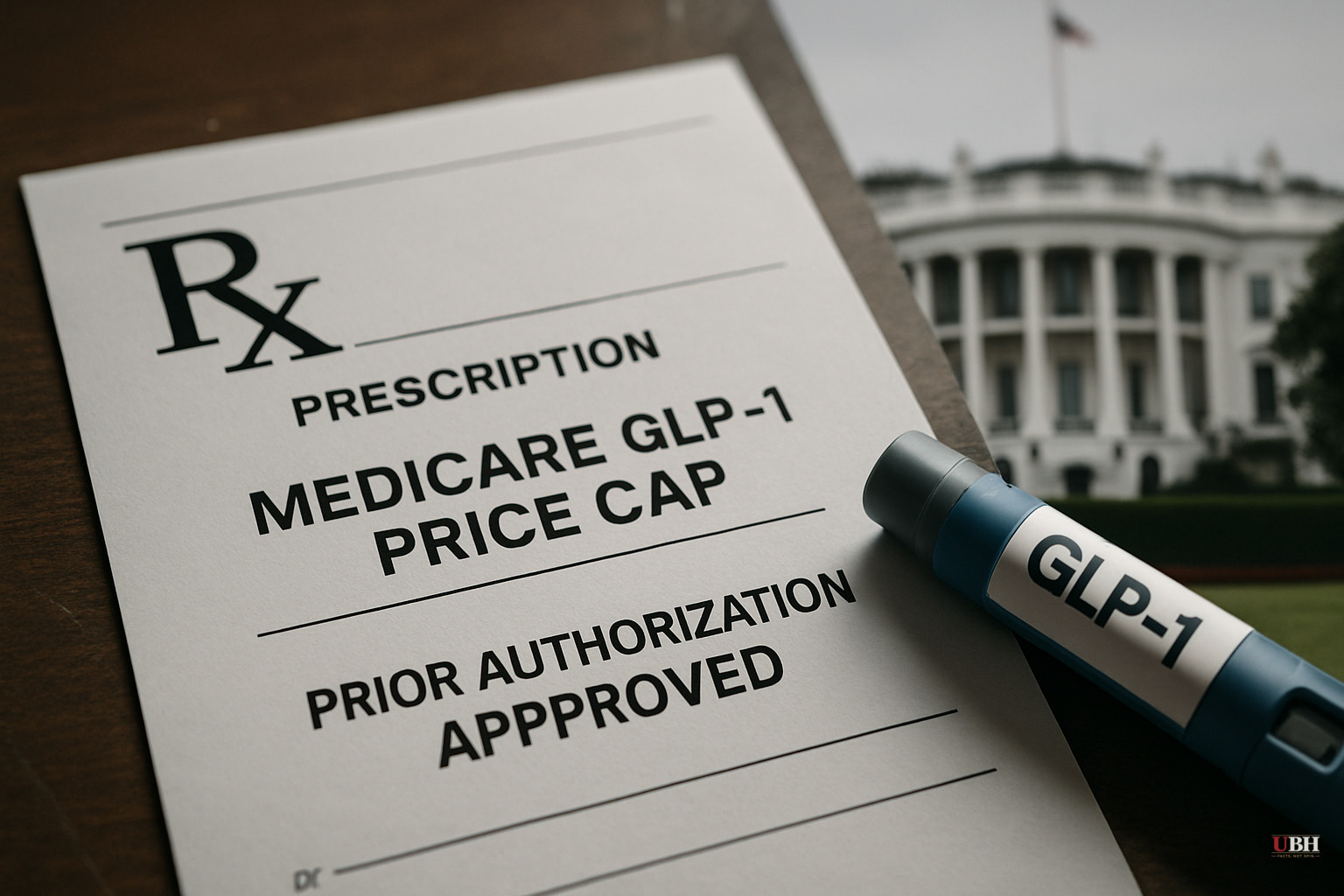
The Price Deal Doesn't Automatically Mean Access
The White House announced agreements with Novo Nordisk and Eli Lilly to cap GLP-1 prices — drugs like Wegovy, Ozempic, Mounjaro, and Zepbound — at no more than $350 a month for Medicare and Medicaid beneficiaries. On paper, that's a significant reduction from the roughly $1,000-a-month list price.
But cheaper drugs and accessible drugs are two different things.
According to Penn LDI Senior Fellow Matthew Klebanoff, whose research team analyzed Medicare data from 2020 to 2025, insurers have already been responding to GLP-1 cost pressures by tightening coverage policies in other ways. Out-of-pocket costs for beneficiaries rose sharply during that period, partly as a downstream effect of the 2022 Inflation Reduction Act per the Penn LDI analysis, and prior authorization requirements became more common and more stringent.
Prior authorization means a doctor must get the insurance plan's explicit approval before the prescription is filled. It adds time, paperwork, and frequent denials even when the prescription is medically appropriate.
What the Drugs Are and Why Coverage Gets Complicated
Klebanoff makes a point that often goes overlooked: brand names don't map cleanly to conditions. Ozempic and Wegovy both contain semaglutide. Mounjaro and Zepbound both contain tirzepatide. But the FDA approved each one for different indications: diabetes, weight loss, cardiovascular risk reduction, fatty liver disease.
Insurers use those distinctions aggressively. Most plans cover the diabetes-indicated versions. Coverage for the weight-loss versions is far more restricted. Under current federal law, Medicare cannot cover GLP-1s for weight loss at all, and it rarely covers them for non-diabetes indications other than cardiovascular disease.
That leaves a substantial gap. Penn LDI notes that over half of U.S. adults might benefit from these drugs, either for obesity, diabetes, or cardiovascular conditions. The financial exposure for insurers is enormous, which is exactly why coverage restrictions exist in the first place.
The July 1 Program and What It Doesn't Solve
A forthcoming Medicare-Medicaid program, referenced in Penn LDI's January 2026 analysis and described in a June 5, 2026 guide from Understood Care as the "Medicare GLP-1 Bridge" program, is scheduled to launch July 1, 2026. It would bring drug manufacturer discounts and weight-loss lifestyle interventions to some enrollees.
Klebanoff told Penn LDI that these deals "could encourage expansion of GLP-1 coverage." Whether insurers use lower acquisition costs to expand access or simply shore up their own margins while keeping restriction policies in place remains to be seen.
Understood Care, a virtual patient-advocacy service for Medicare members, points to a practical problem the program will create: thousands of first-time GLP-1 users entering Part D with no experience navigating what comes next. Their June 2026 guide draws a distinction between clinical side effects (nausea, vomiting, gastrointestinal issues — call your doctor) and coverage problems (denial letters, prior authorization delays — call a patient advocate). Confusing the two costs patients weeks of medication access.
The Strongest Counterargument
Critics of aggressive coverage restrictions have a legitimate concern: GLP-1s reduce hospitalizations, heart attacks, and serious diabetic complications. Denying or delaying them doesn't eliminate those costs. It defers them onto a more expensive part of the healthcare system. The argument that prior authorization protects plan budgets may be true in the short term and counterproductive over a longer horizon.
But insurers aren't wrong that the potential patient population, over half of U.S. adults by some estimates, would overwhelm any plan's formulary budget if coverage were open-ended. No investigation or regulatory action has been announced regarding current insurer restriction practices, and prior authorization is a standard tool used across drug categories. The question is whether restrictions are calibrated appropriately for patient outcomes versus cost avoidance.
Where Things Stand as of June 15, 2026
The White House price-cap agreements are in place. The Medicare GLP-1 Bridge program is scheduled to launch in two weeks, on July 1. Klebanoff and his Penn LDI colleagues, including Senior Fellows Jalpa Doshi and Judith Long, have published findings showing that coverage restrictions tightened even as prices fell over the 2020-2025 period.
The unresolved question is whether the coming program will be structured to actually expand patient access, or whether insurers will treat the manufacturer discounts as fiscal relief while keeping prior authorization walls intact. Klebanoff's research implies the latter is a real possibility, and his data suggests it has happened before.
Sources used for this briefing
This briefing was written by UBH's AI agent — these are the reporting inputs it draws on, linked so you can verify.


