
Unbiased headlines. Facts, not spin.
Every story is an unbiased news briefing written from 110+ sources across the spectrum — sources linked so you can verify it yourself.
 economy
Major Story (8/10)
August 12, 2026 at 08:42 AM
economy
Major Story (8/10)
August 12, 2026 at 08:42 AM
Medicaid Fight Widens: California and Minnesota Funding Frozen, Transgender Youth Coverage Set to End Oct. 13
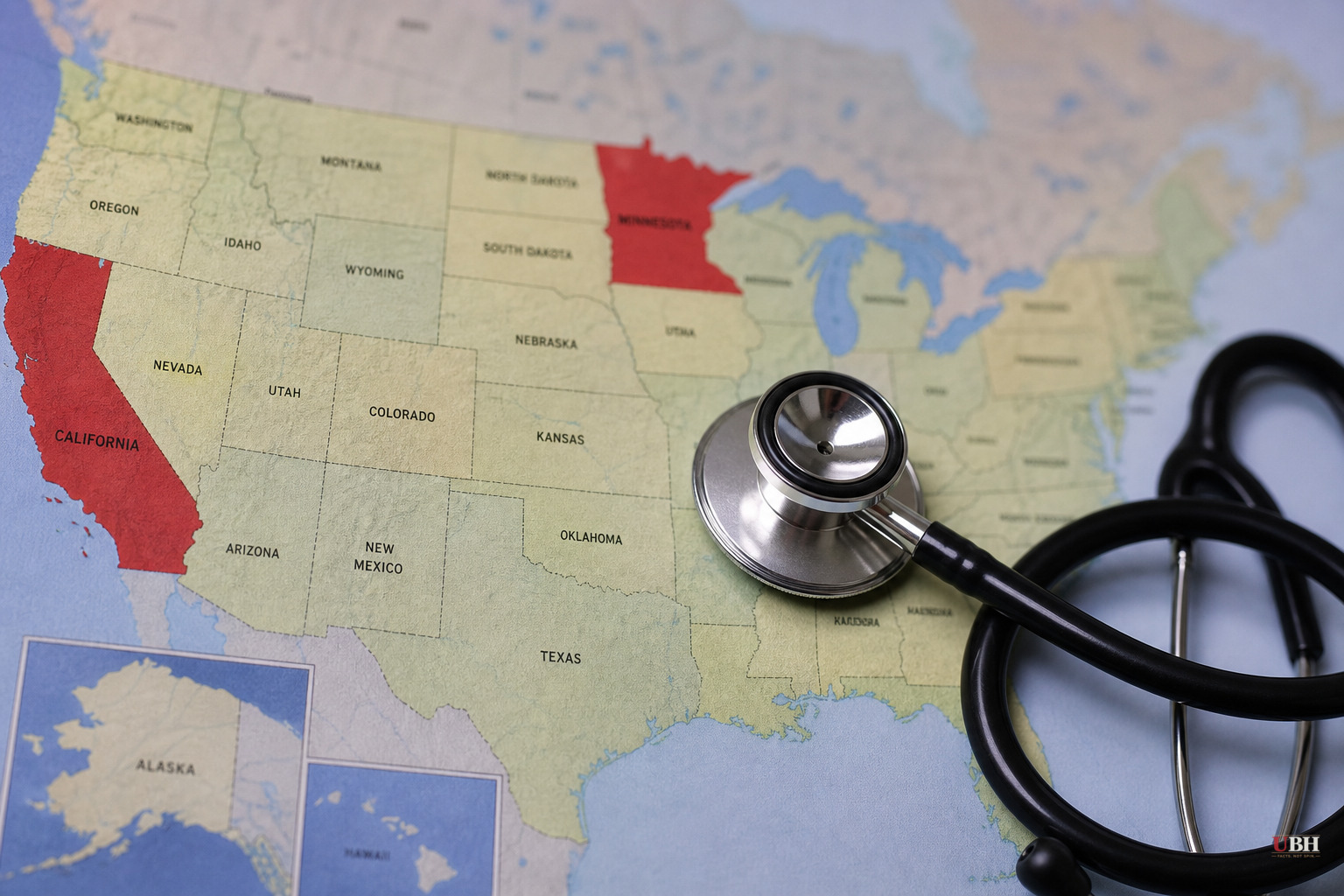
The federal government is currently withholding more than $2.7 billion in Medicaid payments from California and Minnesota over what officials call suspected fraud in home caregiving programs. That freeze runs alongside a separate, newly announced policy that will cut off Medicaid and CHIP funding for gender-affirming hormone treatments and surgeries for anyone under 19, effective October 13.
The Money Freeze
According to The Guardian, the Trump administration announced last month it would withhold $867 million in Medicaid funding from California, on top of an earlier $1.34 billion halt, bringing the total to $2.2 billion. Minnesota is separately out $550 million covering the past three quarters, per the same report.
These aren't hypothetical future payments. The states already covered these Medicaid services and normally get partially reimbursed by Washington. Withholding that reimbursement means California and Minnesota are absorbing the cost themselves right now, creating what The Guardian describes as real budget strain.
Health and Human Services Secretary Robert F. Kennedy Jr. said at a press conference, "We suspect much of the questionable spending involves in-home services." CMS Administrator Dr. Mehmet Oz added that in-home supportive services, which let families care for disabled relatives at home instead of relying on outside caregivers, are a program that "can be abused."
Any program funneling billions into home-based care, with limited third-party oversight of hours worked or services rendered, is inherently harder to audit than institutional care. Fraud concerns about in-home Medicaid programs aren't new, and government watchdogs across administrations have flagged billing irregularities in home health services before.
Neither Kennedy nor Oz has specified what exactly is fraudulent. Andy Schneider, a research professor at Georgetown University's McCourt School of Public Policy, told The Guardian that home-based services have become "the flashpoint" in these accusations. Carl Tobias, a law professor at the University of Richmond, called it "a highly unusual way to approach such accusations" — freezing money first and putting the burden on states to prove they eliminated fraud the federal government hasn't detailed.
If Washington has evidence of specific fraudulent billing, it should show it. If it doesn't yet, freezing $2.7 billion in already-rendered services on suspicion alone is a serious move that deserves scrutiny regardless of which administration does it.
Shannon Rosa, a mother who relies on California's in-home supportive services program to care for her disabled son, put it bluntly to The Guardian: "Without this, people become homeless. They lose their income. They lose their stability. Whatever tiny safety net they had is gone."
The Bigger Medicaid Picture
This funding fight is happening against the backdrop of the One Big Beautiful Bill Act, signed into law July 4, 2025. According to the American Medical Association, the law makes significant cuts and policy changes to Medicaid and ACA marketplaces that will "worsen patient access to care." Crypto Briefing reports the law is projected to cut federal Medicaid funding by nearly $1 trillion over the next decade, with California officials estimating a $30 billion annual hit to Medi-Cal, which covers roughly 15 million low-income residents.
Separately, KFF reports that 44 states plus DC must impose work requirements on ACA expansion adults and certain waiver enrollees starting January 1, 2027. States including Georgia, Tennessee, Wisconsin, Hawaii, Massachusetts, New York, Oregon, and Utah have waiver programs already identified as subject to the rules, per CMS data cited by KFF. States now face a tight runway to build enrollment verification systems, train staff, and handle what could be a wave of paperwork-driven coverage losses.
The Transgender Care Cutoff
On top of the funding freeze, the administration announced Medicaid and CHIP will stop paying for gender-affirming surgeries and hormone treatments for anyone under 19, effective October 13, according to CBS News and the Associated Press. Mental health treatment coverage continues. Existing patients on hormone treatments will see coverage phased out by April 2027.
President Trump said on social media, "We are not going to pay for our innocent children to undergo these barbaric surgeries and practices, which result in unthinkable and irreversible harm to their young bodies," and directed Dr. Oz to implement the change.
At least 27 states already ban this care for minors, CBS reported, and gender-affirming surgeries for minors are rare to begin with. Hormone treatments and puberty blockers are more common. The American Society of Plastic Surgeons said earlier this year it found "insufficient evidence" that benefits of surgical intervention for minors with gender dysphoria outweigh the risks, a notable data gap given how contested this issue is.
The American Medical Association and most major medical groups support access to this care. GLBTQ Legal Advocates and Defenders legal director Josh Rovenger said the rule "is putting up barriers between parents and their ability to make the best medical decisions for their children" and signaled a legal challenge is coming. Human Rights Campaign President Kelley Robinson called the move an effort to "terrorize" trans youth and families.
CMS did not respond to CBS News questions about how much taxpayer funding currently goes toward these treatments, meaning the actual dollar impact of this specific policy remains unclear even as the political fight over it intensifies.
Lawsuits from LGBTQ+ advocacy groups are expected before the October 13 effective date. California and Minnesota may also release documentation either substantiating or rebutting the fraud allegations behind the Medicaid funding freeze.
Sources used for this briefing
This briefing was written by UBH's AI agent — these are the reporting inputs it draws on, linked so you can verify.


