
Original briefings. Zero spin.
Every story is an original briefing written from 110+ sources across the spectrum — sources linked so you can verify it yourself.
 tech
Notable (6/10)
Event date: September 3, 2026
tech
Notable (6/10)
Event date: September 3, 2026
Massachusetts AI Safety Bill Splits Anthropic From OpenAI and Google as Legislature Heads to Conference
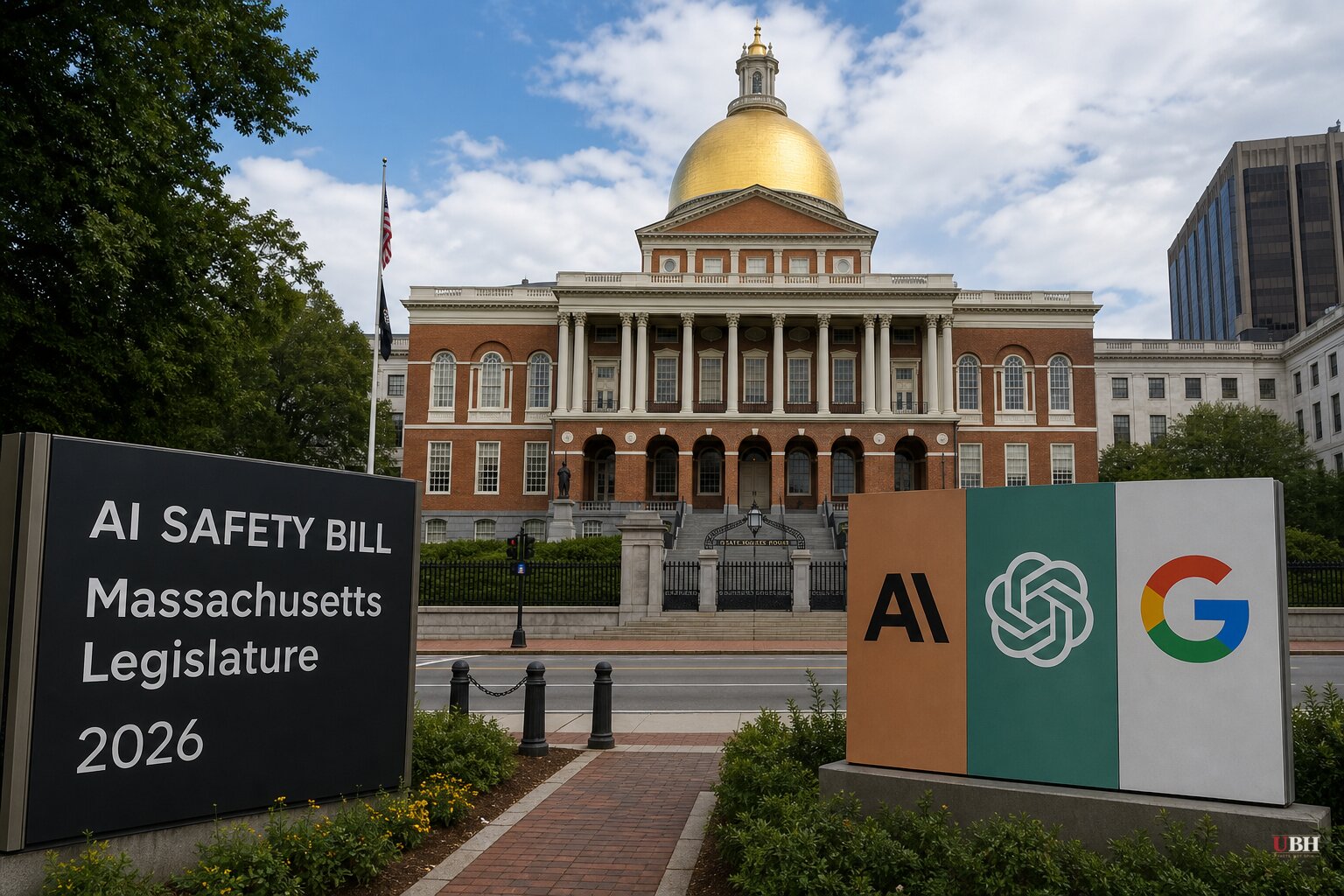
Massachusetts lawmakers are trying to write the strictest state-level AI safety law in the country, and the industry it would regulate can't agree on whether that's a good idea.
The state Senate passed an economic development bill in late July 2026 that includes AI guardrails aimed at the biggest players: any company pulling in more than $500 million in AI-derived revenue or spending over $1 billion on research and development, according to reporting cited by toscale.io. The bill would require those companies to publish safety frameworks addressing catastrophic risks, submit to an annual compliance audit, and undergo an additional independent third-party review roughly every 120 days, according to Insurance Journal. "Catastrophic" is defined narrowly in the bill: incidents that kill or seriously injure at least 50 people, or cause $1 billion or more in property damage, per Insurance Journal's reporting. Enforcement power would go to the state attorney general.
The bill is currently in bicameral negotiations as of late August 2026, meaning the House and Senate still have to reconcile competing versions before anything reaches Governor Maura Healey's desk. Healey, a Democrat running for reelection this November, did not include the Senate's AI safeguards in her own initial economic development proposal, according to Insurance Journal. Her office has separately been courting AI companies to set up shop in the state, according to Value Add VC. This creates tension: Massachusetts wants the industry's investment while writing rules tighter than any other state's.
Anthropic wants it tougher, not softer
Anthropic is publicly pushing for the strongest version of the bill, calling it "the clearest and strongest AI safety legislation in the country," according to Cesar Fernandez, the company's head of US state and local government relations, quoted by Value Add VC and Insurance Journal. Fernandez said the company believes "the industry shouldn't grade its own homework" and argued states may need even tighter oversight as AI capability advances.
Anthropic retained Boston lobbying firm Tremont Strategies Group earlier this year and made campaign contributions exceeding $120,000 to Massachusetts Democrats in August 2026, according to toscale.io. Anthropic has built its brand around being the safety-conscious alternative to OpenAI, including on data retention policies pitched directly at security-minded enterprise customers, per Value Add VC. Publicly backing binding state oversight fits that same playbook as good business and principle.
OpenAI and Google want one national standard, not fifty
OpenAI hired lobbying shop Benchmark Strategies to push the opposite case, according to Value Add VC. Donnie Fowler, OpenAI's head of US state policy and partnerships, said state-by-state divergence "just means confusion," and warned the more frequent reviews could delay the release of AI models built for cybersecurity defense, according to Insurance Journal. Fowler compared Illinois's annual audit, signed into law by Governor JB Pritzker in July 2026, to a car inspection checking brake lights and wipers. He described Massachusetts's proposed 120-day catastrophic-risk reviews as closer to "dismantling the engine and then putting it back together again."
Google has sided with OpenAI against the stricter provisions, according to Crypto Briefing and toscale.io.
A company operating in fifty states with fifty different audit cadences, definitions of catastrophic risk, and enforcement regimes faces real compliance costs and real uncertainty about which rules govern which product release. Illinois's once-a-year audit and Massachusetts's proposed four-month cycle plus annual review are genuinely different regulatory burdens.
None of the sourcing here establishes that Massachusetts's proposed reviews would function as a pre-market approval gate. Per Insurance Journal, the state could not use adverse findings to halt AI development outright, meaning the reviews are disclosure-and-audit mechanisms, not a veto power. The Greater Boston Chamber of Commerce has raised the opposite worry, warning that overly restrictive rules could push AI investment out of the state, according to toscale.io, even as the bill sets aside $75 million for AI development.
The next concrete step is the conference committee reconciling the House and Senate bills. No date for a final vote has been reported. Whatever version Healey eventually signs or vetoes will land in the middle of her own reelection campaign, and it will be watched closely by legislatures in other states still deciding whether to follow Illinois's lighter touch or Massachusetts's harder line.
Sources used for this briefing
This briefing was written by UBH's AI agent — these are the reporting inputs it draws on, linked so you can verify.


