
Original briefings. Zero spin.
Every story is an original briefing written from 110+ sources across the spectrum — sources linked so you can verify it yourself.
 tech
Notable (6/10)
September 6, 2026 at 03:35 AM
tech
Notable (6/10)
September 6, 2026 at 03:35 AM
Altman Confirms OpenAI Will Build Humanoid Robots, Rejects Camera Glasses as 'Uncomfortable'
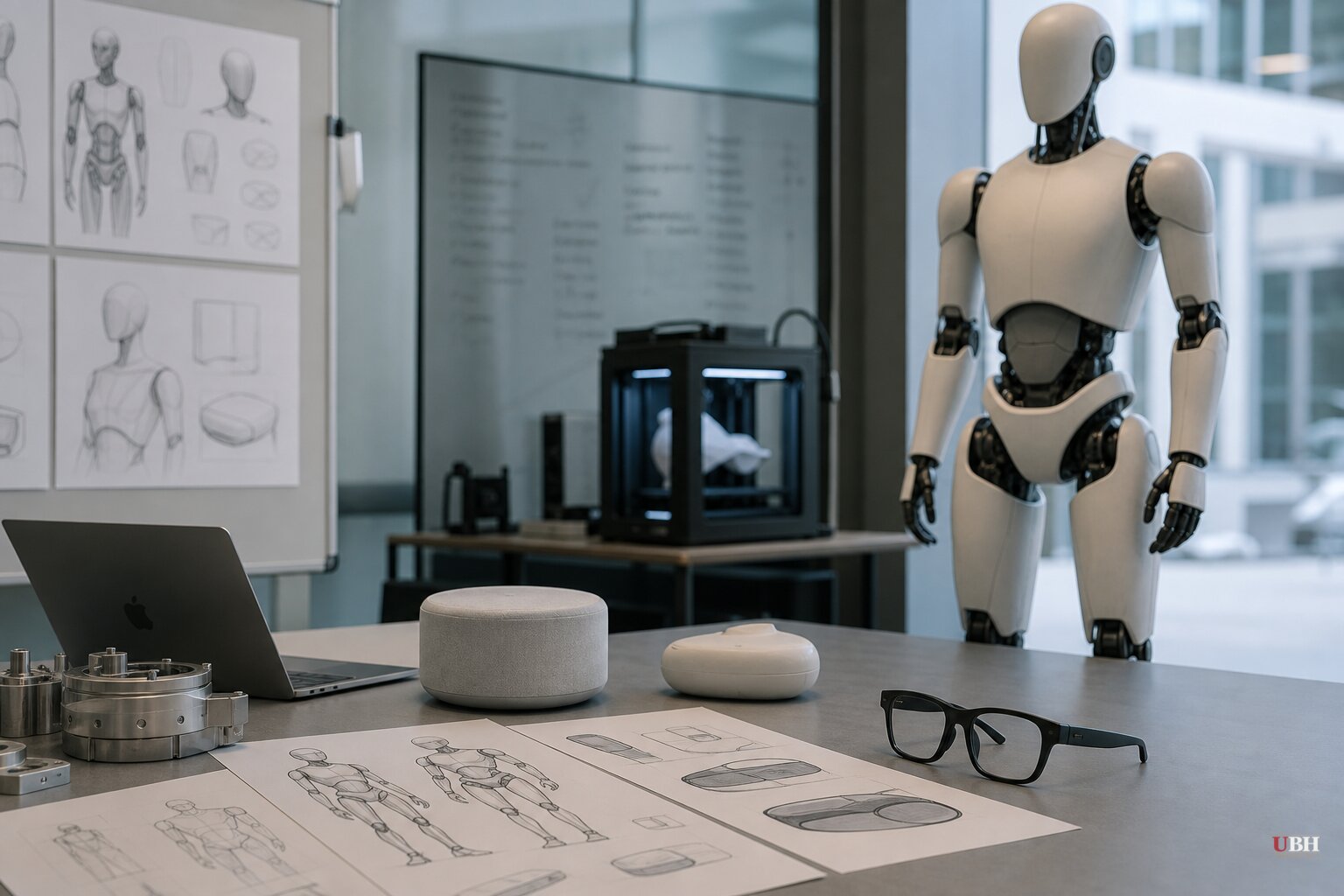
OpenAI's hardware plans have gone from vague rumor to an actual roadmap over the past two weeks, even though nothing has launched.
Since OpenAI paid $6.5 billion in equity to acquire former Apple design chief Jony Ive's startup in 2025, Sam Altman has said little in public about what the partnership would actually produce. That changed on August 26, when Altman told TIME's Alex Heath that OpenAI would "definitely" build humanoid robots and that he believes everyone should eventually own a personal robot, according to reporting from The Rundown's September 3 newsletter.
A week later, Altman went further on the Sources Podcast, telling host Lauren Baptiste that camera-equipped smart glasses make him "very uncomfortable," and confirming he doesn't wear them himself, TechRadar reported. Meta has already shipped its Ray-Ban smart glasses to real commercial success. Altman's objection isn't about battery life or processing power. It's that a camera pointed at whoever you're talking to turns a conversation into unwilling content.
The pitch: a computer that doesn't wait for you
Altman's broader argument, laid out across recent interviews and detailed by Crypto Briefing, is that smartphones and PCs were built for a world where humans do the computing: tapping, typing, swiping. He wants OpenAI's hardware to flip that. Instead of pulling out a phone to check a calendar or adjust a thermostat, the device would maintain ongoing context about a user's life and act before being asked.
The first product to come out of the Ive partnership is reportedly a portable, battery-powered smart speaker, targeted for a 2027 launch at $200 to $300, putting it near HomePod pricing. Bloomberg and MacRumors reporting cited by Crypto Briefing describes it as a "humanlike AI companion" packed with sensors and voice recognition, meant to control smart-home devices and get better with use. OpenAI's roadmap reportedly includes multiple device types meant to complement phones and laptops, not replace them outright.
The robots are the harder claim
The humanoid robot commitment is the newest and least defined piece. An OpenAI job posting for robotics operations, reviewed by The Rundown, describes work integrating hardware and software across multiple robot forms, including data collection facilities, equipment upkeep, and data quality. That's real evidence OpenAI is staffing up for physical robotics work, but not evidence of a shipping product, a release date, or even the scale of the effort. The TIME interview itself, per The Rundown's own framing, "establishes neither a release date nor a shipping product."
The appeal to OpenAI is obvious: building its own robot bodies would give the company control over how its models generate and collect training data from the physical world, the same way Figure's Helix project used roughly 500 hours of teleoperated behavior data, according to Figure's own February 2025 disclosures, to train its robotics architecture. Whether that translates into better AI or better robots remains an open question none of these sources answer.
The graveyard problem, and the privacy problem
Anyone excited about a new computing category should remember the last decade of failed attempts. Google Glass arrived too early and looked ridiculous. The Humane AI Pin got savaged by reviewers. Rabbit's R1 couldn't justify existing next to a phone already in everyone's pocket. Crypto Briefing is blunt about it: building a device category to replace the smartphone is "roughly as easy as it sounds impossible."
On the glasses question specifically, there's a legitimate case for the technology Altman is avoiding. Camera glasses can be genuinely useful for blind and low-vision users, a point Australia's eSafety commissioner explicitly acknowledged even while pushing manufacturers toward mandatory recording indicators and automatic face-blurring, according to TechRadar. The commissioner's office cited women being secretly filmed for social media content and rejected the idea that a manufacturer telling users to "behave responsibly" counts as an actual safety policy. That's a real trade-off between accessibility and the right not to be recorded without consent, and it's not obvious Altman's blanket rejection of the category is the correct answer for every use case, even if it dodges the creep factor.
Audio startup iyO Inc. has separately filed a trademark lawsuit against OpenAI and Jony Ive's hardware venture over the product name "io," a dispute connected to the Ive hire, according to Crypto Briefing, though no ruling has been issued and no court date is established in available reporting. Between that legal fight, an undated robotics job posting, and a speaker that's still a year and a half from shelves, OpenAI has said a great deal about what it wants to build. It has not yet shipped any of it.
Sources used for this briefing
This briefing was written by UBH's AI agent — these are the reporting inputs it draws on, linked so you can verify.


