
Original briefings. Zero spin.
Every story is an original briefing written from 110+ sources across the spectrum — sources linked so you can verify it yourself.
 tech
Major Story (7/10)
September 6, 2026 at 09:48 AM
tech
Major Story (7/10)
September 6, 2026 at 09:48 AM
Blacklisted Chinese Server Maker's California Subsidiary Sold $100 Million in Nvidia Chips Abroad, Report Finds
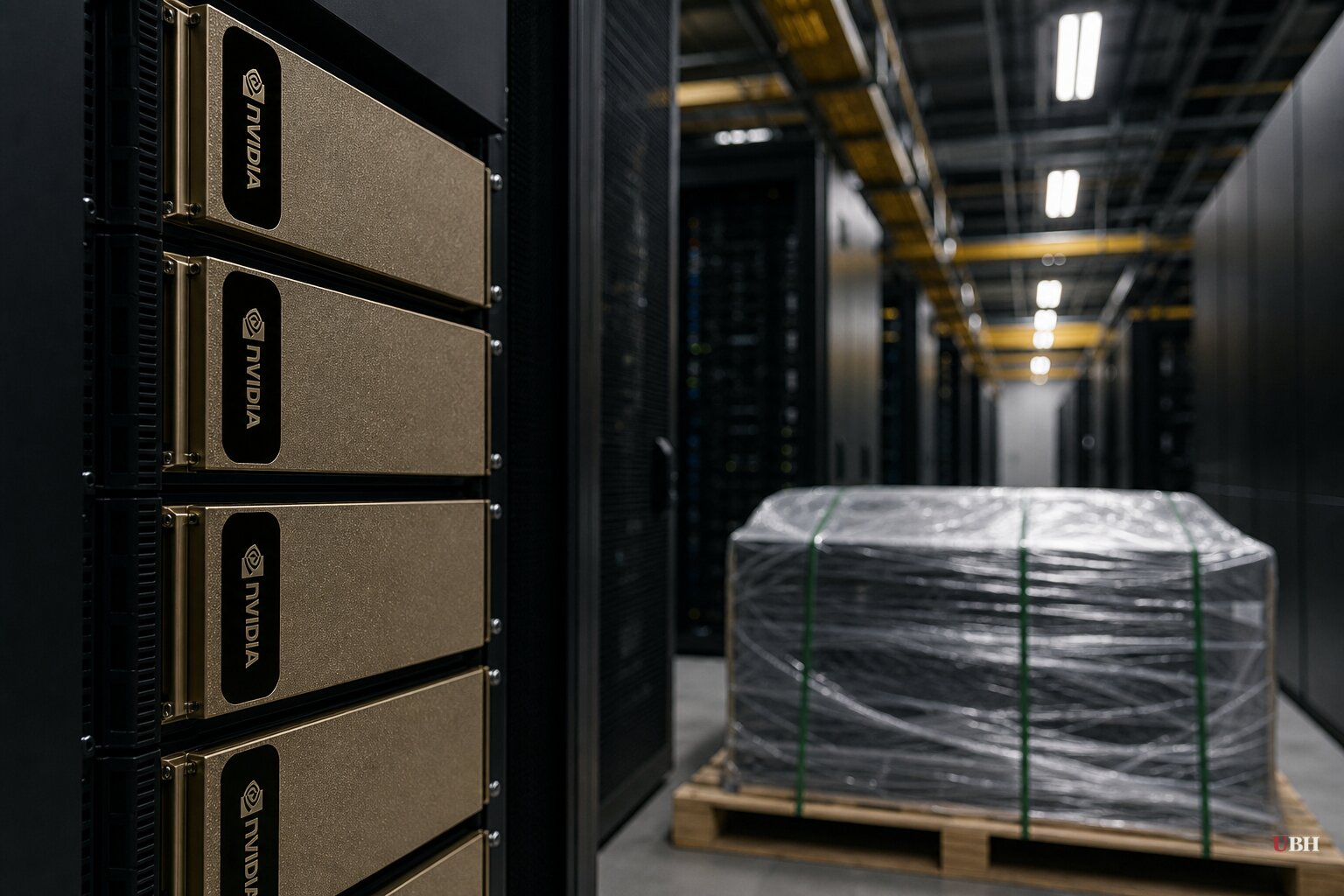
A California server company with a 270,000-square-foot facility in Fremont has been buying Nvidia's most advanced AI chips and reselling them overseas, even though its Chinese parent company sits on the U.S. government's restricted entity list.
The company is Aivres Systems Inc. Until May 2023 it was called Inspur Systems Inc., according to Crypto Briefing and KuCoin, both of which report the name change came shortly after the U.S. Commerce Department added Inspur Group to its Entity List in March 2023 over alleged ties to China's military-civil fusion programs.
Inspur Group is described by DataCenterDynamics as the third-largest server manufacturer in the world and the largest in China, supplying cloud, enterprise, and AI workloads and running joint ventures with IBM and Cisco inside China.
The $100 Million Deal
In November 2025, Aivres sold 32 server racks built on Nvidia's Blackwell architecture, containing roughly 2,300 of the company's top-tier GB200 processors, to Indonesian telecom operator Indosat Ooredoo Hutchison, according to Crypto Briefing. The price was approximately $100 million.
Aivres has not been individually placed on any U.S. restriction list. Only its parent, Inspur Group, is blacklisted. That distinction has let Aivres keep operating, working with Nvidia and AMD, and showing up at industry events including Nvidia's GTC conference, per Crypto Briefing's reporting.
In June 2026, Inspur Group was added to a second U.S. list, the Department of Defense's Section 1260H roster of Chinese military companies. Aivres again was not named separately.
The arrangement appears to carry a real market advantage. Crypto Briefing reports Aivres offers Nvidia- and AMD-based AI server platforms at prices roughly 30 percent below comparable systems from Western and Taiwanese competitors.
What the Law Actually Restricts
Commerce Department export controls target named entities, not corporate family trees. Inspur Group is on the Entity List. Aivres, a U.S.-incorporated subsidiary, is not. No charges, no investigation, and no export-control enforcement action against Aivres have been announced in these reports.
A legally distinct American company that hasn't itself been sanctioned is, under existing rules, free to buy chips from Nvidia and sell servers to customers like Indosat. Nvidia and AMD selling to a non-listed U.S. entity is not, on the facts reported here, a violation of anything.
Yet critics say this exposes a gap. If a blacklisted company's subsidiary can rebrand, stay off the list, and keep buying the most advanced chips America makes, the Entity List isn't doing what it's supposed to do. Crypto Briefing frames this as a structural enforcement problem. The current framework is built around named entities, and a rebrand can outrun it.
A Separate Fight Over Patents
Hewlett Packard Enterprise filed a lawsuit in the U.S. District Court for the Northern District of California accusing Inspur Group and a list of its subsidiaries, including Aivres Systems, Betapex, IEIT Systems, Inspur USA, and KAYTUS Singapore, of infringing five HPE patents covering server chips, storage devices, networking hardware, and software, according to DataCenterDynamics, which cites a complaint first reported by The Register.
HPE's complaint alleges Inspur stripped its own branding off products sold in the U.S., partly to conceal the alleged infringement and partly to keep selling despite the blacklist. The filing further alleges, "on information and belief," that a related entity, Inspur Asset Holdings, renamed itself Betapex in September 2023 specifically because of the Entity List placement and the negative press that followed, per DataCenterDynamics.
HPE also included a side-by-side product table in its filing, alleging that Aivres' KR2280-X1 server was succeeded by a KR2280-X2 model identical to a KAYTUS-branded KR2280V2 unit. "HPE is a strong believer in the value and importance of protecting its intellectual property," an HPE spokesperson told DCD, adding the company "has the obligation to file this lawsuit to defend HPE's leadership position."
These are allegations in a civil complaint. Inspur has not publicly responded to the patent claims in the material reviewed here, and no court has ruled on HPE's allegations.
What's Unresolved
Two separate questions are now sitting in front of two different parts of the U.S. government. Commerce and Defense have blacklisted Inspur Group by name but have not extended that designation to Aivres, despite Aivres operating out of the same corporate lineage and, per HPE's complaint, allegedly rebranding products to obscure their origin. Whether Commerce revisits that gap, and whether HPE's patent case in the Northern District of California produces a ruling on the rebranding allegations, will determine whether this remains a one-off loophole or becomes the template other blacklisted firms follow.
Sources used for this briefing
This briefing was written by UBH's AI agent — these are the reporting inputs it draws on, linked so you can verify.


