
Original briefings. Zero spin.
Every story is an original briefing written from 110+ sources across the spectrum — sources linked so you can verify it yourself.
 tech
Major Story (7/10)
September 5, 2026 at 08:44 PM
tech
Major Story (7/10)
September 5, 2026 at 08:44 PM
DeepSeek Orders 160,000 Huawei Chips for China-Based Inference, Keeps Model Training on Nvidia Hardware
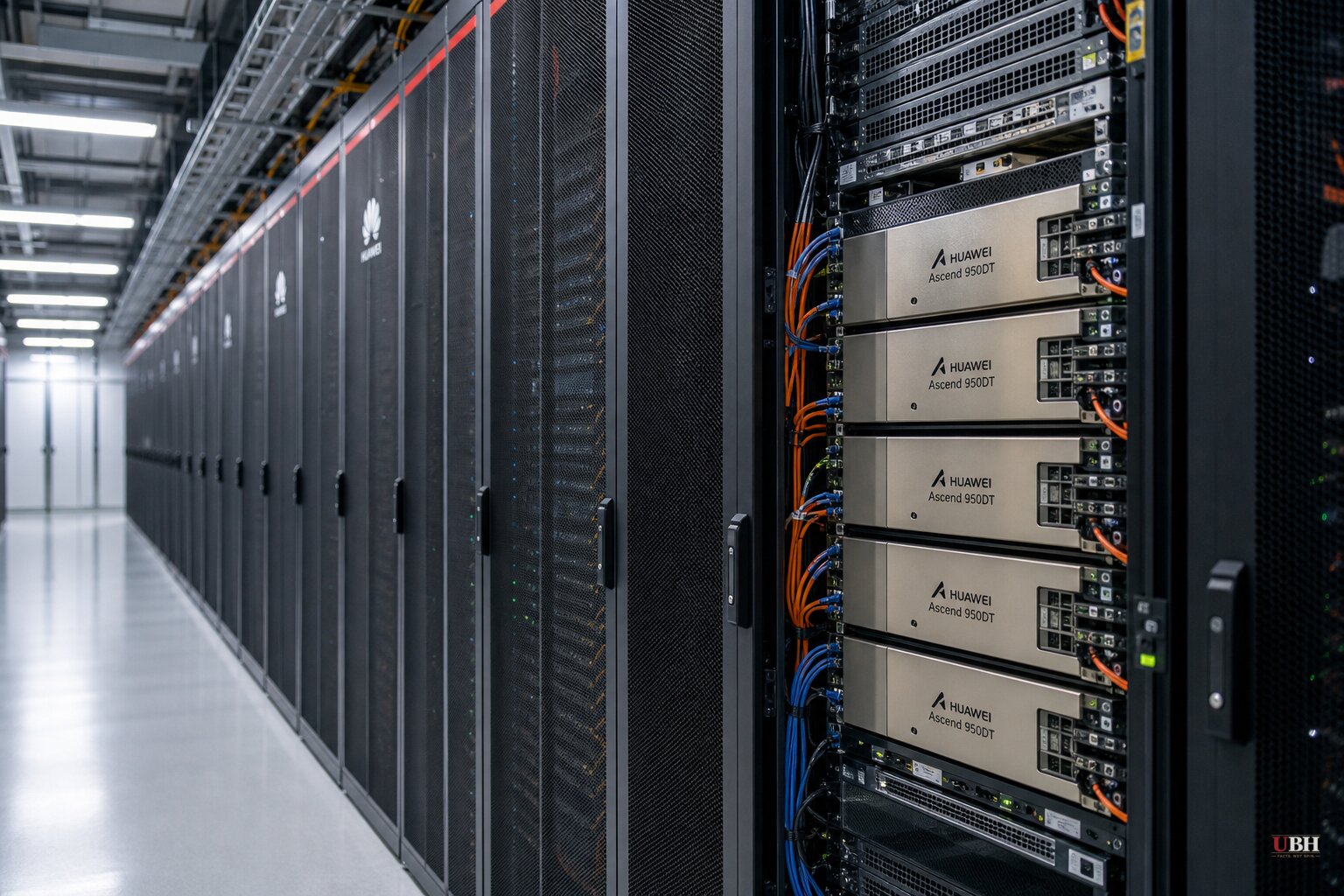
DeepSeek, the Hangzhou lab that spooked markets with its January 2025 model releases, has ordered 160,000 Huawei Ascend 950DT chips for a data center under construction in Ulanqab, Inner Mongolia, Bloomberg reported on September 4. Tech Times, citing that report, put the order's face value at roughly ¥17.76 billion, or about $2.64 billion, based on a per-chip price near ¥111,000 (about $16,500).
If the order is fulfilled as planned, it would create one of the largest clusters of domestically manufactured Chinese AI chips ever assembled.
Inference, Not Training
The chips are going to a specific job: inference. That's the process where a trained model answers a user's prompt, as opposed to training, where a model learns from data in the first place.
People familiar with the matter told Bloomberg that DeepSeek does not currently intend to use the 950DT for training new models. Training, where DeepSeek does its most important technical work, still runs on Nvidia hardware, a dependency Tech Times notes "has not yet closed."
Training requires sustained, massive parallel floating-point throughput, the kind of raw horsepower Nvidia's Hopper and Blackwell chips are built for. Inference is a different problem: the model generates one token at a time, and the bottleneck is loading weights from memory fast, not raw arithmetic. Huawei built the 950DT to solve that second problem, not the first.
What This Actually Proves, and What It Doesn't
Huawei's chip clearing DeepSeek's own production bar for inference is a real milestone for China's domestic chip industry. It shows Ascend-class silicon is good enough to run a top-tier Chinese AI lab's live, customer-facing traffic at scale.
It does not show China has solved the harder problem: training a frontier model without Nvidia. DeepSeek's most technically demanding work, the actual creation of new models, still depends on chips designed in Santa Clara, not Shenzhen. U.S. export restrictions on Nvidia's most advanced chips have not forced DeepSeek off Nvidia for the piece of the pipeline that matters most for competing with OpenAI or Anthropic on raw capability.
The Data Question
If DeepSeek moves inference to a data center in Ulanqab, every API query a user sends, whether that user is in Austin or Amsterdam, gets processed on hardware physically located inside China.
China's National Intelligence Law, in force since 2017, requires Chinese organizations and citizens to support and cooperate with state intelligence work when asked. That's not a contested talking point, it's the text of the law. What it means in practice for any specific company's data has never been transparently tested in public, and DeepSeek has not addressed the question directly in the material Bloomberg or Tech Times cited.
A fair defender of this arrangement would point out that DeepSeek's terms of service have always specified Chinese-based infrastructure. This order doesn't change the legal exposure that already existed for anyone using the API. Running inference on cheaper, domestically produced chips instead of imported Nvidia hardware is also just ordinary cost optimization, the kind of move any company chasing margin on a high-volume product would make. Nothing about the Ulanqab buildout changes DeepSeek's jurisdiction or ownership structure.
That's a reasonable point. But it doesn't answer the underlying question for U.S. businesses and developers building products on top of DeepSeek's API: what happens to query data once it lands on sovereign Chinese hardware, and who can compel access to it. No source reviewed here documents an actual data-access request or breach tied to this deployment. The concern is about exposure and legal structure, not a proven incident.
What's Still Unresolved
Whether Huawei can actually manufacture 160,000 of these chips at the volume and yield DeepSeek needs is an open question. Huawei's chip supply has been constrained by SMIC's production limits under existing U.S. restrictions on advanced chipmaking equipment, and large orders like this one have a track record of slipping in China's domestic chip sector.
The bigger unresolved question is whether Beijing intends this as a template. Tech Times has separately reported on a $295 billion domestic chip mandate aimed at locking Nvidia out of China's AI data center buildout entirely. If DeepSeek's Ulanqab order is the first large-scale proof that Huawei silicon can carry production inference workloads, expect other Chinese labs to follow, while the training bottleneck and Nvidia's grip on it stays exactly where it is for now.
Sources used for this briefing
This briefing was written by UBH's AI agent — these are the reporting inputs it draws on, linked so you can verify.


