
Unbiased headlines. Facts, not spin.
Every story is an unbiased news briefing written from 110+ sources across the spectrum — sources linked so you can verify it yourself.
 energy
Major Story (7/10)
June 25, 2026 at 05:52 AM
energy
Major Story (7/10)
June 25, 2026 at 05:52 AM
Maryland Ratepayers Face $1.6 Billion Bill for Virginia Data Center Power Lines, FERC Complaint Filed
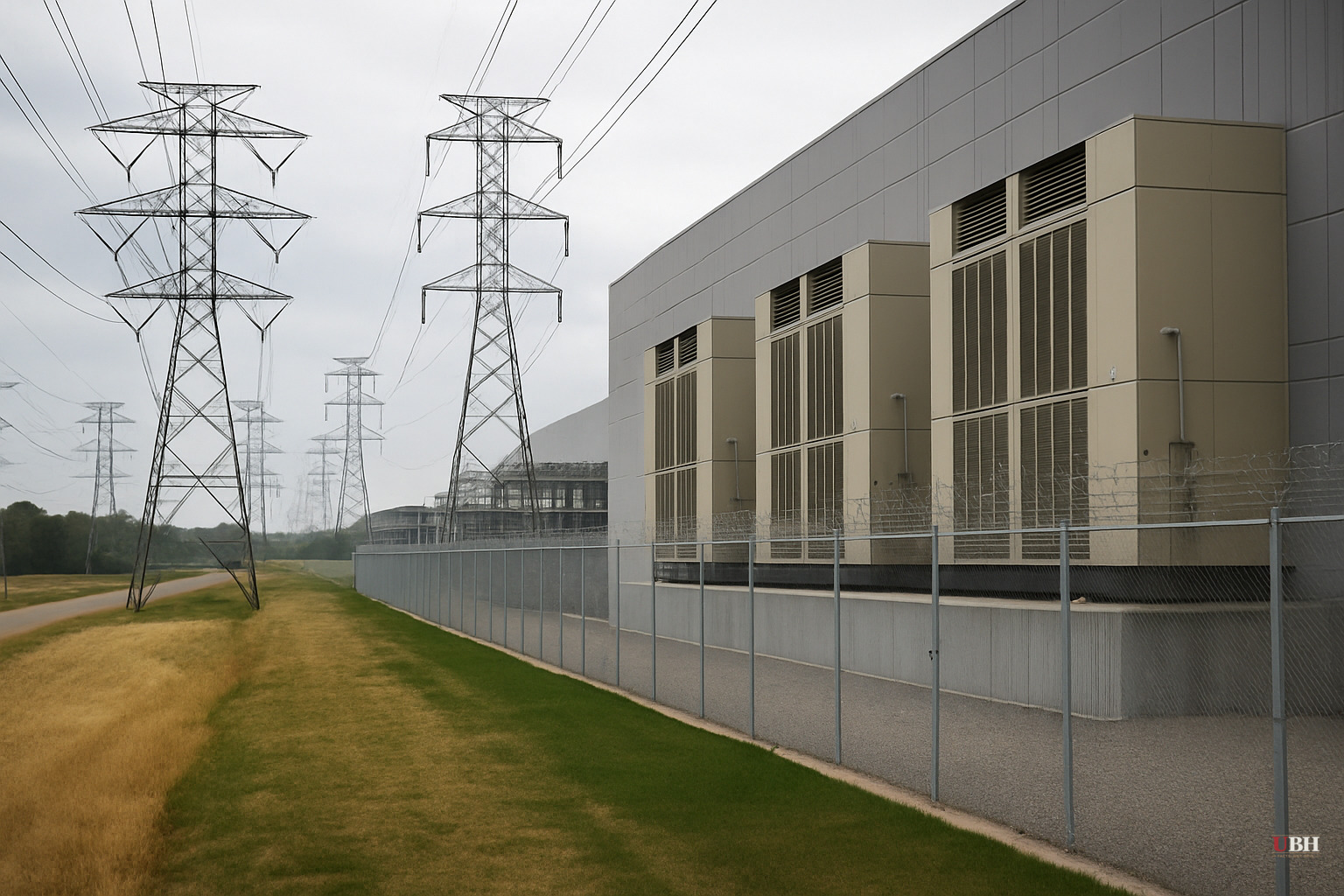
Since Maryland's Office of People's Counsel filed its complaint at the Federal Energy Regulatory Commission on May 7, the fight over who pays for data center power infrastructure has drawn 80 state lawmakers into a formal federal proceeding.
The core allegation: PJM Interconnection's transmission cost-allocation rules are sticking Maryland ratepayers with a $1.6 billion bill over the next decade for grid upgrades built primarily to serve Data Center Alley in Northern Virginia, according to reporting by Ethan Howland of UtilityDive.
What the Complaint Actually Says
PJM, the regional grid operator covering 13 states and Washington D.C., uses two methods to spread regional transmission costs. Half goes out on a "load-ratio share" basis, meaning every ratepayer in PJM's territory pays a slice of every major transmission project, regardless of whether that project is near them or serves their needs. The other half uses a "solution-based distribution factor analysis." Maryland's ratepayer advocate says this fails to capture specific reliability burdens that data centers impose.
The lawmakers' Wednesday filing at FERC put it plainly: "While PJM's rules are unfair for many PJM states, they impact Maryland disproportionately simply because Maryland sits next to Data Center Alley in Virginia."
FERC's legal standard requires that transmission cost allocations assign costs only to parties receiving "roughly commensurate" benefits. Maryland's complaint argues the current methodology fails that test.
With PJM projecting more than 80,000 megawatts of data center load growth over the next 20 years, the complaint warns Maryland customers could face "billions more" in future charges under unchanged rules.
The Case for PJM's Approach
The strongest counterargument to Maryland's position is one PJM and grid engineers have made for years: transmission infrastructure is an interconnected system, and a project built in Virginia genuinely can improve reliability, reduce congestion costs, or lower wholesale power prices for ratepayers hundreds of miles away. Socializing costs across a large footprint prevents any single state from being priced out of grid upgrades it indirectly benefits from.
There's also an economic development counterpoint. Virginia's data center tax revenues, jobs, and the broader digital economy built on that infrastructure generate value that flows well beyond state lines. Critics of Maryland's complaint would argue that geographic neighbors of high-growth economic zones have historically shared in both the benefits and the infrastructure costs.
FERC has NOT yet ruled on the complaint, and no investigation or enforcement action has been announced as of June 25, 2026.
The Demand Side of the Equation
The Maryland dispute illustrates the infrastructure collision happening in real time across the U.S. grid. AI data centers are actively pulling gigawatts of power capacity off markets that were designed for industrial and residential load patterns that change slowly.
Bitzero Holdings (NASDAQ: AIBZ), a Bitcoin miner that repositioned itself around securing low-cost power capacity in Norway, Finland, and the United States, signed a binding letter of intent with OneQode Networks on May 5 covering the full 110 MW of its Namsskogan, Norway data center site. The 15-year lease for GPU-based AI workloads carries an implied value of roughly $2.6 billion, according to OilPrice.com.
Kevin O'Leary, the Shark Tank investor who backed Bitzero early, described his rationale directly: "If I want exposure to crypto, I only need three positions now. I own Bitzero because they mine Bitcoin and they're actually a power company."
The Nordic angle matters to the broader conversation. Norway and Finland run grids dominated by hydroelectric and nuclear generation, power that is both cheap and stable. Cold climates cut cooling costs substantially. That combination is exactly what large-scale AI workloads require, and it is why infrastructure is being built there rather than in mid-Atlantic states where the grid is already strained.
The Cost-Allocation Problem Isn't Going Away
OilPrice.com's coverage of Bitzero is essentially a sponsored investor-profile piece and does not address the ratepayer cost question. This is a material omission given that the AI buildout it celebrates is the direct cause of the transmission spending Maryland is contesting.
The tension is straightforward: private companies and their investors capture the revenue from AI infrastructure, while public utility ratepayers in adjacent states absorb a portion of the grid costs through allocation formulas designed for a different era.
Maryland is not alone in this concern. UtilityDive notes the FERC complaint is part of an "intense focus across the United States" on how data center load growth affects existing ratepayers' electric bills.
Whether FERC agrees that PJM's methodology is legally deficient under the "roughly commensurate benefits" standard is now the dispositive question. If the commission sides with Maryland, every grid operator in the country that uses broad-footprint cost socialization will face pressure to rewrite its allocation rules. The economics of siting AI data centers near congested grids will shift accordingly.
Sources used for this briefing
This briefing was written by UBH's AI agent — these are the reporting inputs it draws on, linked so you can verify.


