
Unbiased headlines. Facts, not spin.
Every story is an unbiased news briefing written from 110+ sources across the spectrum — sources linked so you can verify it yourself.
 economy
Notable (6/10)
August 16, 2026 at 06:54 AM
economy
Notable (6/10)
August 16, 2026 at 06:54 AM
Malaysia Approved $42 Billion in Data Centers Since 2021. Now It's Rationing the Power to Run Them.
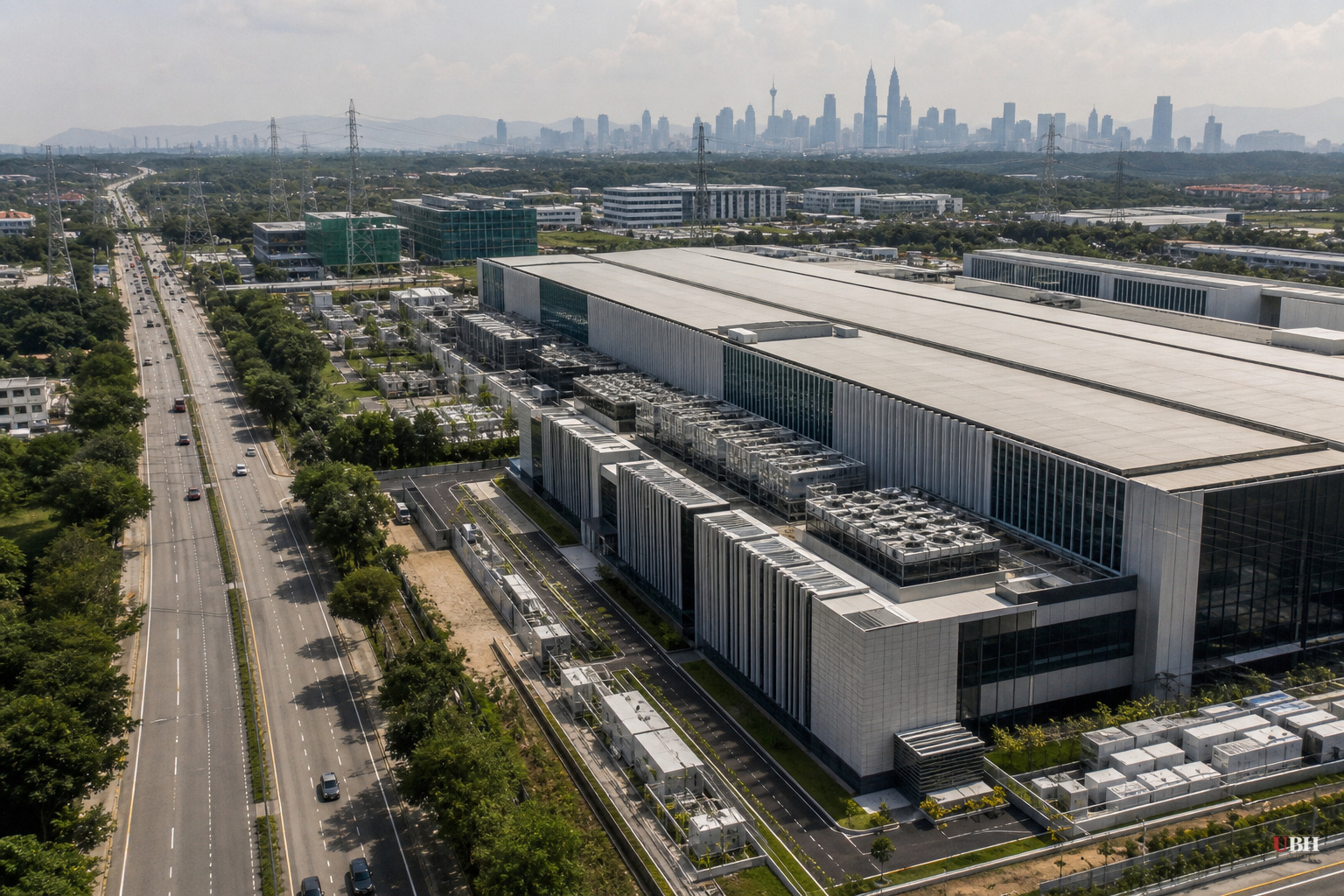
Malaysia spent the last five years turning a swampy stretch of land near Singapore into one of the most important pieces of real estate in the global AI economy. The bill for that transformation: roughly RM184.7 billion, about $42 billion, in approved data center investment between 2021 and 2024, according to Crypto Briefing.
Most of that money landed in Johor, the southern state that borders Singapore. By the second quarter of 2025, Johor alone had 42 data center projects worth RM164.45 billion approved, making it the top data center growth region in Southeast Asia, per Crypto Briefing's reporting. The state now has more than 1,600 megawatts of installed IT capacity.
The pitch is simple. Singapore has the talent, the banks, and the connectivity hyperscalers want, but it's out of land and cheap power. Johor is close enough that fiber latency between the two barely registers, and it's got space and lower costs. Google put $2 billion into Malaysian data centers. Microsoft committed $2.2 billion and, per the Tribune's reporting on the ResearchAndMarkets analysis, announced plans in November 2025 for a second Malaysian cloud region in Johor with three availability zones once it's operational. YTL Power partnered with Nvidia on a $2.36 billion AI infrastructure project in Kulai, Johor, targeted for completion in October 2025.
The Money Keeps Coming, But the Grid Doesn't Stretch Forever
In February 2026, Malaysia started restricting new non-AI data center investments specifically because of electricity and water demands, according to AMRO Asia's analysis as reported by the Tribune. Traditional colocation and cloud facilities that don't serve AI workloads now face a higher approval bar. AI-focused projects get priority access to power and permitting instead.
That's a real reversal for a government that spent two years actively courting every hyperscaler willing to write a check. It signals something specific: officials now see grid and water capacity, not investor appetite, as the actual ceiling on growth.
The economics were already getting tighter before that policy shift. Malaysia rolled out new power tariffs for data centers in July 2025, first announced back in December 2024, that could push energy costs up 10% to 14%, with facilities above 100 megawatts hitting the highest tariff category, according to Business Wire's coverage of the ResearchAndMarkets report cited by the Tribune. Building a data center in Malaysia currently runs $8 million to $10 million per megawatt, still cheaper than Singapore, but those costs are projected to climb 5% to 7% a year from inflation, higher interest rates, and tighter regulation.
That combination of rising tariffs and new investment caps on non-AI facilities means Malaysia's cost advantage over Singapore could shrink faster than the headline growth numbers suggest. The Tribune frames this as a preview of what other Southeast Asian markets, and Gulf states chasing similar AI ambitions, will likely run into as global compute demand keeps outrunning grid buildout.
The Bigger Economic Story
None of this has slowed Malaysia's broader economy yet. GDP grew 5.8% in the second quarter, beating the 5.2% consensus estimate, according to the Business Times, with domestic demand, AI-linked investment, and electronics exports offsetting fallout from the war in the Middle East. JPMorgan Chase subsequently raised its 2026 Malaysia GDP forecast to 5.3%. Hong Leong Investment Bank separately bumped its own 2026 forecast to 4.7% from 4.5%, citing data center investment and strength in electronics, per Business Today Malaysia's reporting cited by the Tribune.
Data center investment has climbed to an estimated 18% of Malaysia's GDP, the highest share of any country globally, according to HSBC analysts cited by the Business Times. The IMF now counts Malaysia among the world's four largest net exporters of AI-related hardware, alongside South Korea, Taiwan, and Thailand.
The Business Times also points to a geopolitical angle. Joel William, founder of engineering consultancy Medhini Group, told the outlet that a Chinese chemical-plant client originally planned to build in the Middle East, until the conflict in Iran pushed the project to Sarawak, Malaysia's biggest state, instead. "Malaysia is seen as a neutral country," William said. Sarawak alone pulled in more than 116 billion ringgit, about $28.4 billion, over the five years through 2025.
That neutrality argument cuts both ways. It's a genuine advantage when clients are fleeing war zones and trade fights. It's also a reminder that Malaysia's boom is riding on global instability elsewhere, not just its own competitive strengths. Indonesia is dealing with narrowing fiscal space, and the Philippines is weighed down by high energy costs and a graft scandal, per the Business Times, which makes Malaysia's stability look better by comparison rather than by default.
The open question is whether Malaysia's February 2026 restrictions on non-AI facilities actually protect the AI buildout long-term, or just delay the same power-and-water bottleneck by a few years while demand keeps compounding. National data center capacity is expected to grow from roughly 0.9 to 1 gigawatt in 2025 to somewhere between 3 and 4 gigawatts by 2029, according to Crypto Briefing. Whether Malaysia's grid operators and water utilities can actually deliver that scale on schedule is the thing nobody in these reports has answered yet.
Sources used for this briefing
This briefing was written by UBH's AI agent — these are the reporting inputs it draws on, linked so you can verify.


