
Unbiased headlines. Facts, not spin.
Unbiased Headlines is an independently owned news organization. We bring you the facts, not opinions, written fresh from 110+ named sources. Sources linked so you can verify it yourself.
 health
Major Story (7/10)
Magnitude 7.0 earthquake in Tibet kills at least 16 and collapses 339 homes
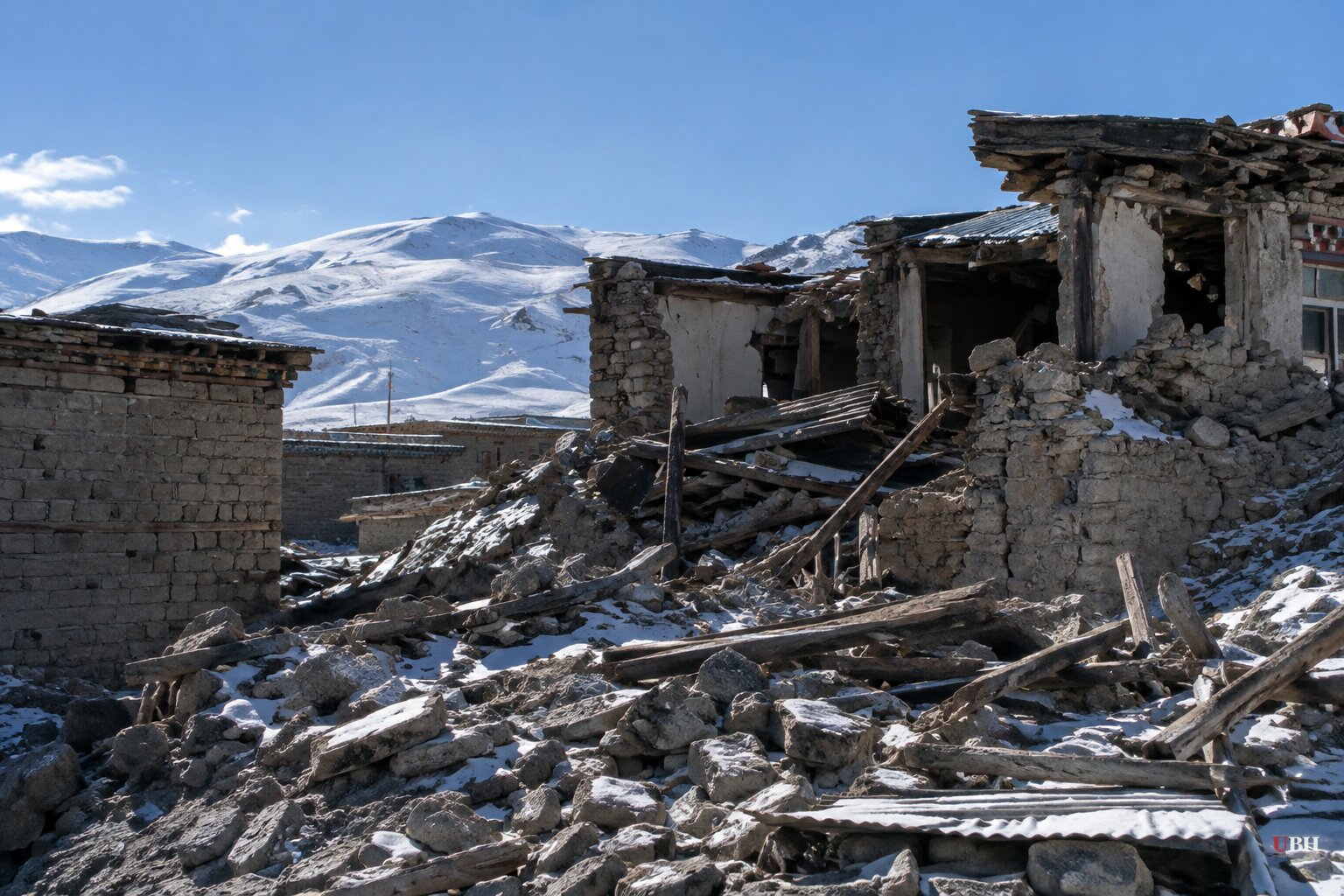
A magnitude 7.0 earthquake hit northern Tibet late Thursday, Oct. 22, killing at least 16 people and collapsing hundreds of homes in the Nagqu region. As of today, Oct. 23, search and rescue work is continuing.
The US Geological Survey put the quake at 10:33 p.m. local time, with the epicenter about 191 km (119 miles) east-northeast of the city of Nagqu. Chinese state media placed the center in Maru township, Baqên County. The area is sparsely populated and sits at about 4,800 meters (15,750 feet).
Casualties and damage
The death toll stood at 16 on Friday. The injured count rose from 54 to 65, including 11 in serious condition, according to the local government.
The Nagqu media office said at least 339 homes and 20 livestock sheds collapsed. Xinhua reported the full extent of the damage was still being assessed.
CCTV, China's state broadcaster, called it the biggest earthquake in the region in five years. Footage it aired showed diners running out of restaurants and goods tumbling off supermarket shelves. Rescue workers with flashlights climbed through buildings with collapsed roofs.
Maru township deputy head Lhawang Dagpo told Xinhua the quake was clearly felt at the township office, where the walls cracked.
Aftershocks and conditions on the ground
The USGS recorded at least seven aftershocks between magnitude 4.3 and 5.2. Chinese state media said more than 400 aftershocks had been registered by Friday morning.
The agencies disagree on depth. The USGS put the main shock at 18 km (11 miles), while the China Earthquake Networks Center put it at about 10 km (6.2 miles). The BBC noted that shallow earthquakes are more damaging than deep ones.
Nagqu resident Yixi Cuomu told Tibet Daily she was asleep when her house began shaking violently and she ran outside barefoot, her "legs trembling uncontrollably." Another witness said it felt "as if several hundred yaks were running past us."
Many residents spent the night outdoors in subzero temperatures, in tents or in cars. They feared aftershocks could trap them inside their homes. Local media said more than 12,400 people had been relocated.
Power and telecom service went down in the county seat. Some power had been restored by Friday morning, but Xinhua said communications remained out in some affected areas.
Rockfalls forced authorities to close a section of National Highway 317 to everything except emergency, rescue and official vehicles. Railway authorities halted trains through the region. Xinhua said intermittent snow is expected over the next three days.
The response
Beijing activated a level-II earthquake disaster emergency response. More than 1,600 rescuers were deployed from the local county, along with more than 300 police officers and almost 350 regional fire and rescue personnel, according to the Nagqu police department and Xinhua.
Supplies that had arrived by early Friday included 1,000 prefabricated housing units, more than 3,200 tents, more than 2,800 folding beds, quilts, stoves and winter clothing, according to state media. The central government allocated 50 million yuan (about $7.5 million) for relief. The Ministry of Emergency Management sent a working group to guide the operation.
President Xi Jinping ordered an all-out effort to find the missing and treat the injured. Premier Li Qiang called for "urgent efforts" to organize rescue and medical care and to resettle affected residents appropriately.
Why the toll could change
Authorities suggested the thinly populated epicenter area may have helped keep the death toll relatively low so far. Al Jazeera's Katrina Yu, reporting from Beijing, said casualty numbers were expected to rise in the coming hours. She also said reaching the area is difficult, with many roads blocked or hit by rockfalls.
The damage count and casualty figures come from Chinese state media and local officials. Foreign reporters have limited access to Tibet. The Guardian reported that China's tight grip on information kept international media from visiting the Tibetan side of the border region after a flood hit the Tibet-Nepal border in August.
That flood, which authorities blamed on the collapse of a glacier, left hundreds of people dead and destroyed several communities, CBS reported. In January 2025, an earthquake in Tibet's Tingri county killed at least 126 people.
The next numbers to watch are the final death toll and the count of collapsed homes once crews reach the remote areas. With snow forecast over the next three days, displaced residents still need shelter in subzero conditions.
Sources used for this briefing
8 links from 8 independent newsrooms (syndicated copies of the same report count once)
These are the sources it draws on, linked so you can verify.


