
Unbiased headlines. Facts, not spin.
Unbiased Headlines is an independently owned news organization. We bring you the facts, not opinions, written fresh from 110+ named sources. Sources linked so you can verify it yourself.
 health
Notable (6/10)
Event date: October 22, 2026 ·
Most GLP-1 users now take the drugs for weight loss, EY-Parthenon survey finds
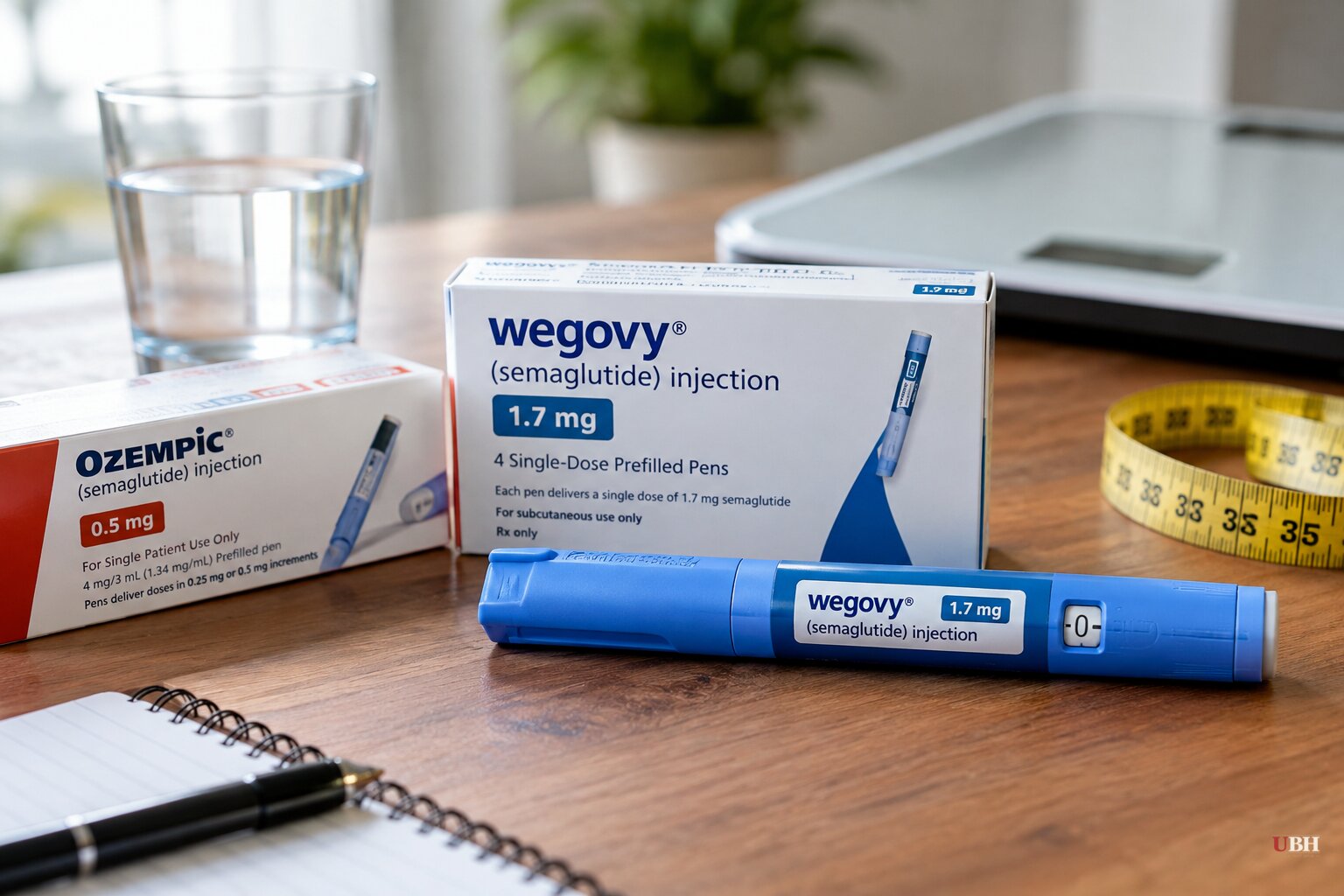
The GLP-1 boom has crossed a line. More Americans now take these drugs to lose weight than for the diabetes and other conditions they were first prescribed for.
Roughly 54% of people taking semaglutide medications such as Ozempic and Wegovy do so for weight loss, according to a survey of nearly 15,000 people by the consulting firm EY-Parthenon. That sample included 3,602 current or former GLP-1 users.
Gallup puts the share of American adults currently taking GLP-1s for weight loss at 11% in 2026, up from 3% in 2024. Another 15% have used them before but may not be taking them now.
Cheaper, more forms, new customers
EY-Parthenon says the drugs are available in more forms, including a pill, and cost less. That is pulling in younger, lower-income and male users.
A Trump administration agreement last year with Eli Lilly and Novo Nordisk cut the price of Ozempic and Wegovy to between $150 and $350 a month, down from roughly $1,000. The Medicare GLP-1 Bridge program gives eligible beneficiaries access for $50 a month.
Costs are not falling for everyone. Reuters reports that out-of-pocket costs are rising for some users as US employers increasingly drop GLP-1 coverage.
The shopping cart and the closet
EY-Parthenon found 63% of GLP-1 users cut back on sweet snacks and 57% on salty ones. Don Johnson, a principal in the firm's consumer strategy practice, said some packaged-goods makers once thought this was a fad. "Now I don't hear that," he said. "Everyone accepts that this is a structural change that's not going away."
Clothing is changing too. In the EY-Parthenon survey, 72% of users sized down, about half spent more on fitness services and 46% switched apparel brands.
Some of the money is going to repair shops instead of new clothes. Stephen Kelly, CEO of Cobblers Direct, which runs 25 stores in Texas plus a mail-in service, said his belt-shortening business is growing at double digits year over year. His company now shortens as many as 500 belts a week.
A survey of more than 700 US users by the telehealth platform Trimi found about 80% are living in clothes that no longer fit. They wait six months on average before buying anything new. University of Cambridge researchers found this year that people who stop the drugs regain on average 60% of the lost weight within a year, which makes users wary of a full wardrobe refresh.
Who should be taking them
Caroline Apovian, co-director of the Integrated Mass General Brigham Center for Weight Management and Wellness, says the field is not asking the right question. "Who are they for?" she said on Harvard's "Harvard Thinking" podcast. She wants the highest-risk patients prioritized even as the drugs are marketed to the general public.
Her warning about casual use: "If you take a GLP-1 to lose 10 pounds, you don't have the disease of obesity. [You might be] setting yourself up for stopping the medication, gaining even more weight back, and developing a problem that you didn't have in the first place."
Harvard evolutionary biologist Daniel Lieberman worries the drugs will let society ignore why people struggle with obesity. He pointed to food companies selling products in one supermarket aisle and weight-loss solutions in the next.
The case for the drugs reaching beyond weight loss rests on trial data. A Lancet study found semaglutide reduced heart attacks, strokes and cardiovascular death in people with existing cardiovascular disease and overweight or obesity, with benefits not fully explained by weight loss. The FLOW trial in the New England Journal of Medicine found a 24% reduction in major kidney complications and cardiovascular death among patients with type 2 diabetes and chronic kidney disease. The STEP 9 trial found reduced knee osteoarthritis pain. Researchers are still sorting out how much of each benefit comes from weight loss itself.
Britain: a fight over rationing
In England, the problem is the opposite of oversupply. The House of Commons Health Committee, a cross-party group of MPs, called the NHS plan to give 220,000 people Mounjaro on prescription in 2028 "woefully small" and "unambitious." The committee says that is only about 6% of eligible people.
More than a million people are already paying privately for weight-loss injections, the committee says, and it warns of a two-tier system in which only the wealthy get good access. The NHS is working on a 12-year Mounjaro rollout, which is under review.
The cost is the obstacle. If all 2.8 million eligible people got the drug immediately, it would cost the NHS an estimated £15.2 billion over five years. The MPs counter that obesity costs the economy around £75 billion a year, and that using digital platforms, as private providers do, could cut the bill by reducing reliance on GPs for prescribing and monitoring.
Moran, speaking for the committee, said obesity should be treated as a serious health condition like diabetes. "Those people are repeatedly failed," she said.
NHS England said it is looking at ways to speed up rollout but is "rightly prioritising these treatments for those with the most severe and complex needs."
The compounded-drug fight
Dr. Michael Burgess, a physician and former Republican congressman from Texas who now advises RX Border Defense, told a Breitbart News event this week that the FDA-approved brand drugs are not the concern. His target is compounded copies made from bulk ingredients imported from overseas.
Burgess says the FDA's GLP-1 "green list," launched in September 2025 after nationwide shortages, still lets ingredients in from listed overseas facilities with "no checks, no balances." The shortage is over, he noted, but the list remains, and China is by far the most heavily represented country on it.
The list was designed to allow imports from facilities the agency has inspected or evaluated and found to appear compliant with FDA standards. The FDA has not responded to Burgess's claim, and he offered no case of harm from a listed facility.
The UK committee raised a related problem: it said the lack of NHS availability has pushed people toward unlicensed products online. It wants a public awareness campaign and a review of online advertising rules.
The next decision is in London. NHS England's review of the 12-year Mounjaro rollout will show whether the 220,000-patient figure for 2028 holds or grows.
Sources used for this briefing
8 links from 8 independent newsrooms (syndicated copies of the same report count once)
These are the sources it draws on, linked so you can verify.


