
Unbiased headlines. Facts, not spin.
Unbiased Headlines is an independently owned news organization. We bring you the facts, not opinions, written fresh from 110+ named sources. Sources linked so you can verify it yourself.
 health
Major Story (7/10)
Family Health Premiums Hit $28,000 as Workers' Share Rises 9%, Outpacing 3.7% Raises
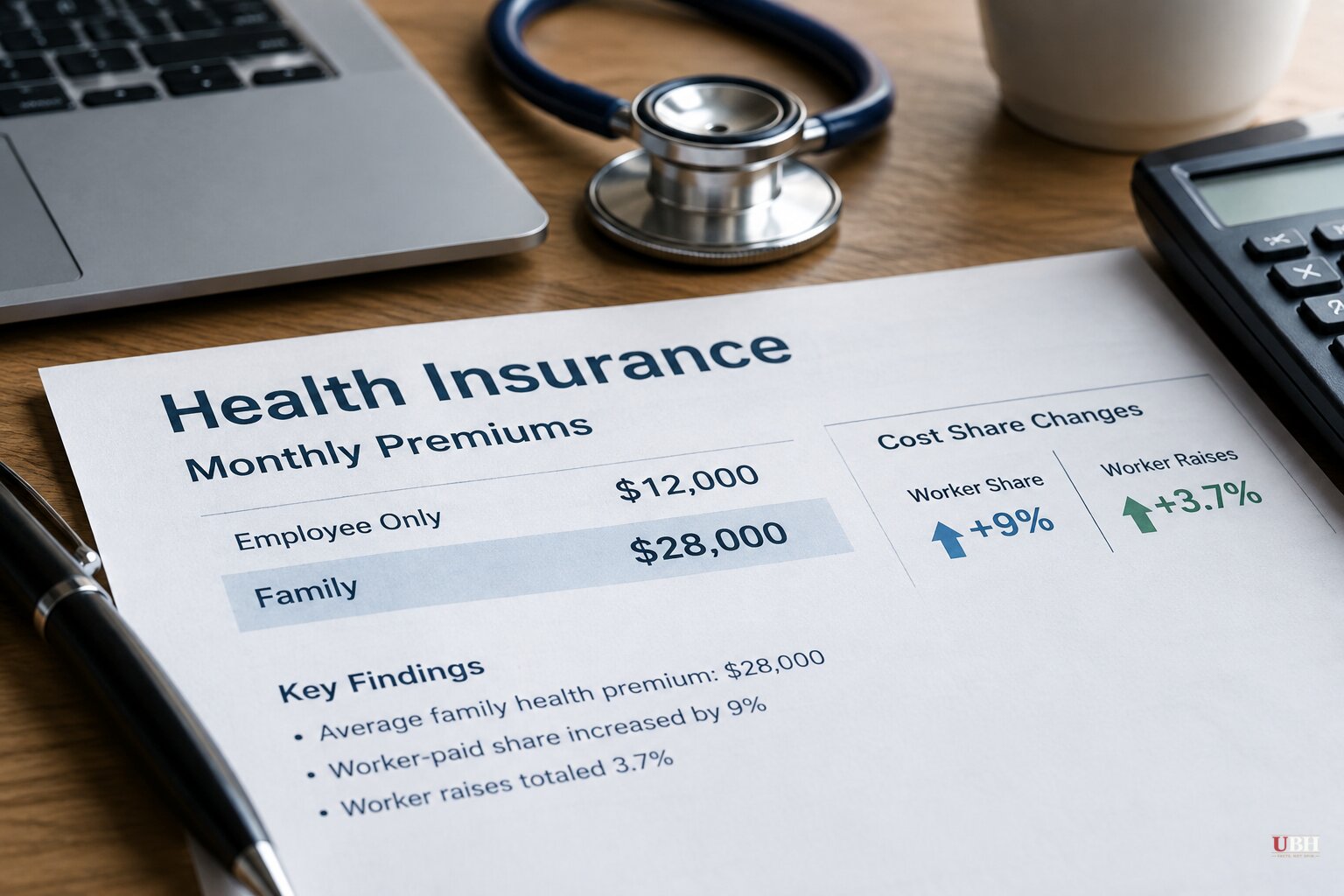
The average family health insurance premium is now $28,000 a year. Workers cover about $7,000 of that, and employers pay the rest.
Those are the findings of KFF's latest Employer Health Benefits Survey, which polled nearly 2,000 employers. Total family premiums rose 5%, roughly in line with wages and inflation. The portion workers pay rose 9%.
At the same time, CNN reports, workers' raises only amounted to 3.7%, on average, according to KFF.
Premiums, deductibles and the next round
"It's basically the cost of a new car every year just to keep a family of four insured," said Matthew Rae, associate director of KFF's Health Care Marketplace Program. He did point to one bright spot: 5% is slower growth than in past years. "If this is the beginning of a shift of costs onto workers, that would be a big deal in terms of affordability," he said.
About 157 million Americans get coverage through a job. Even good coverage can sting. Joseph Babbitt, 60, a senior financial controller at West Plains Veterinary Supply in Springfield, Mo., pays no premium because his owners cover it. His deductible is $5,000. In the '90s, he said, it was $250 or $500.
Next year looks worse. Aon, the insurance brokerage, forecasts employer health costs jumping 9.5% in 2027, the fourth straight year of steep increases. Todor Penev, Aon's head of US health analytics, said employers have run through many of their cost-control options. "The affordability crisis is real," he said.
CNN reports the drivers include more use of health services, expensive cancer treatments and ongoing demand for obesity drugs.
Small employers are already making tradeoffs. Julie Eason, controller at OSI Packaging in Shreveport, La., said worker premiums rose to $300 a month in 2026, up $100. The company kept out-of-pocket costs flat. It has six people on its plan and only began offering coverage in May 2025 to fill job openings.
A starter home is a 16-year savings plan
The squeeze extends past the doctor's office. The Center for Responsible Lending, through its Julian Bond Institute, calculates that a median-income renter household would need 16 years to save a down payment and closing costs for a starter home. That is twice the time in 2019. For a median-income Black renter household, the figure is 21 years.
For middle-income households earning roughly $50,000 to $120,000, the wait has doubled to 12 years. For police officers, firefighters, EMTs, nurses and teachers, it ranges from 10 to 13 years.
Center president Mike Calhoun said those numbers likely undercount the problem. The math assumes a 3.5% down payment, the FHA minimum, while the median first-time buyer puts down about 10%. It also assumes families are stretching their savings to the limit.
Mortgage rates have topped 7%. Closing costs have risen too, in part because of higher homeowners insurance.
Calhoun said the last seven years have been "extraordinarily good to homeowners," who built equity as prices climbed. Renters have had no such cushion.
Beef: a price fix that landed badly in cattle country
Ground beef averages around $6.80 a pound. The beef herd is at a 75-year low, said Zach Raff, incoming livestock economist at Iowa State University, and demand is strong.
The Trump administration has tried to bring prices down. In August, Trump signed an executive order suspending tariffs on up to 300,000 metric tons of imported lean beef trimmings, with the stated goal of lowering ground beef prices. The order said the imported beef was to be sold at 25% below market prices. In February he ordered lower tariffs on some Argentine beef.
Producers say the policy has hurt them. Scott Birker, who runs about 150 mama cows near Garrison, Iowa, and is northeast regional vice president of the Iowa Cattlemen's Association, said the surprise hit "really, really fast and really, really hard" in an already volatile market.
Raff said the order helped push cattle prices lower. The bigger problem, he said, was uncertainty. A producer who expects more imports next year, or a different policy the year after, may send heifers to slaughter rather than keep them to rebuild the herd. That would shrink supply further.
The 300,000 metric tons equals around 2% of total US beef consumption, and the average ground beef price in September was only about 13 cents lower per pound than in August. China's cut in U.S. beef purchases last year, during the trade war, has also weighed on producers.
What comes next
CNN reports that affordability has become a centerpiece of the midterm elections. The decisions are landing at kitchen tables first.
Debbie Barosko, human resources director at the University Club of Michigan State University, has to choose soon for its 30 plan members. One option is a nearly 13% premium hike with the same $1,000 deductible. The other is a deductible of $1,500 with the premium increase held to about 7%. Last year's plan already brought a 9% premium hike and a doubled deductible.
Sources used for this briefing
7 links from 4 independent newsrooms (syndicated copies of the same report count once)
These are the sources it draws on, linked so you can verify.


