
Unbiased headlines. Facts, not spin.
Unbiased Headlines is an independently owned news organization. We bring you the facts, not opinions, written fresh from 110+ named sources. Sources linked so you can verify it yourself.
 health
Low Interest (4/10)
Rising Costs in Lebanon's War Keep Autistic 20-Year-Old Out of Class, Her Mother Says
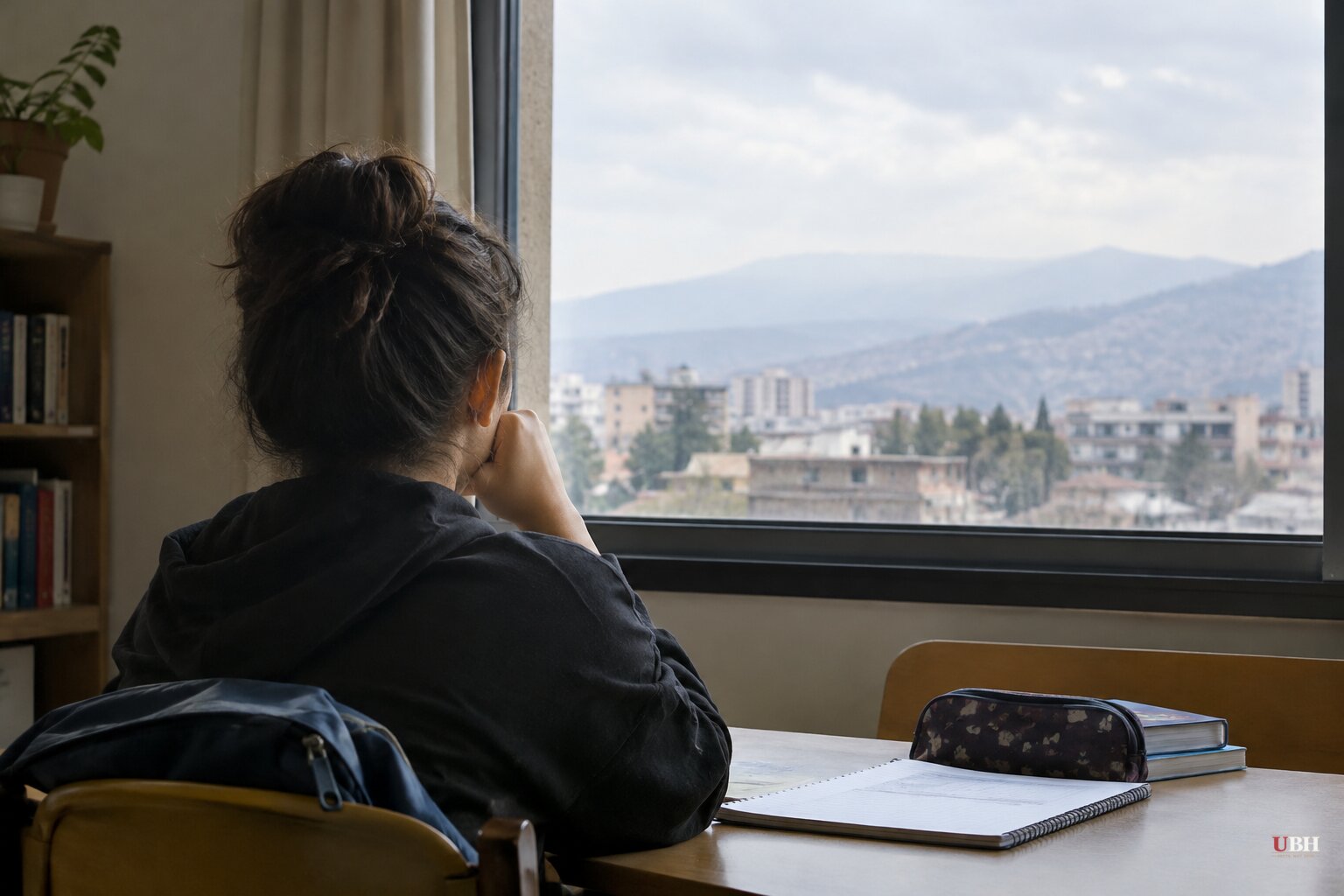
Lena Kouyoumjian has a simple description of what her daughter needs: stability, structure and a predictable day. The war in Lebanon has taken a good deal of all three.
Kouyoumjian's daughter Vana is 20, autistic and non-verbal. After Kouyoumjian's husband died of COVID-19 in 2020, she moved back to her parents' home in Mazraat Yachouh, a village about 20 minutes' drive from Beirut, so she would have help caring for Vana.
She first noticed Vana's symptoms when the girl was two.
A routine that depends on stability
Autism and attention-deficit/hyperactivity disorder (ADHD) vary from person to person. Both frequently involve sensory issues and emotional dysregulation, and the two often occur together, a combination sometimes called AuDHD.
Kouyoumjian works as a trainer for children with disabilities, so she knew what an escalation could mean at home. Israel stepped up its attacks on southern Lebanon in March. Lebanon has been in conflict since October 2023, with bombings across the country and an economic crisis that affects the whole population.
"Any sudden change in routine, loud noises, fear, or uncertainty can increase their anxiety and make them feel unsafe," Kouyoumjian told Al Jazeera.
"I can see this in my daughter. Since the situation became more difficult, she has become more anxious and sensitive to the changes happening around her."
That is one family's account, and Vana's own experience cannot be put in her words. Her mother has spent years learning to read how she feels.
The school that is hard to reach
Vana has attended classes for the past six years at the Autism Awareness Association (AAA), a nonprofit in Antelias, outside Beirut. It works as an alternative school for young autistic people.
AAA was co-founded in 2015 by Ghada Hayek Makhoul and other parents of autistic children. Makhoul's own son, Anthony, is 27, autistic and non-verbal. Al Jazeera photographed him choosing colouring pencils with a teacher at the school.
Makhoul says the group has worked constantly to raise awareness of autism in Lebanon. People with these conditions are often stigmatised in Lebanon, as in other places where the conditions are not well understood, according to the account.
The obstacle for Vana has been money, not the curriculum. Rising costs during the war have kept her from attending regularly.
"Even transportation to her centre became very difficult, especially with the increasing financial challenges," Kouyoumjian said. "At times, it became impossible for her to go, so she had to stay home."
For a young woman who relies on routine, a missed class is not a minor scheduling issue. Staying home removes a structured part of her week, at a time when her mother says she is already struggling with unpredictability.
A parent's load
Kouyoumjian is open about how hard the caregiving is. "Being a parent of an autistic child isn't something every parent can handle," she said. "A challenge I often face is deciding the amount of time and energy I should allocate to my child."
The family's support, as she describes it, comes from relatives, who gave her a place to live, and from a charity started by other parents. No government program features in her account of how she keeps Vana's days steady.
The broader argument made by the people quoted is that neurodivergent people are more vulnerable than most when conflict and displacement hit. They need consistent support and routine, and war and economic strain erode both.
What is unresolved
The account is one mother's experience and one organization's description of its work. It does not include figures on how many autistic young people in Lebanon have lost access to schooling or services, and it does not say how many families at AAA face the same transport costs.
What the family has said is specific. Vana has attended AAA for six years, her attendance has become irregular because her mother cannot always afford to get her there, and her anxiety has risen since March. Whether Vana can return to regular classes depends on whether her family can cover the transportation, which Kouyoumjian says has at times been impossible.
Sources used for this briefing
4 links from 2 independent newsrooms (syndicated copies of the same report count once)
These are the sources it draws on, linked so you can verify.


