
Unbiased headlines. Facts, not spin.
Unbiased Headlines is an independently owned news organization. We bring you the facts, not opinions, written fresh from 110+ named sources. Sources linked so you can verify it yourself.
 health
Notable (5/10)
Applegate's MS Misdiagnosis: Neurologists Say 15% to 20% of MS Diagnoses Turn Out Wrong
Since Christina Applegate said on Tuesday, Oct. 20, that doctors told her she does not have the multiple sclerosis she announced in 2021, neurologists have been putting numbers on how often that happens: roughly one in five.
Dr. Robert Bermel, director of the Mellen Center for MS at Cleveland Clinic, which cares for more than 11,000 MS patients, said the largest studies of the problem show between 15% and 20% of people diagnosed with MS turn out not to have it.
Dr. Marwa Kaisey, an associate professor of neurology at Cedars-Sinai Medical Center, put it almost identically on Applegate's "MeSsy" podcast. "Almost one in five of these people who'd been told they had MS, some for decades, didn't actually have it," Kaisey said. She added that a majority of them were on medication to treat MS.
Why the diagnosis is easy to get wrong
There is no single test for MS. Kaisey said so directly: "It's not like we have something like a pregnancy test." Doctors work from "a list of criteria."
Dr. Josef Gutman, director of NYU Langone's Long Island Comprehensive MS Care Center, said the symptoms are "not necessarily specific in a lot of ways." The diagnosis comes from the patient's story, MRI imaging and markers such as spinal fluid. "It's not like diabetes," Gutman said, where one blood test settles it.
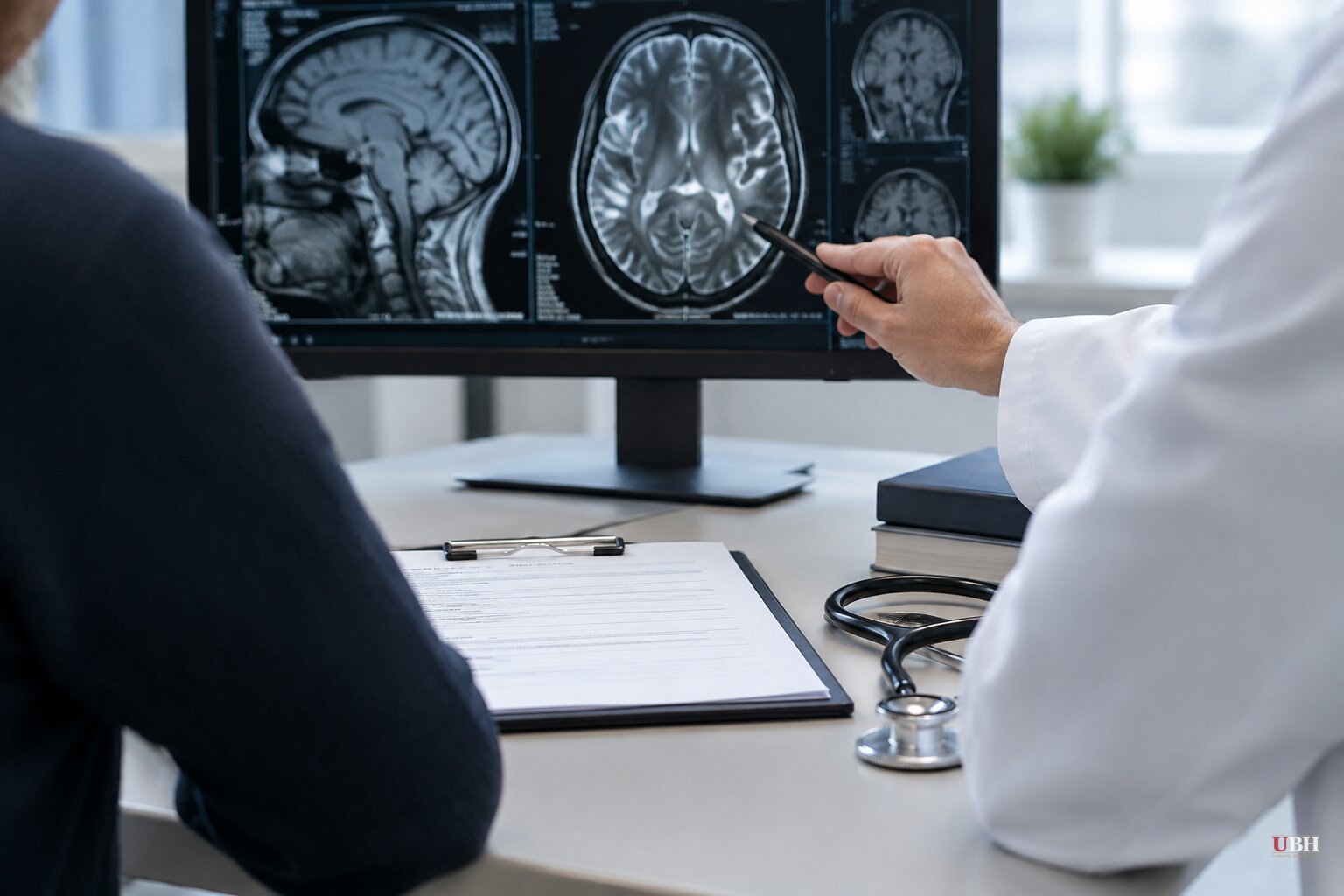
Bermel said the usual root cause of a misdiagnosis is misread brain scans. Lesions are a hallmark of MS, but high blood pressure, smoking and migraines can also cause them.
The error is most often caught when a patient seeks a second opinion because symptoms are not improving. Bermel said that is not proof the diagnosis is wrong, but it can be a trigger for more testing.
That testing can include advanced MRI sequences that separate MS lesions from those with other causes, a spinal MRI, or spinal fluid analysis that looks for specific abnormal immune proteins.
Treatment risk
Bermel said most MS treatments, especially the most commonly used ones, are "very safe" and would not endanger a person's health. Kaisey's point that most of the misdiagnosed patients in the data she cited were on MS drugs raises the question of what they were taking, and for how long, without having the disease. Neither doctor, in the accounts available, put a number on harm.
Applegate's own situation
Applegate, 54, did not frame the news as a relief. "This may come as great news, but to me, I'm back at square one," she said. Her doctor told her, "Congratulations, you don't have MS," and she said she was "not happy at all" while "everybody else was so happy."
Her reasoning: "You don't get misdiagnosed and then all of a sudden I'm better." She said she is worse in some ways.
She said she still uses a wheelchair at the doctor's office and cannot walk from the car to the exam room. "Nothing magical happened when she said, 'You don't have MS,'" she said.
She also described the cost of the past five years. "I've gone through a great depression because of it," she said. "I lost my job." She said she feels she "let everybody down" after she and co-host Jamie-Lynn Sigler became, in her words, "the poster children for MS."
Applegate herself pointed to the statistics. "There's a pretty damn high number of misdiagnoses with MS," she said. "So this is not a rare occurrence."
The timeline of her own certainty is on record too. In an ABC News interview with Robin Roberts as recently as March, she said she had not yet accepted her diagnosis, adding, "This is a lifelong disease with no cure. Period."
What comes next
Applegate has not said what her doctors now believe is behind her symptoms, or what prompted them to revisit the diagnosis beyond a review of her treatment. She said they will begin a new investigation next week to find out what has been going on since 2021 and why she was diagnosed with MS in the first place.
The workup could involve the kind of advanced imaging and spinal fluid testing Bermel described. Whether any of it produces a replacement diagnosis is the open question, and she has said she does not currently have an answer.
Sources used for this briefing
7 links from 7 independent newsrooms (syndicated copies of the same report count once)
These are the sources it draws on, linked so you can verify.


