
Unbiased headlines. Facts, not spin.
Unbiased Headlines is an independently owned news organization. We bring you the facts, not opinions, written fresh from 110+ named sources. Sources linked so you can verify it yourself.
 health
Notable (5/10)
Greenpeace Says Fecal Bacteria Found at All 17 Yucatan Water Sites Tested Near Mérida
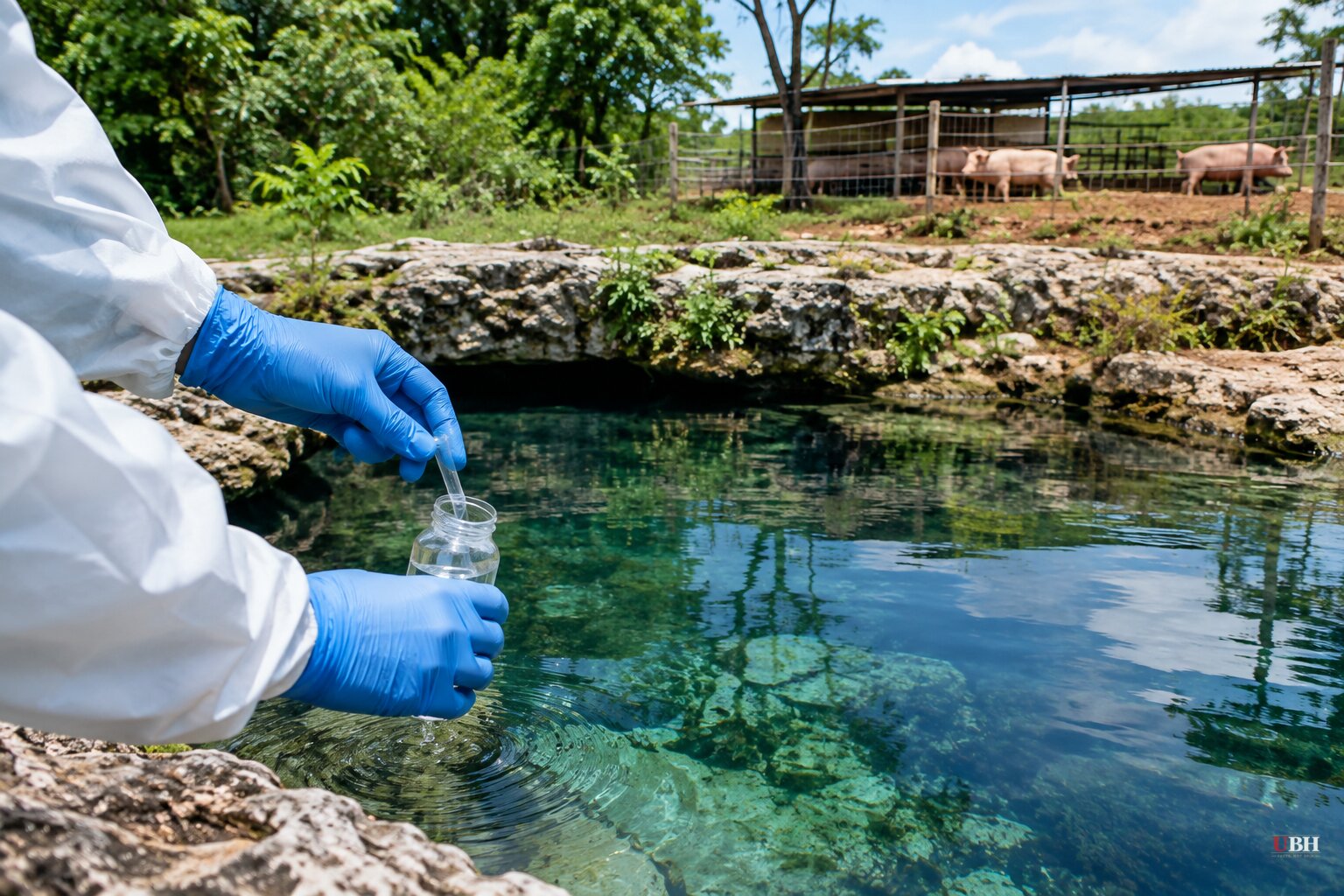
A Greenpeace report published Tuesday, Oct. 20, says water that Yucatan residents use for drinking is contaminated with fecal bacteria. The group points to nearby pig farms and municipal wastewater as the likely sources.
Greenpeace commissioned an independent laboratory to test water at 17 sites near the state capital, Mérida, in August. The sites included household and farm wells, community water points and cenotes, the natural sinkholes that dot the peninsula.
What the tests found
Every sample showed some degree of contamination likely linked to fecal waste, according to the report. Several sites appeared heavily polluted.
Total coliform bacteria hit the test's upper limit in 16 of the 17 samples. Fecal coliforms hit that ceiling in 13.
"A range of chemical and microbiological indicators reveal a complex mosaic of severe, localized organic pollution," the report said.
Those limits matter. The standard coliform tests cannot show whether the waste came from people or animals. Leaking septic tanks and municipal sewage may also contribute, the report acknowledges.
Greenpeace says separate testing with Pig2Bac, a pig-specific DNA marker method, detected pig fecal matter in samples analyzed at laboratories at Johns Hopkins University in the United States and Mexico's National Autonomous University (UNAM). Greenpeace says the results raise "critical accountability questions" about nearby pig farms.
Seventeen sites is a small sample for a state this size. The report does not claim to map contamination across Yucatan.
Why the geology raises the stakes
Yucatan has no above-ground rivers. Groundwater is the state's only freshwater source, and the porous limestone bedrock lets pollutants seep quickly into the aquifer.
The report says about 30% of local residents drink water drawn directly from wells and sinkholes. For them, there is no treatment plant between the aquifer and the glass.
The pig farm numbers
A UN report published in July found more than 500 industrial pig farms across Yucatan, holding more than 50,000 animals. Many sit near the lands of Indigenous communities.
Greenpeace, citing its own 2020 survey, says only 22 of 257 pig farms in the state had an environmental impact study. It also found 43 such farms operating inside protected natural areas.
Marcos Orellana, the former UN Special Rapporteur who wrote the July report, says waste and chemicals from industrial farms "find their way very quickly" to water communities use for bathing, cooking and drinking. He says most farms lack required permits and that regional government initiatives "remain insufficient."
"The contamination of the waters that have sustained Mayan culture for millennia is predominantly coming from the industrial operations of the growth of animals," Orellana said.
The permit claim is the report's sharpest point. Operating without required permits is a question of existing Mexican rules not being enforced, not a gap in the rules themselves.
The industry side
Not everyone accepts that framing. Antonio Zumarraga, vice president of the Yucatan Citizen Scientific Water Observatory, defended the local pork industry and said the sector has invested in water treatment.
That position sits against the limits of the Greenpeace data: coliform tests that cannot separate human from animal waste, and a sample of 17 sites. The Pig2Bac results are the group's main evidence pointing at pigs specifically, and those come from Greenpeace's own commissioned work.
Mérida's Association of Pig Farmers did not respond to a request for comment from Reuters.
What Greenpeace wants
Greenpeace is calling for an immediate moratorium on new industrial livestock operations and expansions of existing farms in the state. Maya communities joined the group in demanding action from environmental authorities.
The Yucatan state government was not available for comment. Mexico's national water commission, CONAGUA, did not immediately respond to a request for comment.
No official response, investigation or enforcement action tied to the report has been announced. Whether regulators test the same sites, and whether they check the permit status of the farms Greenpeace names, is the open question.
Sources used for this briefing
6 links from 5 independent newsrooms (syndicated copies of the same report count once)
These are the sources it draws on, linked so you can verify.


