
Unbiased headlines. Facts, not spin.
Unbiased Headlines is an independently owned news organization. We bring you the facts, not opinions, written fresh from 110+ named sources. Sources linked so you can verify it yourself.
 health
Major Story (8/10)
Event date: October 10, 2026 ·
Nigeria Confirms Ebola Case in Abuja in Woman Who Arrived From Uganda, 44 Contacts Being Traced
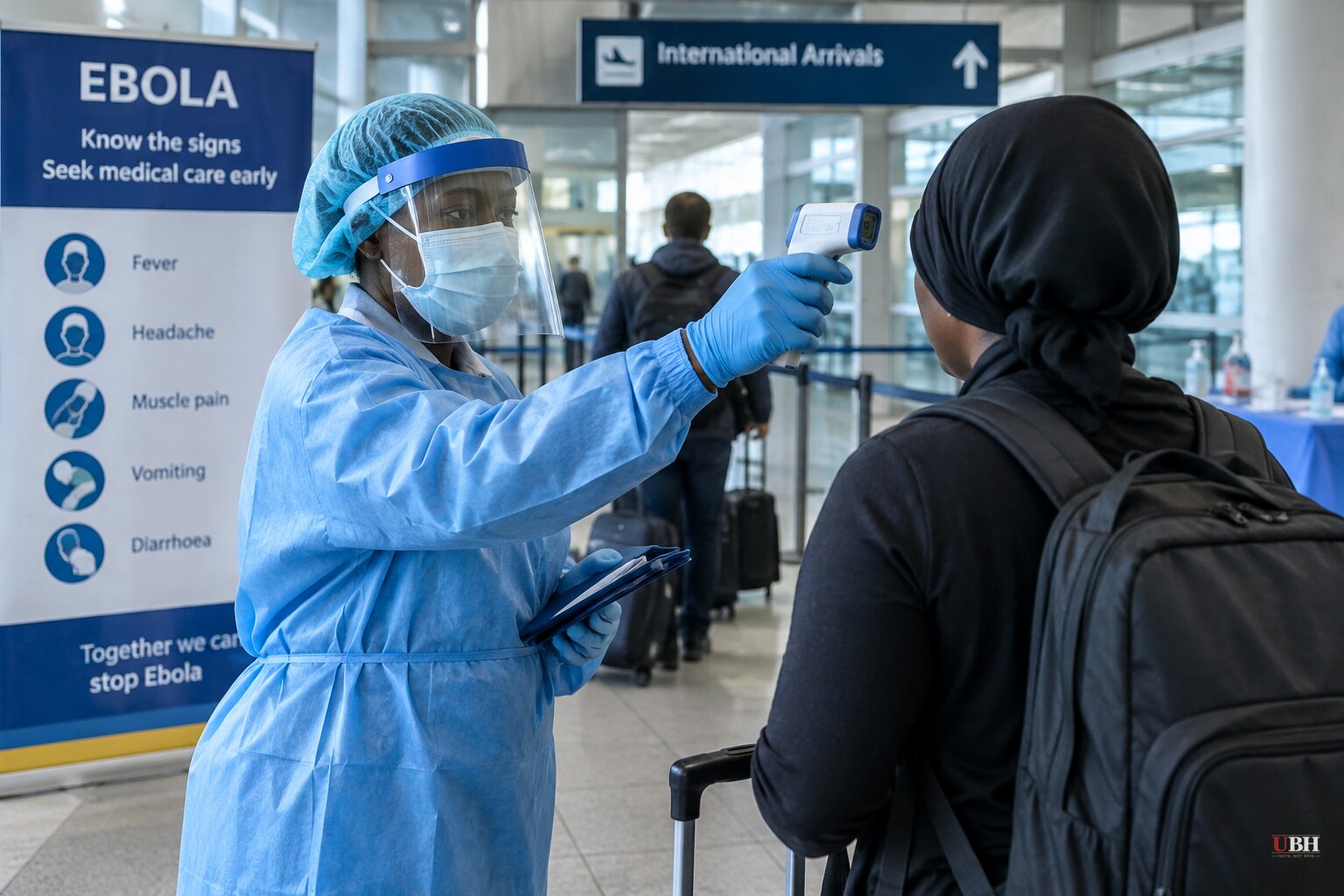
Since Kenya confirmed its first Ebola case earlier this month, its count has reached nine. On Tuesday, Oct. 20, Nigeria became the latest country to report a case of the Bundibugyo outbreak.
The patient is a woman who recently arrived on an international flight from Uganda, according to a statement signed by Health Minister Muhammad Pate. She is in isolation at a private hospital in the Federal Capital Territory.
She began showing symptoms on Oct. 7 and was admitted to the hospital on Oct. 11, where she was later diagnosed. That leaves roughly nine days between admission and the public announcement.
Contact tracing
Authorities have identified 44 close contacts so far. The ministry said they include health care workers, other patients, caregivers and travel contacts.
"We are doing everything possible to contain this case by tracing all the contacts the individual may have had," Pate said.
The government also asked potentially exposed airline passengers to come forward and follow public health instructions. It told all public and private health facilities to be on high alert and to "maintain a high index of suspicion, promptly identify and isolate suspected cases."
The ministry did not say which flight the woman took or where she was diagnosed beyond the private hospital in Abuja.
Nigeria's preparations
The Nigeria Centre for Disease Control said two weeks ago it was stepping up surveillance after Ebola was detected in Kenya. Its Sept. 22 advisory said travelers from countries with active transmission could be required to complete a Health Declaration Form listing travel history and health information.
It is not yet clear whether that form or other entry-point screening helped identify this patient.
Nigeria set up an Ebola task force in June, after the Congo outbreak began in mid-May. At the time, Femi Gbajabiamila, chief of staff to President Bola Tinubu, said: "We do not want a repeat of what happened during the last outbreak when a carrier entered the country, and everyone was scrambling to respond."
That earlier outbreak began in 2014, when an infected traveler from Liberia arrived in Lagos. Nigeria recorded 20 cases, and the WHO declared the country free of transmission on Oct. 20, 2014, exactly 12 years before this confirmation.
Kenya adds a ninth case
Kenya's Ministry of Health announced a ninth case earlier Tuesday: a 24-year-old man who was already in quarantine when he fell ill. He is a close family member of Kenya's first patient, who traveled from Congo through Uganda and died at a Nairobi hospital on Oct. 5.
"All nine cases belong to one cluster, and as of today there is no evidence of transmission outside this group," Director-General for Health Patrick Amoth said.
Amoth said eight patients are stable and responding to treatment. He said 134 of 135 contacts have been traced and quarantined, and no infections have occurred inside quarantine facilities.
Most quarantined contacts have stayed well through the 21-day monitoring period and can go home from Oct. 25, Amoth said. He asked communities to welcome them back, saying they "pose no risk of infection."
The wider outbreak
The WHO reported 9,066 confirmed cases and 4,381 deaths in Congo as of Oct. 11, a crude case-fatality rate of 48.3 percent. Bundibugyo virus was confirmed in Congo and Uganda in May. Uganda later declared itself free of the virus.
Africa CDC Director General Jean Kaseya wrote on X: "We are facing an extremely serious threat." He said the outbreak "has already become the most geographically extensive in history, affecting several countries spread across three regions of Africa."
The WHO has said the outbreak is the fastest-spreading Ebola outbreak on record and is on track to exceed the deadliest, the 2014 to 2016 West African epidemic, which killed 11,000 people. The U.S. CDC calls it the second-largest on record.
The WHO says there is no approved vaccine or specific treatment for Bundibugyo virus disease, though early supportive care can improve survival. A WHO spokesperson said the agency advises against restricting travel to or trade with Congo, Uganda or Kenya based on current information.
The CDC said Tuesday that no cases linked to this outbreak have been reported in the United States. It rates the risk to the American public and travelers as low.
What comes next
The next numbers to watch are the 44 contacts in Abuja. Each will need to be monitored for 21 days, and the list is still growing as health teams track down passengers, patients and caregivers. Whether any of them tests positive will show if this stays a single imported case, the way Kenya's has so far stayed inside one cluster.
Sources used for this briefing
8 links from 6 independent newsrooms (syndicated copies of the same report count once)
These are the sources it draws on, linked so you can verify.


