
Unbiased headlines. Facts, not spin.
Unbiased Headlines is an independently owned news organization. We bring you the facts, not opinions, written fresh from 110+ named sources. Sources linked so you can verify it yourself.
 health
Major Story (7/10)
FDA Approves GSK's Hibsago, First Antisense Drug for Chronic Hepatitis B
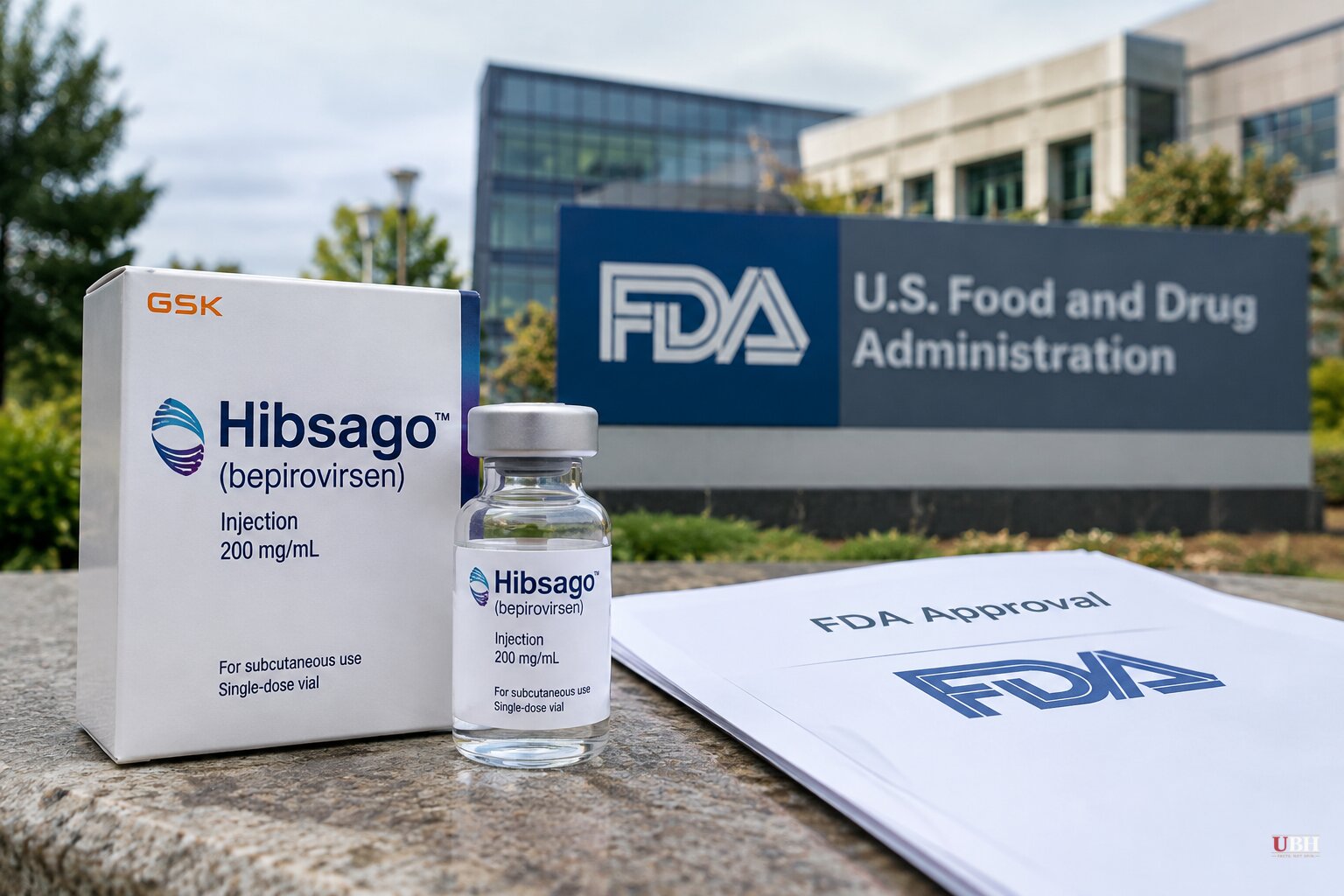
The U.S. Food and Drug Administration approved Hibsago (bepirovirsen) today, Oct. 20, for certain adults with chronic hepatitis B. The agency says it is the first FDA-approved antisense oligonucleotide for the disease. It is meant to be given alongside existing antiviral therapy, and it gives some patients a chance to stop that therapy altogether.
Standard treatment is usually a commitment measured in years. Nucleotide analogues suppress the virus but rarely eliminate it, and patients often take them for life. Reuters reports that current standard-of-care treatments produce a sustained functional cure in only 1% to 4% of patients.
Who qualifies
The label is narrow. Hibsago is approved for adults without cirrhosis who have taken hepatitis B antiviral therapy for at least six months, have suppressed virus in their blood, and have hepatitis B surface antigen (HBsAg) levels of 3,000 IU/mL or less. The level must be determined by an FDA-authorized test.
The FDA also authorized the Roche Elecsys HBsAg II quant II RxDx assay as a companion diagnostic to help select patients and monitor them during treatment.
What the trials showed
Hibsago was tested against placebo in two trials, B-Well 1 and B-Well 2. Patients received injections under the skin for up to 24 weeks while staying on their existing medicine. They then continued that medicine for at least 24 weeks after the last injection.
Across the two trials, 24% of patients on Hibsago met the requirements to stop their existing medicine. None on placebo did.
Twenty-four weeks after stopping all hepatitis B treatment, 19% of Hibsago patients still had the virus under control, with HBsAg undetectable in their blood. That is nearly one in five. It also means roughly four in five did not reach that mark.
Results were better in patients with lower starting levels. Among those with HBsAg at or below 1,000 IU/mL, the functional cure rate reached 26%, according to trial data reported by MedPage Today. That group is about 45% of diagnosed cases worldwide.
"This is the start of a new era in treating people living with [chronic hepatitis B]," said Norah Terrault, MD, of the Keck School of Medicine at the University of Southern California, an investigator on the trials, in a statement issued by GSK. "Bepirovirsen offers patients the potential to achieve functional cure after a short period of treatment, a long-standing goal for patients and physicians alike."
Wendy Carter, DO, acting director of the Office of Infectious Diseases in the FDA's Center for Drug Evaluation and Research, was more measured. The drug, she said, "gives some patients the possibility of maintaining control of the virus after all chronic HBV treatment has ended." The word is "possibility."
Safety warnings
Hibsago carries a boxed warning, the FDA's most serious label warning. It covers serious liver reactions, including hepatic flares during treatment, and low platelet counts that can raise the risk of life-threatening bleeding.
The label also warns of worsening kidney function, serious inflammatory reactions such as vasculitis, and serious risks from improper injection. Patients need regular blood tests. The drug is not recommended for people co-infected with hepatitis D.
The most common side effects are injection site reactions, fatigue, fever and headache. After the first dose, patients can self-administer the injection, which means the injection-risk warning applies outside a clinic.
The money
Hepatitis B affects more than 250 million people worldwide, according to Reuters. It can lead to cirrhosis, and more than half of liver cancer cases globally are attributable to it, according to MedPage Today.
For GSK, the stakes are financial too. The company expects peak annual sales of more than £2 billion ($2.68 billion) from the drug. It is central to the plan under new CEO Luke Miels to reach more than £40 billion in annual revenue by 2031, as patents on GSK's blockbuster HIV drugs near expiration.
GSK licensed the drug from Ionis Pharmaceuticals, which is eligible for milestone payments on approval and other regulatory benchmarks.
Hibsago has already been approved in Japan and is under review in China and Europe. U.S. biotech Aligos Therapeutics is developing a rival hepatitis B therapy, pevifoscorvir sodium, currently in a mid-stage trial.
What comes next
GSK has not disclosed U.S. pricing or when the drug will reach patients. Given the narrow label and the testing requirements, how many of the world's hepatitis B patients actually qualify will depend heavily on that rollout. The decisions from regulators in China and Europe are still pending.
Sources used for this briefing
4 links from 4 independent newsrooms (syndicated copies of the same report count once)
These are the sources it draws on, linked so you can verify.


