
Unbiased headlines. Facts, not spin.
Unbiased Headlines is an independently owned news organization. We bring you the facts, not opinions, written fresh from 110+ named sources. Sources linked so you can verify it yourself.
 health
Major Story (7/10)
Event date: October 15, 2026 ·
Measles Cases Hit 4,080 This Year While Midterm Voters Name the Economy as Top Concern
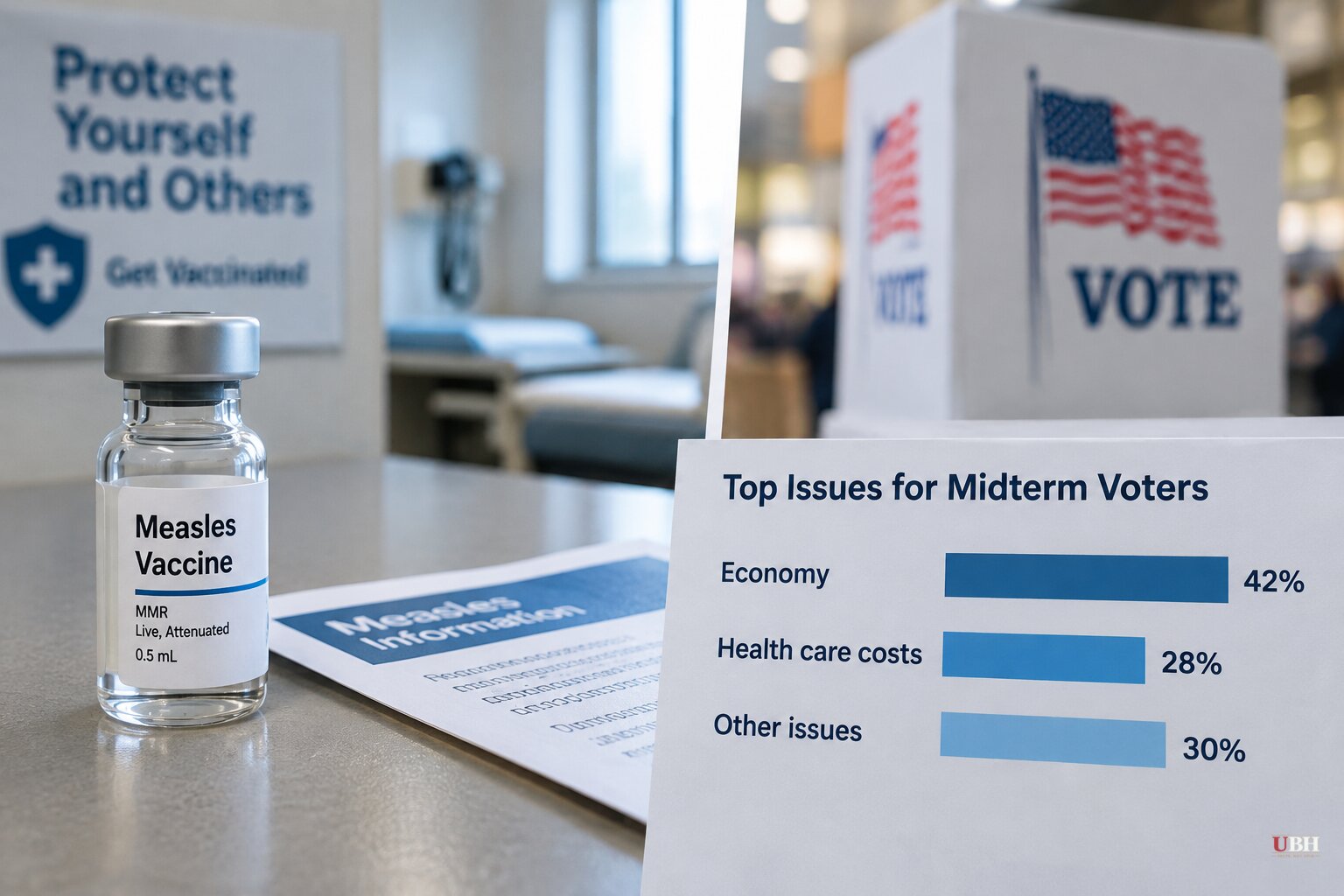
Measles is spreading faster in the United States than at any point in recent years. Vaccine policy is still not what is driving votes.
As of early October, the Centers for Disease Control and Prevention had recorded 4,080 confirmed measles cases in 2026 and two deaths. All of 2025 produced 2,289 cases and three deaths. In 2024 there were 285 cases and no deaths.
The vaccination numbers behind the outbreak
Kindergarten MMR coverage is slipping. During the 2025-26 school year, 92.4% of U.S. kindergartners had completed the measles, mumps and rubella series, down from 95.2% in 2019-20. That gap left roughly 280,000 kindergartners in school without documentation of the full series.
Dr. Edith Bracho-Sanchez, a primary care pediatrician at Columbia University Irving Medical Center, says the pattern in her office has changed. Fewer parents refuse outright, she writes in a CNN commentary. More of them delay, citing a missing spouse, a birthday party or a fussy child.
She attributes that to a climate in which vaccination has become "so socially and politically loaded" that some parents avoid picking a camp. Her prescription is practical: book the next appointment before the family leaves the exam room.
That is one pediatrician's account of her own patients. The CDC data show the national direction, not the reasons behind it.
What voters say they care about
Pew Research found economic issues are the main driving political force this cycle for 29% of Americans. Annual inflation stands at 3.4%, according to the Bureau of Labor Statistics. Gasoline is up roughly 25% over the past year, a rise tied largely to the Iran War's disruption of global oil supply. Food inflation is around 3%.
Health care enters the picture through cost. In July, 69% of Americans told Pew they were very concerned about the cost of health care. That was higher than the share worried about gas prices (56%) or jobs (44%).
Vaccines are a separate matter. A MedPage Today commentary by vaccine policy advocates says the national focus on the two wars and on energy and food prices kept vaccine policy from becoming a bigger midterm issue. The same piece says vaccine advocates did succeed in raising awareness and building informal coalitions. Those groups coordinated against changes at HHS and FDA advisory bodies and against state moves to widen school vaccine exemptions. They also backed a lawsuit challenging the reshaping of the Advisory Committee on Immunization Practices (ACIP) and the resulting cuts to routine vaccine recommendations.
Many medical societies responded by publishing their own schedules that largely mirror the pre-2025 ACIP guidance.
Kennedy's shift in emphasis
Health Secretary Robert F. Kennedy Jr. has not changed his position, the MedPage authors write. They say that after the ACIP controversies, and reportedly at the White House's behest, he temporarily shifted toward topics less likely to become midterm flashpoints, such as expanded vaccine injury research at NIH.
Ross Marchand, executive director of the Taxpayers Protection Alliance, argues in a Washington Post opinion piece that Kennedy is planning an attack on the Vaccine Injury Compensation Program. Marchand says most voters of every political stripe support access to FDA-approved vaccines and trust their doctors' advice. No policy action on that program is detailed in the excerpt of his piece.
The MedPage authors argue that even a friendlier Congress would not end the threat. In their words, vaccines face "long-term existential threats at both the federal and state levels" through regulatory and legislative action, a fight they expect to stretch into 2029 and beyond.
The race itself
Republicans hold the House 218-214. Democrats are widely expected to take it back, according to the Epoch Times, which cites declining Trump administration approval. In the Senate, where Republicans hold 53 seats, GOP slippage in Maine, North Carolina, Georgia and Texas has put a Democratic majority within reach.
GOP strategist Austin Hein, who works on Bo French's Texas Railroad Commission campaign, says polls "always underestimate Republican voters." House Speaker Mike Johnson says flatly, "I'm going to be the Speaker in the next Congress."
House Democratic Leader Hakeem Jeffries told The Wall Street Journal he is "very confident" of a majority. He listed restoring Medicaid cuts and enhanced Affordable Care Act subsidies, opposing the Iran war, and investigations of the administration as priorities. Vaccines were not among the items cited.
On the trail, Trump spent Monday in Kansas for Sen. Roger Marshall, casting the election as a fight against "extremists." In Michigan, Republican Mike Rogers is attacking Democrat Abdul El-Sayed. Neither campaign event, as described, centered on vaccines.
A political scientist writing for Public Health Post notes that midterms after a White House change have often turned on health policy, from the ACA in 2010 and 2018 to abortion in 2022. Whether 2026 follows that pattern, the author says, remains an open question.
What comes next
More than a million ballots have already been cast. Election Day is Nov. 3, and the new Congress convenes Jan. 3, 2027. Whichever party holds the gavel will inherit a measles count already above 4,000, falling kindergarten coverage, and an unresolved fight over who sets the national vaccine schedule.
Sources used for this briefing
7 links from 7 independent newsrooms (syndicated copies of the same report count once)
These are the sources it draws on, linked so you can verify.


