
Unbiased headlines. Facts, not spin.
Unbiased Headlines is an independently owned news organization. We bring you the facts, not opinions, written fresh from 110+ named sources. Sources linked so you can verify it yourself.
 health
Notable (6/10)
Event date: October 19, 2026 ·
Drugmakers Ask Court to Join Hospitals' Lawsuit Against 340B Rebate Pilot Set for January
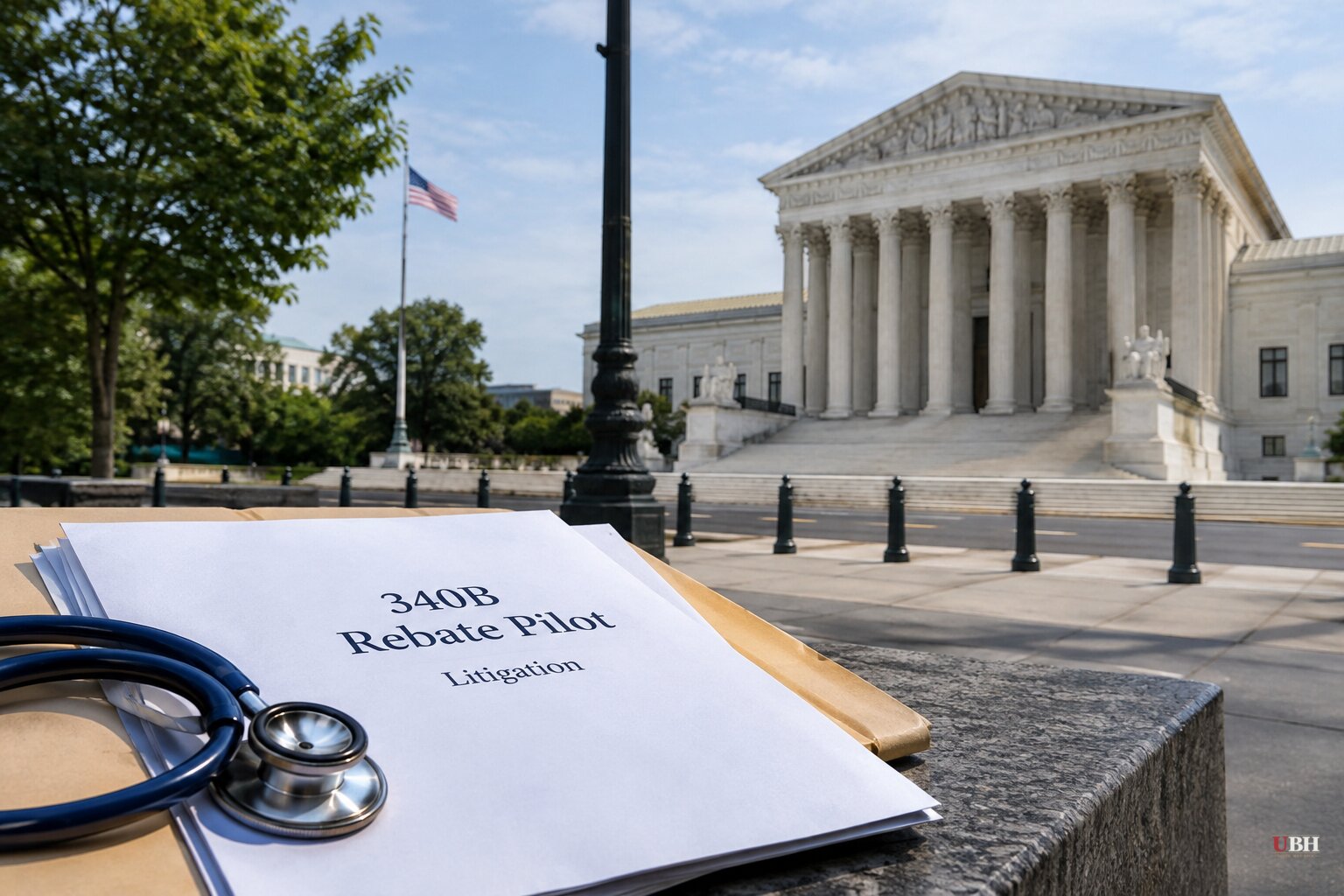
Since HHS dropped its first 340B rebate pilot last year after hospitals won in court, the administration revived the idea in July. This month the fight is back in federal court, and drugmakers are now asking to join it.
The 340B program, created by Congress in 1992, lets hospitals and clinics serving many low-income and uninsured patients buy outpatient drugs at steep discounts. The new pilot would flip the mechanics. Hospitals would pay the regular price up front, file claims after the drug is dispensed, and then wait for a rebate.
The lawsuit
The American Hospital Association, four safety-net hospitals and the Maine Hospital Association sued earlier this month. They want the pilot cancelled and the status quo restored.
Guy Hudson, MD, president and CEO of Northern Light Health in Maine, said the shift "would place significant financial pressure and administrative burdens on hospitals and clinics that rely on 340B savings to support essential patient care services." He said rural systems would see resources diverted from direct patient care.
The AHA puts the added administrative cost at more than $1 billion a year. HRSA's own estimate is $537 million, according to the figures hospitals cite. Hospitals also say many would have to draw on thin cash reserves to buy drugs at full price before any rebate arrives.
HRSA, the agency that runs 340B, says ten manufacturers' plans have been approved for the pilot. It describes the pilot as limited to a select group of drugs and as consistent with its statutory authority.
Drugmakers want in
Boehringer Ingelheim, Bristol-Myers Squibb and AbbVie have filed a motion to intervene. PhRMA, the industry's largest trade group, filed its own.
The companies put numbers on their complaint in the filings. Boehringer says it loses an average of $3 million a week to duplicate discounts, where a drug is discounted under 340B and another federal program at once. It expects losses to grow when Medicare's maximum fair price takes effect next year for Ofev and Tradjenta. Bristol-Myers says it has already lost $40 million to duplicate discounts. AbbVie expects to lose tens of millions.
These are the companies' own figures, offered in court filings. They are unproven.
The companies tried this route last year and failed. The judge in the first case denied their motions, saying they had no "tangible basis" for doubting that the government could represent their interests.
PhRMA says what happened next supports its position. HHS consented to vacating the pilot and, in PhRMA's words, allegedly downplayed manufacturers' financial harms. To win intervention this time, the drugmakers have to show a plausible risk that HHS will not adequately represent them.
PhRMA also tried to head off the obvious objection. "While Plaintiffs will likely argue that granting intervention will unduly complicate the suit, that argument should not bear weight," the group's filing states.
The dispute over who benefits
PhRMA argues the program itself has drifted from its purpose. Its website says covered hospitals "generate billions in profits on medicines," and it puts the figure at $142 billion. It also says there are "no guardrails on how they use program profits."
The group describes a "hidden tax for patients, employers and taxpayers." Hospitals dispute that framing. The AHA says the program lets safety-net providers stretch scarce resources.
The scale of the program is not in dispute. HRSA data show covered entities spent $100 billion on 340B drugs in 2025, up from $81.4 billion in 2024 and $66.3 billion in 2023.
The rebate model is the administration's answer to what drugmakers call abuse, including duplicate discounts. The hospitals' answer is that rebates give manufacturers, in the AHA's words, "unprecedented control over hospitals' receipt of discounts to which they are legally entitled."
Congress weighs in
On Oct. 15, the AHA wrote to Reps. Rob Bresnahan and Debbie Dingell in support of the 340B Rebate Model Delay Act, H.R. 10770. The AHA says the bill would pause the HHS rebate program while Congress works on longer-term changes to 340B. The letter argues the rebate model would shift financial risk onto hospitals and fall hardest on rural and safety-net providers.
The measure is a bill, not law.
A separate PhRMA lawsuit
PhRMA also sued the federal government on Oct. 7 over a different Trump administration drug-pricing effort. That suit targets a CMS rule, due to take effect Jan. 1, 2027, that would base Medicare pricing on average sales prices across 19 countries.
PhRMA CEO Stephen Ubl called the rule "unlawful" and said it "clearly exceeds CMS' authority." CMS has said in notices that it has statutory authority. Officials have also pointed to a provision of the Social Security Act that limits judicial review of certain pricing changes.
That case is distinct from the 340B litigation. It does show the pharmaceutical lobby fighting the administration in court on one front while asking to help defend it on another.
What comes next
The briefing period for the case is expected to wind up in mid-November, and the judge will then decide whether oral arguments are needed. A decision is expected before Jan. 1, when the new program is due to start, so the schedule is tight. If the court again denies drugmakers a seat, HHS will be the only party defending the pilot. That is the same party that agreed to scrap it last time.
Sources used for this briefing
6 links from 6 independent newsrooms (syndicated copies of the same report count once)
These are the sources it draws on, linked so you can verify.


